"Sometimes, you find yourself handling 16 patients alone, while in other departments, you find one or two staffers only, for example," said Mahmoud Omar, describing the difficult times he has been going through while working as a nurse in a psychiatric hospital in Jordan.
Mahmoud Omar, a pseudonym, is a nurse at the National Center for Psychiatry in Jordan. Omar has worked for more than 10 years in psychiatric and addiction hospitals in the country.
Omar explains that nine departments are available in the National Center for Psychiatry, each with 16-18 nurses. But that the health facility is experiencing periods of nursing shortages, he said.
He confirms that many nursing staffs who have worked in the hospital for years have decided to quit and go and work abroad.
The National Center for Psychiatry includes 265 beds with occupancy rate of approximately 67 per cent. The average duration of the patient's stay is around 34 days, according to the Jordanian Ministry of Health statistics for 2021.
The Jordanian Ministry of Health has three psychiatric hospitals, including the National Center for Psychiatry which is the largest, the National Center for the Rehabilitation of Addicts, and Al-Karama Psychiatric Hospital, and a separate judicial department of the National Center for Psychiatry that was recently established.
The functions of a mental health nurse includes providing care for potential or actual psychiatric patients and people with substance abuse disorders. He or she should be a specialized sworn nurse with at least a graduate university degree.
Increased admission to the National Center for Psychiatry in 2010-2020
Over the past decade A slight growth in the number of registered nurses has been recorded in the hospital
Source: Annual Statistical Report of Jordan’s Ministry of Health for 2010-2020
* 2021 statistics were not included in the above chart, as the statistics cover the number of staff in other psychiatry government hospitals
An analysis of data about the National Center for Psychiatry reveals a limited increase in the number of specialized nurses working at the center between 2010 and 2020.
The numbers of generalist mental health nurses in Jordan looks small when compared with those in neighboring countries. In Jordan, there are 3.3 nurses per 100,000 inhabitants, In Qatar there are 9.9, for every 100000 inhabitants, 4.8 in Egypt, and 150.3 in Turkey.
When it comes to specialized nursing care in the field of mental health, the rate decreases to 0.13 nurse per 100,000 people, according to a report published by the World Health Organization in 2020.
Mental health nurses are classified as authorized professionals, divided into two categories – specialized and advanced nursing staff. In both cases, the requirement is at least a bachelor's degree.
However, three main categories of nurses are employed in the mental health hospitals of the Jordanian Ministry of Health among them the specialized or sworn nurse, the associate nurse and the nursing assistant. The latter are not required to have a university degree.
According to nurse Mahmoud Omar, nursing staff are not trained prior to their deployment by the National Center for Psychiatry. But newly appointed nurses start a three-month period of orientation to learn how to deal with patients. They may also be subject to further courses and training, he explained.
Certified nurses are the majority of nursing staff at the National Center for Psychiatry
2021
2020
Source: Annual Statistical Report of Jordan’s Ministry of Health for 2010-2020
A specialized nurse must have a higher or vocational diploma or undergo a specialization training of not less than nine months. The requirement to obtain a master's degree is added for the specialized applicant, and in both cases it is necessary to sit for the Jordanian Nursing Council's examination in specialty, according to the specialization and technical classification system in the profession of nursing and midwifery issued under the Jordanian Nursing Council Law No. 53 of 2006.
Number of practicing psychiatric nurses per 100000 inhabitants
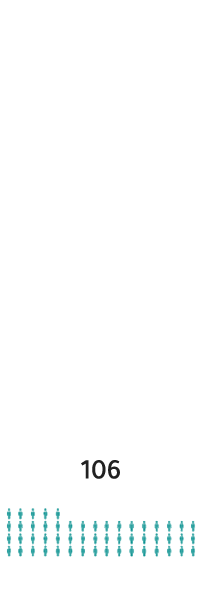
Saudi Arabia

Turkey
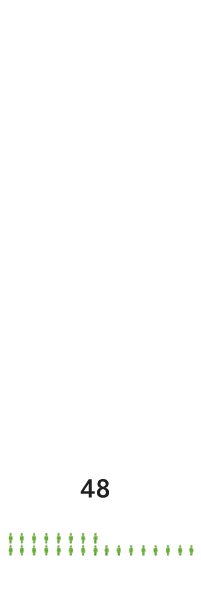
Egypt

Qatar

Jordan
Source: Global Health Observatory
Omar explains that the hospital director asks the Ministry of Health to provide the hospital with nurses every one or two years, but the nurses must wait for their appointment to go through by Civil Service directorate. "We get nurses but only a few. For example, we get five, six nurses in batches," he says.
He attributes the shortage of nursing staff to the low salaries paid, and the tendency of nurses to seek better paid jobs in neighboring countries.
He explains that the problem got worse four years ago. "The salary of a public sector employee is not enough to make ends meet. I am one of the people who is forced to do two jobs for the last seven years. This is not to live well; it is to make end meet and live like the majority of people," says Omar.