 30/11/2023

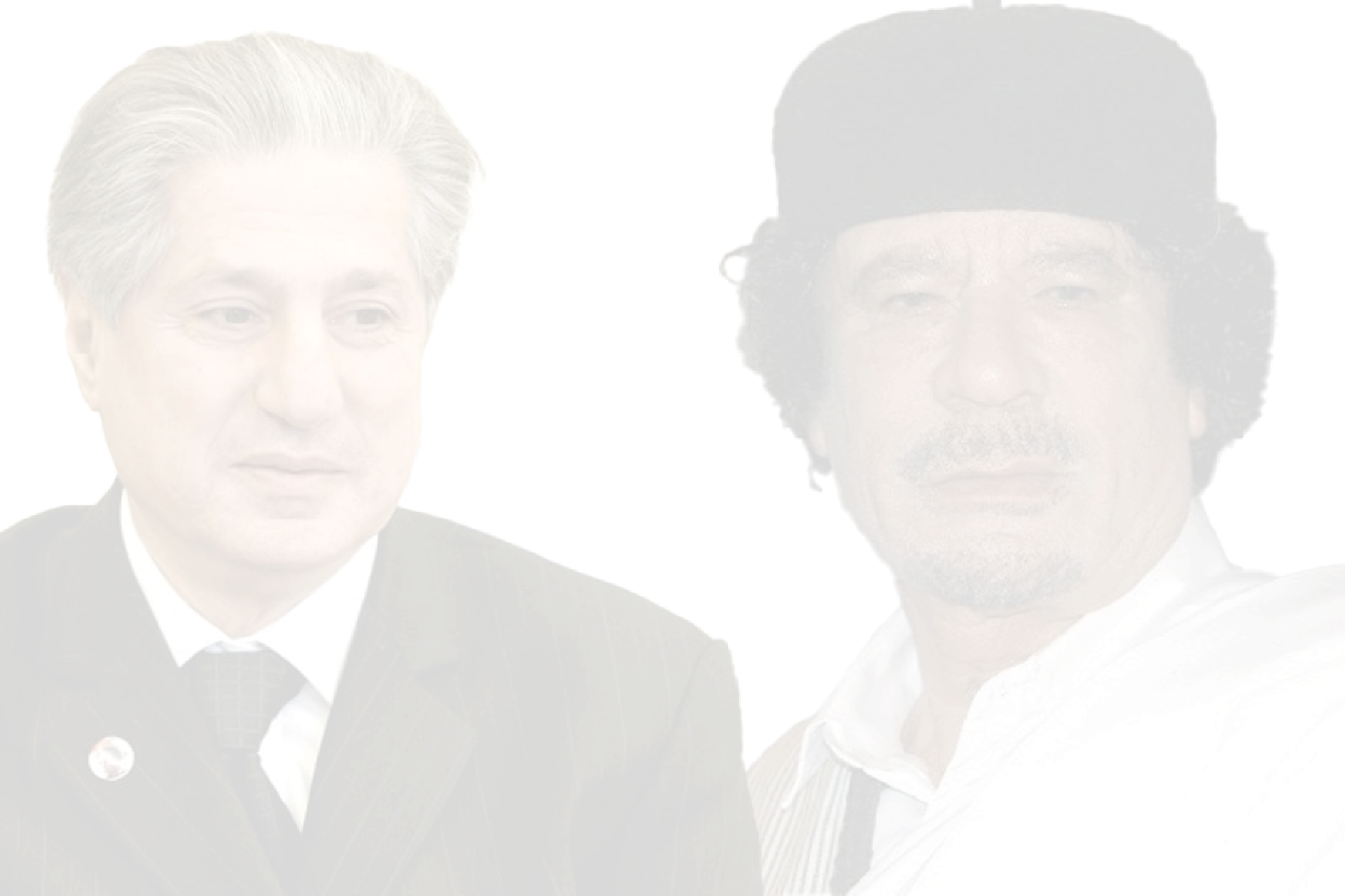
“I need your help,” said Libyan leader Muammar al-Qaddafi to the former Lebanese president, Amine Gemayel, during the latter’s first visit to Libya. Qaddafi was seeking help to sink the American battleship USS New Jersey, which was moored in Beirut.
At the time, diplomatic relations between Libya and Lebanon were severed, following clashes in the 1970s between the Palestine Liberation Organization (PLO) and the Kataeb, the party founded by Pierre Gemayel, the father of former Lebanese President Amine Gemayel.
The restoration of Libyan-Lebanese relations, following the PLO withdrawal from Beirut in 1982, required mediation by King Hassan II of Morocco, after which Gemayel was hosted by Qaddafi in his tent in Tripoli.
Gemayel was happy to take on the role of mediator himself twenty years later, when Lebanese-Libyan relations had reached their lowest point, after repeated accusations by the Amal Movement that the Qaddafi regime had kidnapped the founder of the movement, Musa al-Sadr. At that time, Gemayel was part of the opposition camp, hostile to the Syrian presence in Lebanon, which was however supported by the Amal Movement.
In June 2003, Gemayel went to meet Qaddafi in Tripoli, accompanied by his son and member of parliament Pierre Gemayel, who was assassinated in 2006. Pierre Gemayel expressed his dissatisfaction with the abject state of bilateral relations.
About a year after this visit, Gemayel and the Libyan Arab Foreign Investment Company (LAFICO) – owned by the Libyan government and subject to UN sanctions since 2011 – entered into a partnership over a Cypriot company called Lionworld (Lionworld Trading & Investment Company) which lasted until 2016.
This investigation establishes the existence of the partnership, using documents obtained by ARIJ, within the framework of the “Cyprus Confidential ” collaborative investigative project. It was carried out in cooperation with the International Consortium of Investigative Journalists (ICIJ) and Paper Trail Media.
The investigation finds that the company which partly owned Lionworld, was itself owned by Amine Gemayel and does not appear in the Cypriot registry of companies. Gemayel’s name appears as only a director of Lionworld. It also appears that those in charge of the company tried to provide a channel to transfer funds from the Libyan authorities. This is based on the fact that the company appears unlikely to have engaged in any commercial activities, judging by the company’s files, available on the Cyprus Companies Registry, as well as reports from the Libyan Audit Bureau and expert analysis of the company’s structure and bank accounts.

On September 15, 2004, the Bellground company (Bellground Trading and Investments Limited) was established in Nicosia, Cyprus, with its headquarters listed as the address of its registering agent, Dadlaw (Demetrios A. Demetrios LLC).
Lionworld company document

Data from the Cyprus Companies Registry shows that the company name was changed from Bellground to Lionworld a few days after it was set up. Its one thousand shares were distributed equally between the Libyan ِArab Foreign Investments Company and Casteline (Casteline Trading and Investments).
Lionworld was managed by the Lebanese Amine Pierre Gemayel and two Libyans, Hamed Aarabi Elhouderi, and Mohamed Arafa. The law firm meanwhile appointed a group of its employees to manage the company, but without wide-ranging powers.
Hours after Lionworld was set up, Dadlaw registered another company at its address: Bricktown Trading and Investments Limited.
While searching for Bricktown in the Cyprus DEPARTMENT OF REGISTAR OF COMPANIES AND OFFICIAL RECEIVER, we found that it was the same company as Casteline, the part owner of Lionworld. But, like Lionworld, its name had also been changed a few days after it was established. The Cyprus DEPARTMENT OF REGISTAR OF COMPANIES AND OFFICIAL RECEIVER documents indicate that Casteline is owned by the law firm Dadlaw.
Casteline company document
However, the leaked documents indicate that Gemayel is the beneficial owner of the company whose shares were 500 shares at the value of 500 Cypriot pounds.
Casteline Ownership document
The fact that Gemayel’s name does not appear as an owner of Casteline raises question marks. Fabiano Angélico, a researcher at Public Integrity Research Group (a Swiss-based global organisation specialising in transparency and anti-corruption) describes the practice of not listing names as a “cover”, provided to businessmen by offshore companies to enable them to avoid taxes and to politicians who want to transfer money without being traced.
Tax Justice Network, an independent organisation based in the UK, examined the company structure and concluded that it did not provide sufficient information on the ownership of Lionworld, and that “to obtain more information would mean consulting the record of the principal owner of the company.”
The network points out that Cyprus has always been considered as one of those locations providing confidentiality to company owners, as it does not require them to disclose their ownership. This makes it a preferred destination for individuals seeking to hide their money, according to the network’s Financial Secrecy Index.
The main features of the Cypriot company Lionworld are therefore clear. Its shares were distributed equally between a company owned by Gemayel and the Libyan ِArab Foreign Investment Company (LAFICO).
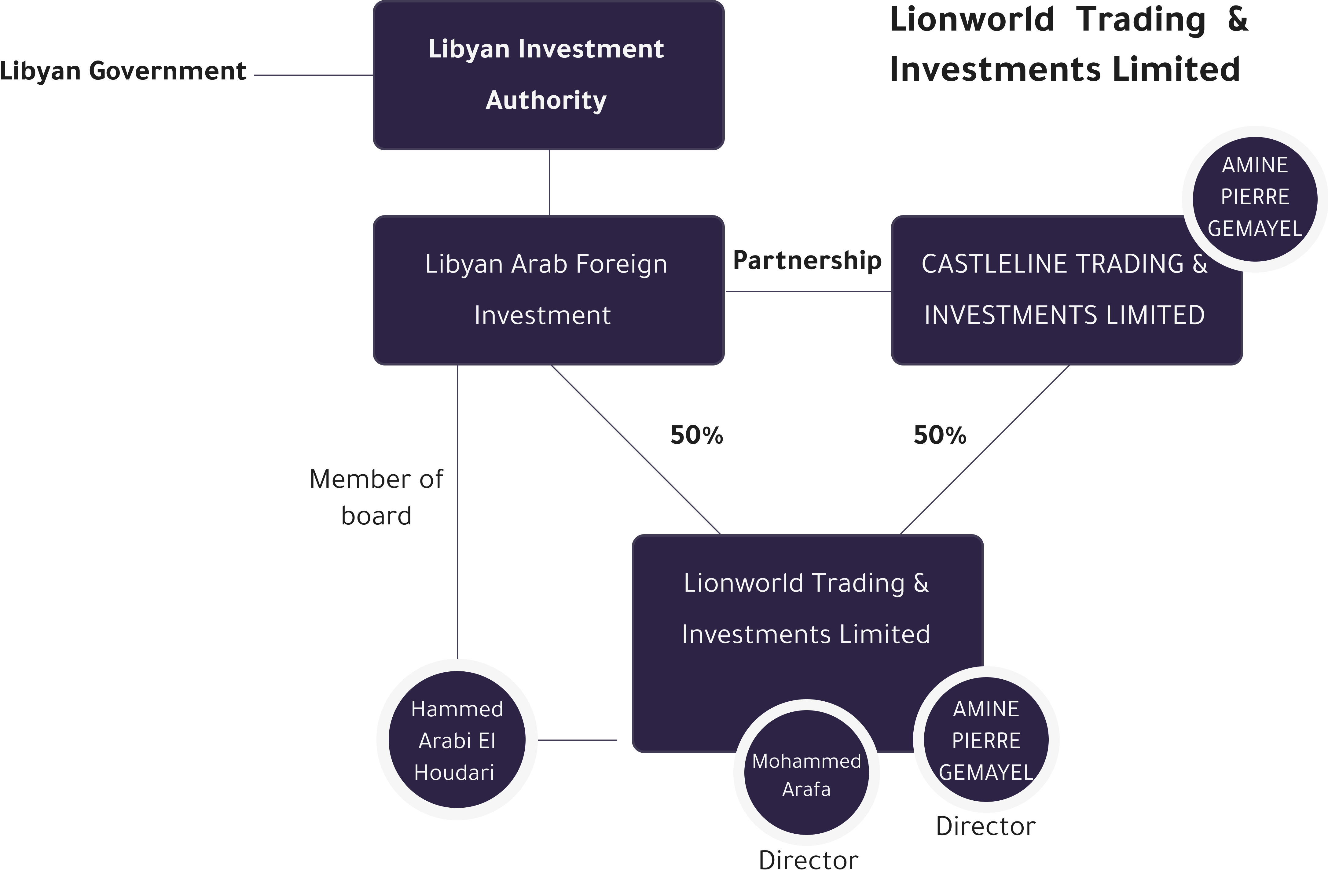
When the Libyan Foreign Investment Company was set up in 1981, it was then known as the Libyan Arab Foreign Investment Company (LAFICO).
The company is wholly owned by the Libyan government, which injected 500 million Libyan dinars in capital, for the purposes of “investing Libyan Arab funds outside Libya”, in various sectors.
In 1986, the company, like other Libyan economic institutions, was subject to sanctions imposed by the US administration on the Libyan government, which was accused of supporting the Vienna and Rome airport bombings in 1985. The US Treasury Department cancelled these sanctions about 15 days before Lionworld was set up, in early September 2004.
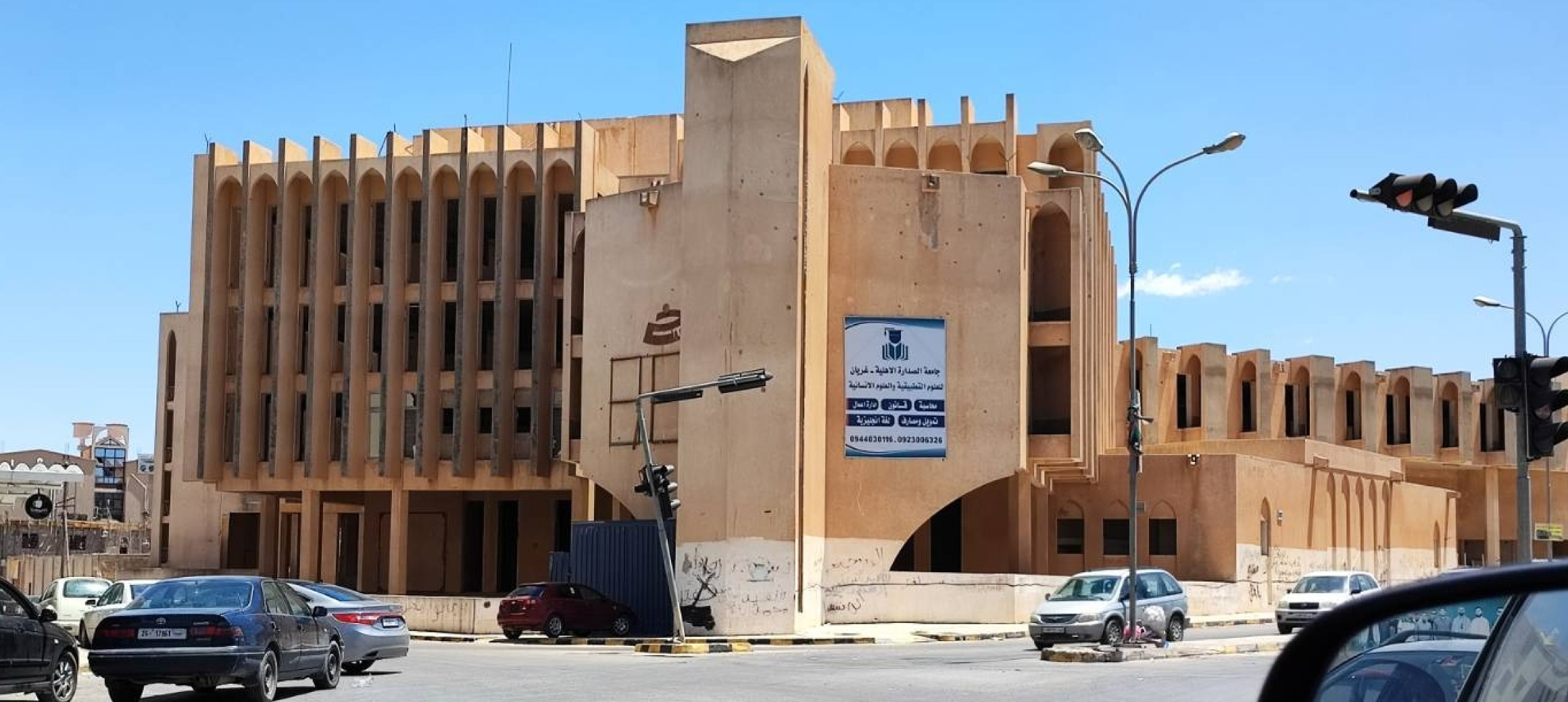
A photo of the former headquarters of the Libyan Foreign Investment Company
In 2006, The Libyan Arab Foreign Investment Company came under the umbrella of the Libyan Investment Authority, which included five companies.
When the Libyan revolution broke out in 2011, the UN sanctioned a number of the investment bodies that were part of the Libyan Investment Authority, including The Libyan Foreign Investment Company, because “they provided a source of wealth for Qaddafi’s associates, which led to mismanagement of, and small returns on, investments. It is also believed that the ambiguous nature of the ownership structure of the various branches of the company was a deliberate move by the previous regime to facilitate the laundering of funds embezzled from the state, and to transform them into assets abroad.”
At the time, the UN estimated the capital of the Libyan Investment Authority to be $40 billion, while that of the Libyan Foreign Investment Company (LAFICO) had reached around US$881 million. As a result of UN Security Council sanctions, US$11 million of LAFICO assets abroad were frozen.
The question remains though, about what drove a Libyan state company with millions of dollars in capital, to enter into partnership with a newly established Cypriot company with no headquarters and capital of only 500 Cypriot pounds.
At the beginning of the millennium, things in Lebanon were changing, and the Qaddafi regime was subject to a fierce campaign by the Lebanese Amal Movement, which accused the regime of being behind the disappearance of founder of Amal Movement, Musa al-Sadr.
Sadr had disappeared in 1978 during a visit to Libya. The Libyan authorities denied any connection to the disappearance of the Lebanese religious leader, claiming that he had left the country and gone to Italy.
A document released by the Central Intelligence Agency (CIA) indicates that contacts in Italy had informed the US embassy in Rome that Sadr never reached Italy.
Affairs reached a head in September 2003, when the Libyan authorities decided to sever diplomatic relations with Lebanon. This followed the demand by Amal leader Nabih Berri for international intervention to reveal the circumstances of Sadr’s disappearance in Libya.
In the midst of this bilateral dispute, another row was going on within Lebanese politics which highlighted the role of Amine Gemayel and his son Pierre Gemayel, then a member of the Lebanese parliament.
Amine Gemayel had returned to Lebanon in 2000, after a voluntary exile in France, Switzerland, and the US that followed the end of his term as president in 1988.
Gemayel and his Kataeb Party became heavily involved in the movement opposed to the Syrian presence in Lebanon. This led in 2005 to the formation of the March 14 alliance, in opposition to the March 8 alliance, which included Nabih Berri’s Amal Movement and a number of other movements and parties, led by Hezbollah.
Gemayel had a long-standing rivalry with the Amal Movement dating from when Amal came out in opposition to the May 17 Agreement, which Gemayel intended to conclude with Israel. Amal led what was known as the February 6, 1984 Intifada, which torpedoed this agreement.
Qaddafi was also one of the opponents of the abortive agreement. But the icy relations between Qaddafi and Gemayel thawed following mediation by the king of Morocco, and the subsequent visit Gemayel made to Qaddafi in his tent in Tripoli, which led to the revival of a bilateral commercial trade relationship at the same time.
The bonds of friendship endured between the two leaders, even after Gemayel left his post, after which he remained in contact with the Libyan embassy in France, according to the former Libyan ambassador to Paris.
After Gemayel left the presidency and departed Lebanon, he worked as a university lecturer. When he returned home, he continued his academic work and resumed his political career as head of the “Phalangist” opposition. The biography that appears on Gemayel’s website makes no mention of him engaging in any commercial or financial activities.
When disputes flared between Lebanon and Libya, Gemayel put himself forward as a mediator to restore relations, travelling with his son to Tripoli in June 2003, to discuss the deterioration in bilateral relations.
“My relations with him were excellent. I met him a number of times and he was keen to improve relations.” That is how the former Libyan ambassador to Lebanon, Abdel Gader Ghowga, describes Gemayel’s efforts to restore relations between the two countries.
Ghowga denies that the Kataeb Party received any support from Qaddafi. He points out that, while Qaddafi did support parties and movements in Lebanon, he personally - as a political ambassador – was not connected with the provision of such support, and was unaware of any partnership between Gemayel and the Libyan Foreign Investment Company.
When Lionworld was set up, Gemayel was active in Lebanese political life, and was classed as “a foreign individual of political capacity.” Recommendations 12 and 22 issued by the Financial Action Task Force call on member states - including Cyprus, as a member of the European Union - to ensure that institutions implement measures to prevent abuse by politicians of the financial system.
Recommendation no. 12 emphasises the need to make clear the identity of any politicians who own companies, in order to prevent “the circumvention of safeguards against money laundering, terrorist financing, or corruption through the opening of accounts, establishment of business relationships, or conducting of transactions using third parties, such as intermediaries or legal entities.”
Despite this, the legal firm Dadlaw did not register Gemayel’s ownership of Casteline in the Cyprus Companies Registry, part of a recurring pattern in the registration of companies owned by politicians.
When it was set up, Lionworld had only 1,000 shares, each valued at one thousand Cypriot pounds.
But, beginning in April 2005, the company continued to develop. Its directors opened a bank account in the Tripoli branch of the Libyan Foreign Bank (LBF), which is wholly owned by the Central Bank of Libya. The LBF was set up to handle all Libya’s financial and investment operations abroad.
Leaked documents show that the opening of the bank account carried the signatures of Amin Gemayel,Hamed Aarabi Elhouderi and Muhammad Arafa and that the bank could not take any financial action without it being signed off by two of the three directors.
Cyprus company law does not stipulate that companies incorporated in its area of jurisdiction must open a local bank account, subject to the Cypriot authorities.
A month after the bank account was opened, the owners of Lionworld raised the number of company shares to 581,000, each with a value of 581,000 Cypriot pounds (US$993,500), distributed equally between Casteline, owned by Gemayel, and the Libyan Arab Foreign Investment Company.
The company continued with this level of capital until it was dissolved in January 2016.
One striking thing is that, in the summer of 2010, Lionworld was in correspondence with the North Africa Commercial Bank SAL in Beirut, apparently for the purpose of opening a bank account. However, the leaked documents do not show whether this account was opened or not.
Document requesting opening of bank account at North Africa Commercial Bank
The Libyan Arab Foreign Bank owns 99.5% of the North Africa Commercial Bank. Both banks were therefore subject to US banking sanctions imposed in 2011, on all financial entities connected to Qaddafi.
Since the Libyan Foreign Investment Company (LAFICO) holds bank accounts at the North Africa Commercial Bank, the UN informed the Lebanese authorities in 2012, that LAFICO funds deposited at this bank needed to be kept frozen.
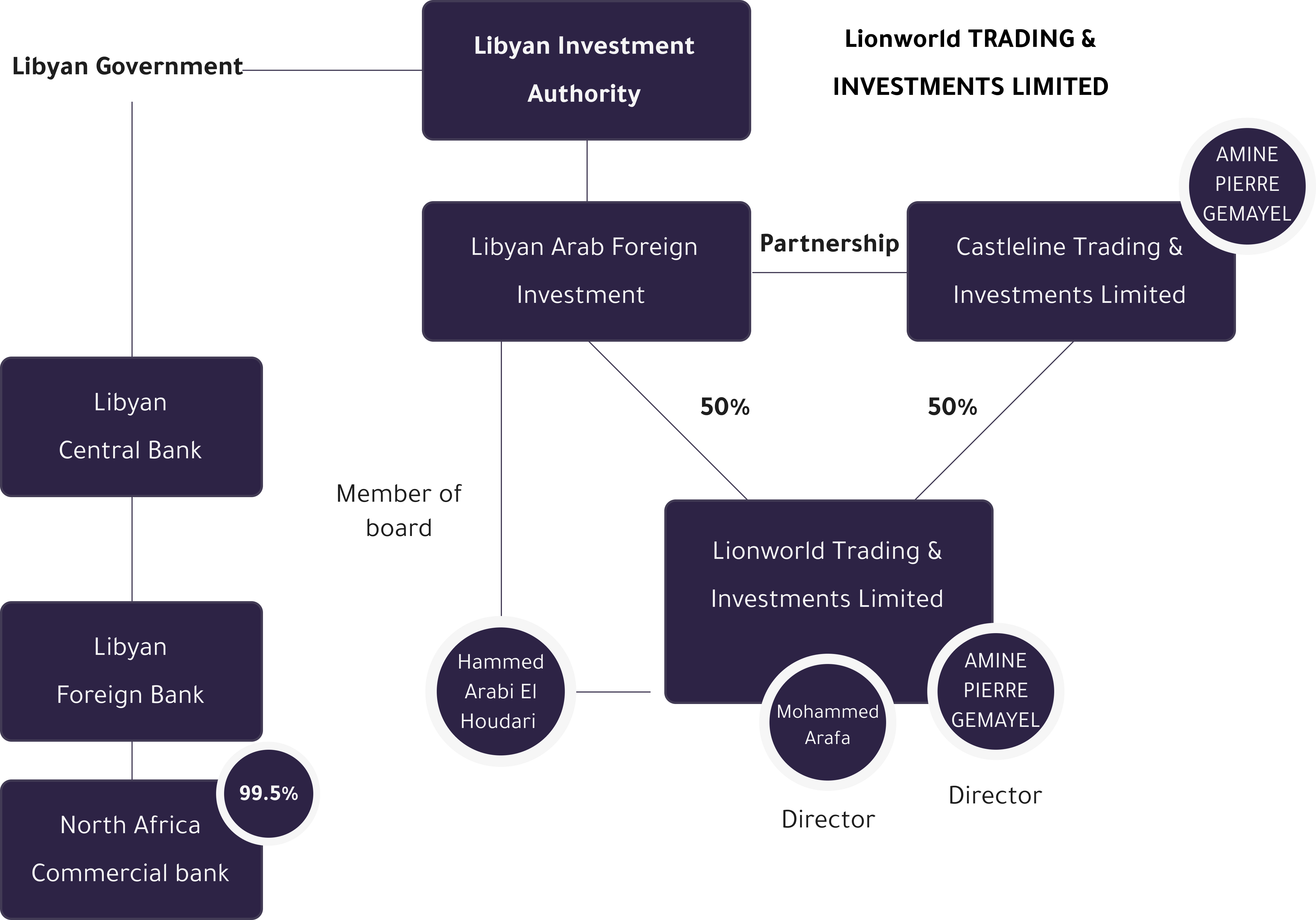
Tim Eaton, a researcher in Middle Eastern and North African political economy at the British thinktank Chatham House, has analysed the structure of the company. He concludes that, regardless of the purpose for which the company was established, the Libyan authorities have sought to control its structure at every level, so that no financial transaction can be made without their say so.
Warren Thompson, economic journalist at the Finance Uncovered – the British organisation that helps journalists investigate companies – draws the same conclusions as Tim Eaton from examining the structure of this company, and its bank account. The purpose of this structure may be “to facilitate the process of transferring money from Qaddafi to Gemayel.” He adds that it is extremely difficult to establish whether financial transfers have occurred and to what purpose. He says that the lack of company financial statements makes it difficult to find out whether Gemayel did benefit personally from this partnership, but this structure raises suspicions.
Fabiano Angélico, the researcher at the Public Integrity Research Group, points out that bank accounts would be used to pay wages and bonuses to company staff, and to make other payments to service providers who do not wish to be identified. The company’s managers who are also politicians, could also use these accounts “to transfer funds or obtain profits from their interests on capital. And the offshore company could be a channel for transferring funds.”
According to Lionworld’s memorandum of association, the company's managers are entitled to receive periodic bonuses, determined by the members of the board.
Eaton is not surprised by this form of partnership between Gemayel and LAFICO, which was always seen as Qaddafi’s foreign investment arm - especially in Malta and Cyprus. Qaddafi always relied on it – alongside other government companies – for establishing partnerships and making investments aimed at strengthening his relations with politicians across the world.
Eaton’s words match revelations in the leaked Paradise Papers of a partnership between the Libyan Arab Financial Investment Company (LAFICO) – owned by the Libyan Investment Authority – and Abdel Hakim Abdel Nasser, the son of the former Egyptian president, Gamal Abdel Nasser.
In 2013, the Libyan Audit Bureau reported that LAFICO had taken shares in companies without conducting the necessary economic viability studies, which led to some failing and being liquidated. That appears to be what happened to Lionworld.
Since its inception, Gemayel’s company Casteline had been connected to the Libyan Arab Foreign Investment Company (LAFICO), which had paid Casteline’s registration fees. Casteline had been set up the same day as Lionworld and the Libyan Arab Foreign Investment Company (LAFICO) continued to pay registration fees for its companies in Cyprus – including Gemayel’s company – up until 2011.
The structure of this partnership was linked to the Qaddafi regime, so that after 2011, LAFICO failed to pay management fees to Dadlaw.
Despite European and UN sanctions imposed on LAFICO in 2011, the company was forced to pay outstanding administrative fees in 2013. Because the company wanted to change its administrative structure, this caused the resignation of: Amine Gemayel, Mohamed Arafa, and Hamed Aarabi Elhouderi.

At the time Lionworld was set up, Al Hudayri was head of the General Contributions Department of LAFICO. He then moved to become the director general of the Economic and Social Development Fund Libya, which specialised in establishing foreign partnerships.
While he was a director of Lionworld, before resigning in 2013, Al Hudayri’s name had appeared on a list of persons covered by Law 47 of 2012, which orders that their assets and property be placed under the administration of a public receiver for reasons including strong suspicion of corruption and activities harmful to state interests.
Al Hudayri’s name was entered on Interpol’s Red Notice list. But his name was later removed, alongside most of the men of the Qaddafi regime whose names had been registered under Law 47.
Al-Hudayri is now a member of the board of directors of the Libyan Foreign Investment Company, managing a number of the company’s projects in Egypt.
Lionworld changed its management structure, adding directors who are notably all Libyan. They include Abu Bakr kalab, director of one of LAFICO’s subsidiaries in Tunisia. Even the representative of Casteline , was a Libyan, living in Lebanon.
It appears that the company's new directors did not remain long in their positions. In December 2014, Dadlaw wrote to the Cyprus Companies Registry stating that Lionworld and Casteline were without directors and that it had lost contact with both companies and that Dadlaw was consequently resigning its responsibilities as company secretary.
Neither LAFICO nor Casteline appointed another registration agent, which prompted the Cyprus Companies Registry to dissolve both companies in January 2016.
A year before the company was dissolved, the European Union renewed the 2011 resolution, freezing the assets of the Libyan Foreign Investment Company, due to its close association with the Qaddafi regime.
Although Lionworld was dissolved in 2016, the company appeared for the first time in a Libyan Audit Bureau report that same year. It was listed under “functioning” commercial holding companies in which LAFICO has a stake.
But it did not appear in the inventory document of commercial companies which were affiliated with LAFICO and conducting for-profit activity in 2014.
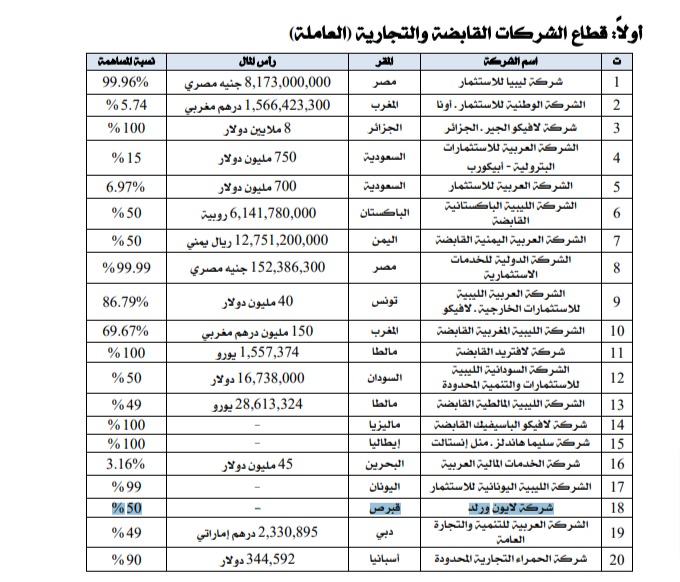
Mention of the company in the Audit Bureau report
An inspector at the Libyan Audit Bureau - who refused to be named - says that the company’s activities had not been inspected by the bureau, and that no information had been received by the bureau about its ownership and capital.
This confirms the 2016 report, in which the capital of the company is not mentioned, in contrast to most of the other companies included in that report.
The memorandum establishing Lionworld indicates that the company had been set up for the purpose of conducting commercial activities outside Cyprus.
From looking into the import and export databases and those covering ownership of companies, it does not appear that the company engaged in any import or export activities, nor did it own any shares in other companies.
Working in cooperation with Dr. Mohamed Sameh, financial advisor to a number of European companies and banks, it was possible to examine Lionworld documents. It is clear that the law firm Dadlaw had drawn up no financial statements showing company profits, despite the fact that, under its the agreement with Lionworld, Dadlaw was obligated to submit regular reports on profits to the company's owners.
Neither did Lionworld submit any company reports to the Cyprus DEPARTMENT OF REGISTAR OF COMPANIES AND OFFICIAL RECEIVERbetween 2005 and 2014, something that Sameh thinks “raises questions over the seriousness of the setting up of the company” and creates the suspicion of it being a “paper” company.
ARIJ reached out to Elhoudayri, via DHL registered post addressed to the company in Cairo whose board of directors he chairs, asking for him to comment on his involvement in the management of Lionworld along with Gemayel. Up to the time of publication of this report we have received no response from him.
The following is the response from former Lebanese President Amine Gemayel to questions submitted by ARIJ:
“From the beginning of the second (sic) millennium, Libya took the decision to open up to the West. This policy was evident in the decision by Muammar al-Qaddafi to make an official visit to Brussels in April 2004. In this context - and given my friendship with a number of figures in Libya, my good relationships with the Arab states, and the fact that I no longer held any official position in Lebanon – I was asked to help the Libyan [Foreign] Investment Company in their search for Business opportunities in Western countries. On the initiative of the Libyan party, two companies were established to do this. The Libyan party undertook all the legal measures to set up these companies with the law firm in Cyprus.
“None of this took place in secret and the fact that there was a Libyan investor was clear. I also agreed for my name to be included as one of the directors of the two companies. As regards the liquidation of one company and the re-establishment of another company in its place, this was - according to my recollection and the way it was explained to me at the time - merely a procedural name change, because the original name was similar to that of another company that had previously been registered in Cyprus by a third party.
“Efforts were made and studies conducted, but this did not result in any investment or commercial activity, so the two companies remained dormant. Consequently, the companies made no profits, and I, of course, received no profits.
“After some time, before the subsequent political changes in Libya and the overthrow of Moammar al-Qaddafi, and in the absence of any company results, I chose to effectively withdraw completely from this matter. However, it is possible that the recording of my standing down took place at a later date, since I neglected the matter. I also learned that the shareholders had taken the decision later to liquidate the two companies. But I did not follow up on these legal procedures and renounced my ownership of a share in the capital of the two companies.
“I submit these clarifications based on my own recollection, bearing in mind that I have given no attention to these matters for approximately 14 years.
“The issue of the opening up of Libya to the West issue was unconnected in any way with Lebanese politics and had no influence on it. I’d like to recall that politics in Lebanon at the time was focused on the withdrawal of the Syrian army, the future of Lebanon after this withdrawal, and the relations between the Lebanese parties themselves. Libya, of course, was not associated in any way with these issues.”