A look into the "trade in contracts" and sacking of journalists in
Egypt
Sahar Azazi
21 June 2026
Scroll Down
مرر للأسفل
This investigation documents the abuses faced by Egyptian
journalists working in private media organizations. It reveals a
systemic pattern of mistreatment, including arbitrary dismissals
without due process, wages below the legal minimum, and a lack
of insurance or employment protections. Journalists are often
unable to join the journalists’ syndicate unless they pay bribes
to gain entry through unofficial channels. The investigation
also highlights the failure of existing laws to protect media
workers and the widespread fear that prevents meaningful reform.
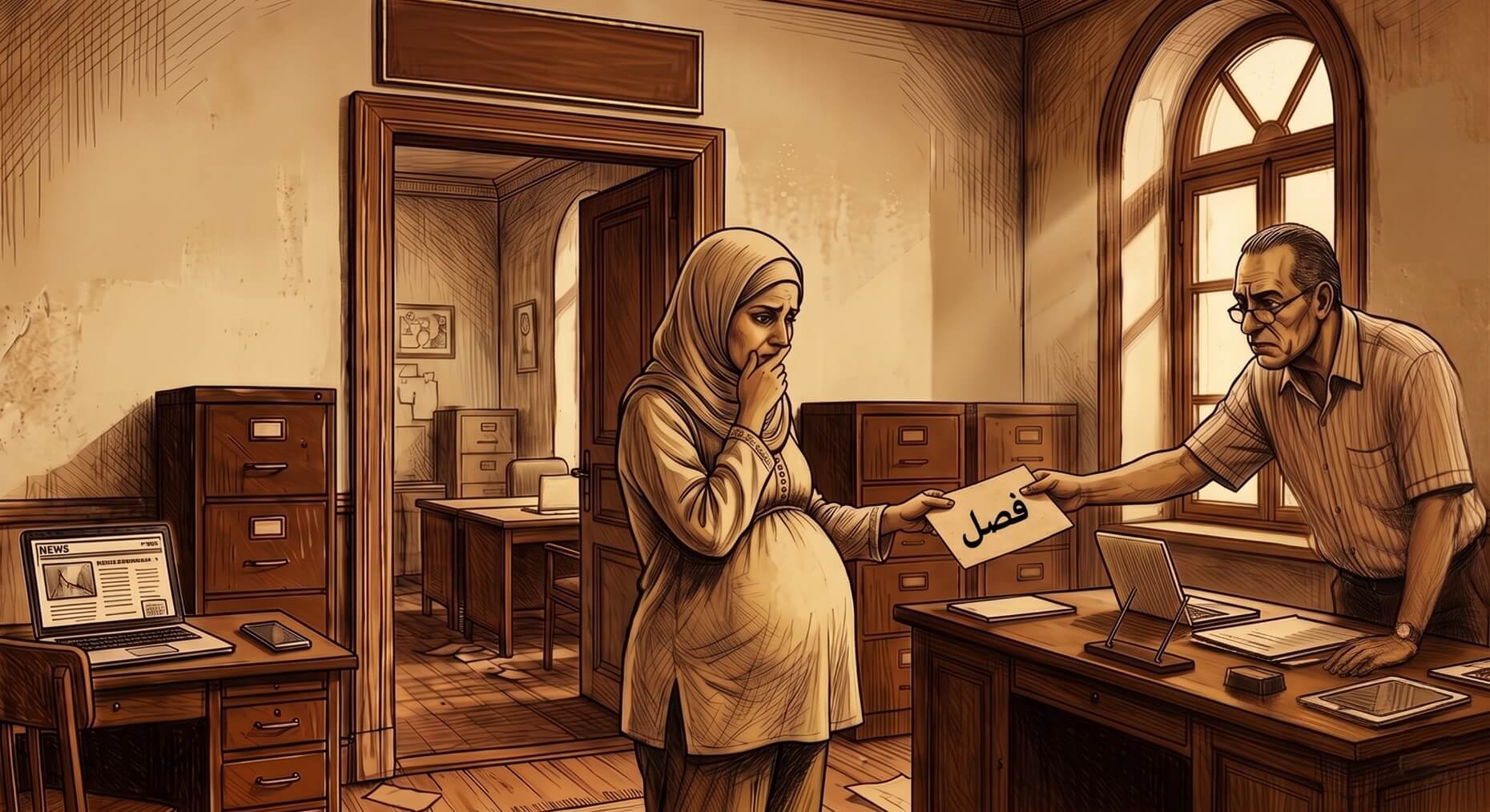
“You’ll be no good to us, because you’re pregnant. Already
you’re tired, and once you’ve had the baby you’re not going to
be able to cope with the work … you’ll just keep taking time
off.”
This was what the former chairman of Al-Watan told Dina Abdel
Khalek, a journalist who work on the paper for nine years before
she was unfairly dismissed in 2023 for becoming pregnant. Her
experience is far from unique. It is one of dozens of similar
stories told by journalists working in the private sector in
Egypt.
Mapping Exploitation
For this investigation, I carried out a survey of 152 journalists
in private media organizations across various governorates, almost
evenly divided between men and women (49.3 percent female and 50.7
percent male).
The predominant age group in the study (57.2 percent) was 25–35,
followed by 28.9 percent in the 36–45 age range. This shows that
the problem affects mainly the most active generation of
journalists.
Multiple Jobs: Most journalists are forced to work for more than
one organisation to make ends meet, which affects the quality and
independence of their output.
A significant proportion work at multiple locations
Loopholes in the Legal Framework
Article 16 of the Press and Media Regulation Act No.180 of 2018
prohibits the dismissal of any journalist without an investigation
and without the notification of the syndicate they belong to being
notified of the reason for the dismissal. There must then be a
period of sixty days from the date of notification to allow for
reconciliation between the parties. But what happens in practice
is totally different.
Text of Article 16
“A journalist or media professional may not be dismissed from
their job until after they have been investigated, the
appropriate syndicate has been notified of the grounds for
dismissal, and sixty days have elapsed from the date of such a
notification, during which time the syndicate shall attempt to
reconcile the parties. If the syndicate exhausts the
reconciliation phase without success, the provisions of the
Labour Law regarding the dismissal of an employee shall apply.
His salary or allowances may not be suspended during the
reconciliation period.”
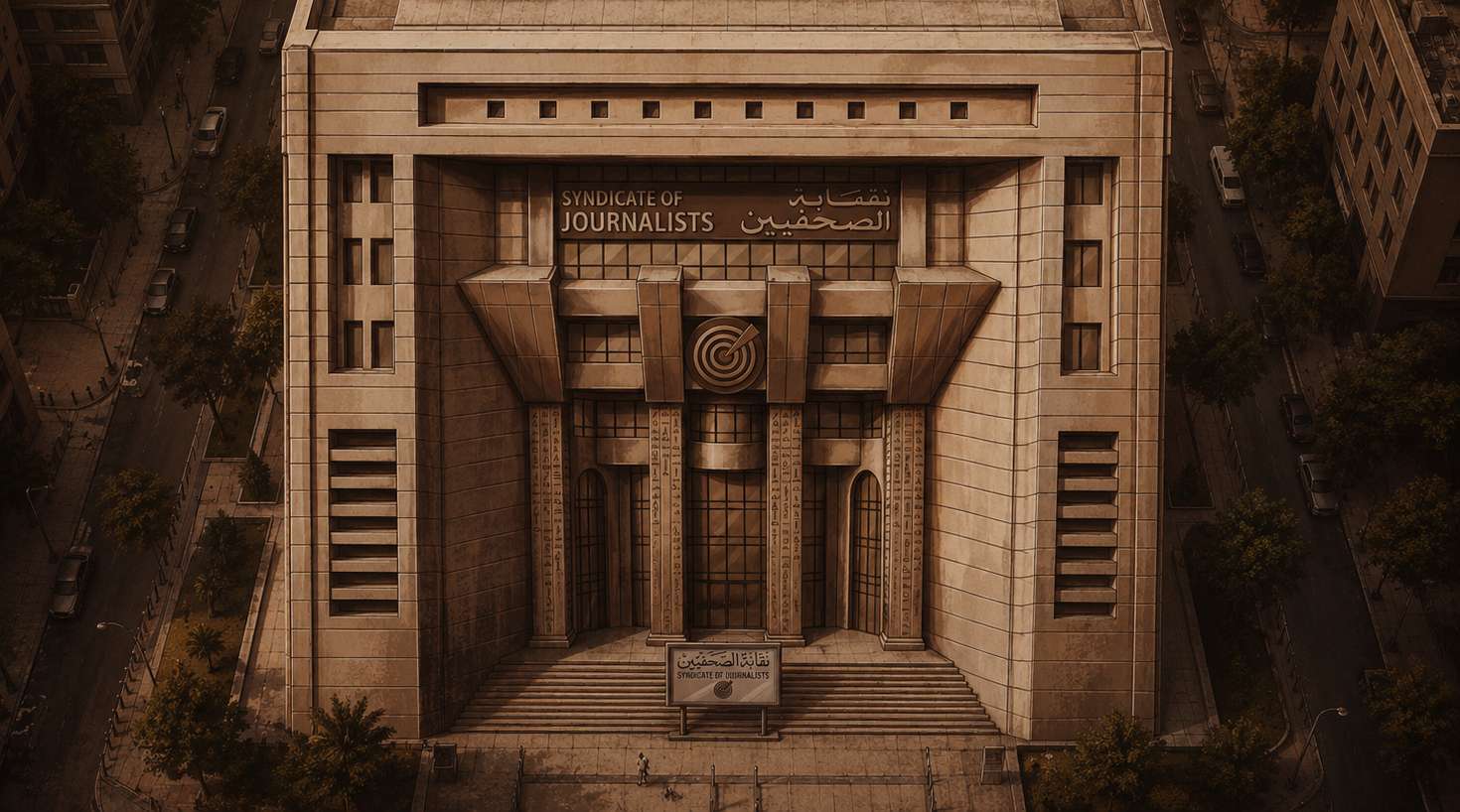
The problem extends beyond unfair dismissal. Article 6 of the
Journalists’ Syndicate Law No. 76 of 1970, which sets out the
criteria for membership, requires journalists to be formally
employed by a print newspaper or news agency and receive a fixed
salary. By its very nature, this requirement excludes most
journalists working in digital media, despite the fact that online
journalism now dominates the media landscape.
These requirements have led to the surprisingly common use of a
mechanism by which journalists pay for membership of the Egyptian
Journalists Syndicate through unofficial channels. This
investigation shows that the cost of doing this is between fifty
thousand and one hundred and fifty thousand pounds [US$945 -
US$2,800].
The largest percentage describes the work environment as
repellent and stressful
A Hostile Work Environment
Click on any card to read the full details
01 · Unfair dismissal | Al-Watan Newspaper
Dina Abdel-Khalek: sacked for becoming pregnant
From April 2013 to 2023... nine years of work
View details
Dina Abdel-Khalek paid the price for her pregnancy by
being unfairly dismissed from Al-Watan newspaper. She had
asked for an extension to her sick leave during the early
months of her pregnancy, when she was at risk of
miscarriage. Her doctor advised complete rest, so she
applied for unpaid leave. Even though her line manager
agreed, the management turned down her request and then
made the surprise decision to dismiss her.
“You’ll be no good to us, because you’re pregnant. Already
you’re tired, and once you’ve had the baby you’re not
going to be able to cope with the work … you’ll just keep
taking time off.”
This was not the first such incident. In 2021, her request
for a week’s leave to be with her grandmother in intensive
care was turned down. When she returned from having taken
unpaid leave, she found she had been arbitrarily moved to
“desk” duties. “This is your punishment,” she was told.
Her years of field reporting counted for nothing.
Dina took the matter to court, and, on October 31, 2024,
the North Giza Court made a preliminary ruling in her
favour. It ordered the paper to pay in full what was due
to her, plus compensation, and to grant her a certificate
of experience. The paper appealed, however, and the case
is still pending.
02 · Collective dismissal | Al-Bawaba News
Yasmine Ezzat: unenforced court ruling
worked without a contract
View details
Yasmine* Ezzat, who was unfairly dismissed along with her
colleagues at Al-Bawaba News, says that having no contract
left her vulnerable to being threatened, pressured, and
dismissed at any time.
She took her case to court, and in 2021 a final ruling was
made in her favour that confirmed she had been employed,
and awarded compensation she describes as “negligible” -
no more than 9,000 Egyptian pounds (US$365 at the time).
Despite the ruling, she has so far been unable to join the
journalists’ syndicate, even though the court acknowledged
that she had worked in the profession for three and a half
years, on top of two years when she had worked unpaid and
without a contract.
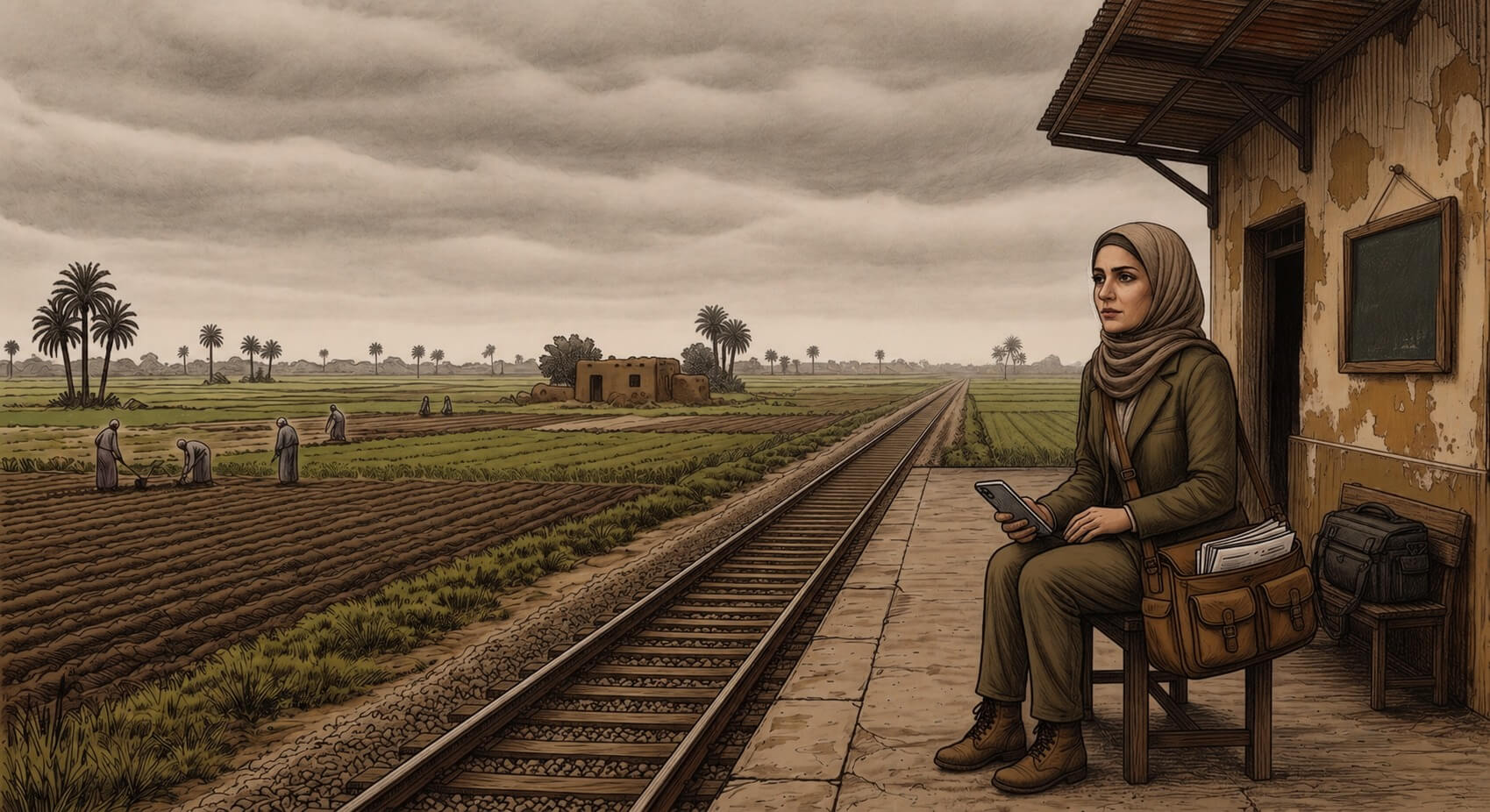
Yasmine used to travel every day to Cairo from her village
near Zagazig, spending 75 to 80 pounds a day on transport.
Her situation was made more difficult by being a young
woman in a rural community.
When we contacted the legal adviser to Al-Bawaba News,
Yahya Al-Diyasti, he denied that Yasmine had been
threatened or dismissed. He said her probationary period
had come to an end, after she had worked at the paper for
three years on a monthly salary of 1,000 Egyptian pounds
[US$19], a period confirmed by the court ruling. He
justified her and her colleagues being taken off WhatsApp
groups by citing the decision of the evaluation committee
that had ruled against them being appointed as staff. He
described this as a routine administrative procedure that
applied to everyone when their contract expired. He denied
that she had worked without pay.
Al-Diyasti said the paper was committed to implementing
the ruling to pay her 8,233 Egyptian pounds [US$151] –
6,000 pounds in compensation for terminating her training
plus 2,233 pounds in accrued leave - as soon as Yasmine
began the official legal process.
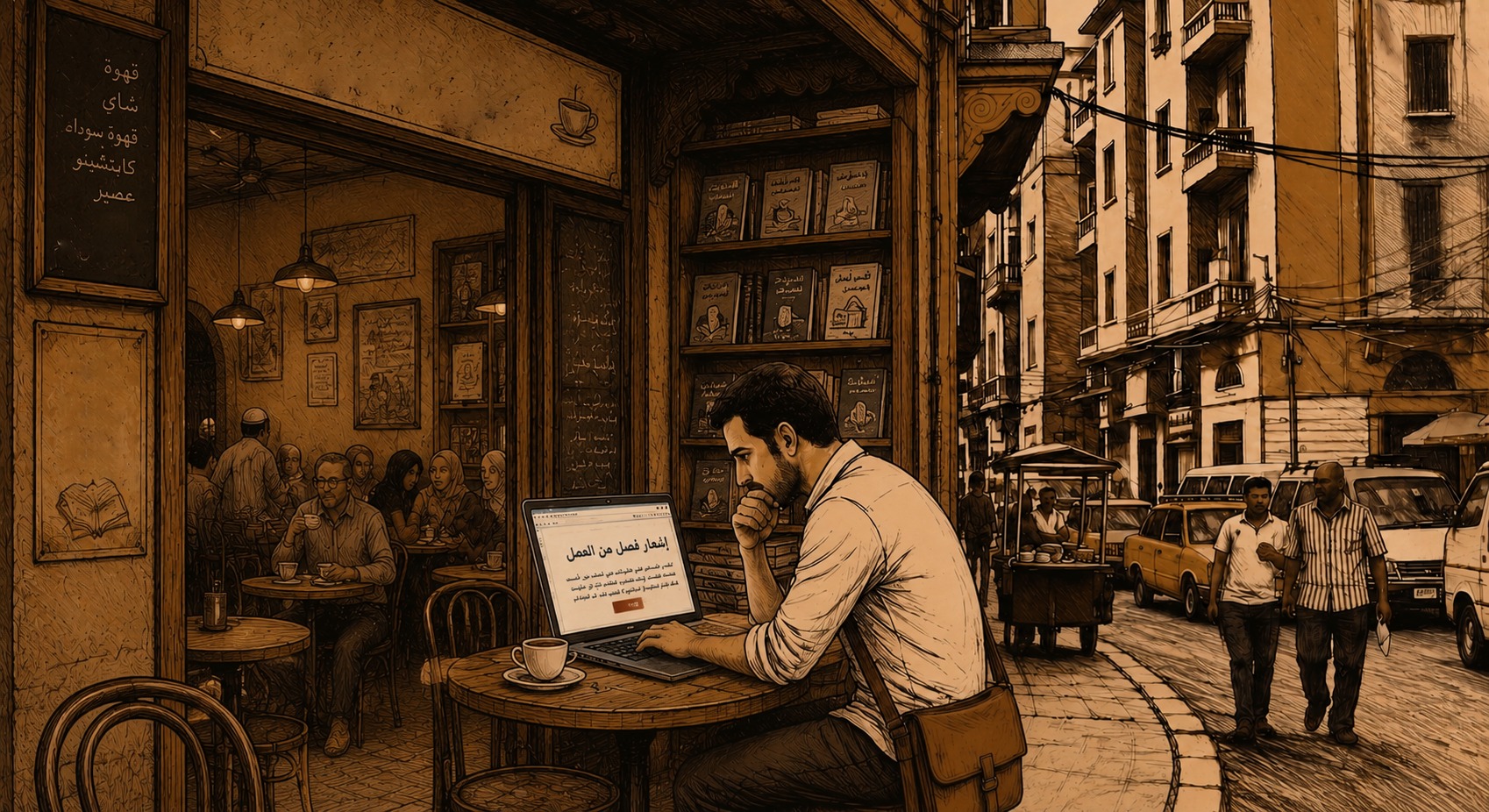
03 · The Back Door | Pseudonym
Mohamed Ahmed: losing 50,000 pounds twice
5 years of journalism in the Gulf — stuck without a
professional identity
View details
Mohamed* Ahmed came back from the Gulf about five years
ago. He returned to Egypt for a short holiday, but his
circumstances forced him to remain in Upper Egypt. He
found himself in a quandary – he had no official proof in
his home country that he worked as a journalist, because
changing his job title on his ID card required that he be
a member of the syndicate.
After much difficulty and numerous attempts to register
with the syndicate, he resorted to using the “back door”
and looked for an intermediary to help him become a
member, so that he could continue working. Three years
ago, he paid 50,000 pounds [US $945] to an editor-in-chief
who promised to secure his appointment and nominate him
for syndicate membership. But this editor-in-chief broke
his promise, and Mohamed took back the money.
“I paid 50,000 and waited a whole year, only to be back at
square one.”
In July 2024, he tried the same thing again with the
managing editor of another newspaper. He paid the same
amount up front, with a commitment to pay another 40,000
pounds after he received his membership card, but the
result was the same: broken promises and complete silence.
04 · Paid to publish | Pseudonym
Rehab Hassan: 58,000 for membership
2015 graduate — ten years on the margins of the profession
View details
In 2015, Rehab* Hassan graduated in journalism from one of
Egypt’s universities. She worked in various jobs but never
managed to obtain membership of the syndicate. Eventually
she found what she was looking for at a party-affiliated
newspaper, where she worked for around five years without
pay. In fact she had to pay them between 1,000 and 2,000
pounds [US $19-38] to have her articles published.
“I had to pay 1,000 to 2,000 pounds just to get my work
published .”
When she applied for a position, she was told she had to
pay up front. She ended up paying around 58,000 pounds
[US$1,100] in instalments, starting with 5,000. But then
she had to pay 35,000 in a lump sum. She worked in social
media to meet these costs and joined a savings scheme.
“This isn’t in line with my principles, but I had no
choice,” she says.
The allowance paid by the syndicate, which currently
stands at 4,500 Egyptian pounds (equivalent to around
US$87), was the main factor that drove Rihab to go down
this route to achieve financial security and protection
while working as a freelance journalist.
05 · Forged resignation | Pseudonym
Abeer Ibrahim: She signed her resignation without realising it
7 years of work
View details
Abeer Ibrahim signed what she thought was a formal
employment contract in 2019, after working for seven
years. But the newspaper’s legal adviser slipped a
resignation form in with the contract, which she signed
without realising. The date was left blank and later
filled in with the date as July 23, 2023.
“We were just happy, and didn’t take the opportunity to
read it; we just went ahead and signed.”
Abeer explains that the collective contracts were
introduced in response to the Egyptian Journalists
Syndicate requiring formal contracts for accreditation:
“They were forced to take us on.” But being employed came
at a price; her monthly salary of 500 pounds [US$10] was
stopped, but she still had to pay for professional
indemnity.
She only found out what had happened when the paper
obtained official accreditation in 2023 and dispensed with
its old staff. New staff had to pay between 80,000 and
100,000 Egyptian pounds [US$1,500 - 1,900] for an official
contract. She pointed out that in some places the costs
reached 150,000 pounds [US$2,800].
06 · "Imposter" Editor-in-Chief | Pseudonym
Omar Hassan: 14 years in journalism and outside the law
An editor-in-chief who cannot write his name on the masthead
View details
After fourteen years in journalism, Omar* Hassan found
himself forced to use the “back door” (unofficial
channels) to obtain the status of a “card-carrying
journalist.” He had initially refused to do this, but his
hand was forced by becoming editor-in-chief. As such, he
would have been unable to put his name on paper’s online
masthead, as in the eyes of the law he would be considered
an “imposter” in the profession.
“I was editor-in-chief, yet in the eyes of the state I was
an imposter; I said I had no problem paying.”
His colleagues in editing and social media were,
meanwhile, members of the syndicate. A friend intervened
on his behalf with a former party leader. And thanks to
his family’s connection to the founders of the party, the
paper agreed to appoint Omar without pay, on condition he
paid his own social security contributions. He joined the
syndicate in 2023 and still pays his own social security
contributions.
“The law needs to be changed, but the syndicate general
assembly is fearful of what a new law from parliament would
mean. We’re constantly haunted by this fear and we must get
over it. The syndicate got in touch with all the newspapers
and is ready to fight for the minimum wage alongside others.
Everyone in Egypt knows that syndicate membership has become a
commodity and that the system is deeply distorted, yet few
journalists are willing to speak about it openly. As a result,
there is little evidence on which to base legal action or a
formal investigation. Efforts to substantiate these widely
held suspicions have repeatedly failed, largely because all
parties involved benefit, in one way or another, from
maintaining the status quo.”
“We asked some of our colleagues to file an official
complaint, but they were too scared. Despite this, we managed
to suspend the registration of several problematic newspapers
published by political parties.”
“We introduced conditions into the new regulations on
registration to tackle this issue. And they require newspapers
to do the following: give the syndicate the names of trainees
every six months, and make sure no other names are registered;
pay the national minimum wage in line with the date a contract
is signed; bring everyone into the financial system; and pay
salaries only through a bank account. This is to stop unfair
dismissals, which can only be made through the courts.”
“When we proposed these conditions, they sparked significant
opposition. The General Assembly refused to approve and adopt
them, while individuals with vested interests in the syndicate
membership system mobilized others to speak on their behalf.
Nevertheless, if these provisions are not incorporated into
the regulations, they will be submitted to the council as
formal resolutions in an effort to resolve the issue once and
for all.”
“There are professional journalists who can’t find work,
because it’s a closed shop. And they go off to find newspapers
that will sell them a syndicate membership. So it’s essential
that we have other ways one can get genuine syndicate
membership which are properly controlled, like allowing
membership via websites.This idea though caused an outcry.”
“The Egyptian press, as an industry and a profession, is
fraught with problems and structural flaws as a result of one
single entity monopolising 75–80 percent of the media
landscape. The state is most to blame, as it treats the press
as a marketing tool rather than an independent profession.”
“Having a minimum wage of six or seven thousand pounds
[US$113-132] is absurd. Private institutions operate on the
basis that ‘no one can force me to comply’. We need radical
change to laws governing the press: Law 180 of 2018 and the
Press Syndicate Law 76 of 1970.”
“Allowances paid by the syndicate are one of the disastrous
things that have meant it no longer includes only those
working in the profession, but anyone looking for a job with a
proper salary. The law as it stands doesn’t allow an
award-winning journalist working for one the most prominent
outlets to get registered, but it allows a newspaper that
complies with the law of syndicates and puts out just a
handful of issues a year.”
“We have secured court rulings awarding journalists more than
400,000 Egyptian pounds (approximately US$7,500) in
compensation. However, enforcing these judgments often proves
to be a lengthy process. Most media organizations delay
compliance, and only a small minority comply voluntarily.
While we pursue enforcement through the legal channels
available to us, organizations can evade accountability by
relocating their headquarters or stripping their assets of
value.”
“Exploitation of journalists is clearly taking place, and the
press law is complicit in this. Media proprietors give a
percentage of advertising revenue to the syndicate and get
their staff to vote in syndicate elections. This creates a
mutually beneficial relationship that stops the syndicate from
standing up for journalists’ rights.”
For three years, Dina has been waiting for a final ruling in her
case. She still hopes to recover some of her rights and finally
clear her name after nine years at work that ended in her
dismissal. Yasmin Ezzat dreams of the day she can finally join the
syndicate for journalists and stop being seen as an ”imposter”.
But these two cases are not exceptions. They are a microcosm of
what dozens of journalists in the private sector endure: working
without a contract or insurance, earning low salaries, and living
under the constant threat of arbitrary dismissal, all while the
doors of the syndicate remain firmly closed to them. The entire
system, including the law, the syndicate, and media proprietors,
ultimately produces journalists with broken wings. They pay twice
for speaking out: once for doing their job, and again for
insisting on their rights.
Without a change in the laws governing the profession and
effective mechanisms of oversight and accountability - and unless
the syndicate changes from being an electoral tool into an
institution giving real protection - security in this profession
just a dream for all those who choose to speak up.
This investigation was produced with support from ARIJ.
The images were created using AI
* Names changed at the request of the individuals concerned.
This investigation was published in Arabic on the following: