Morocco
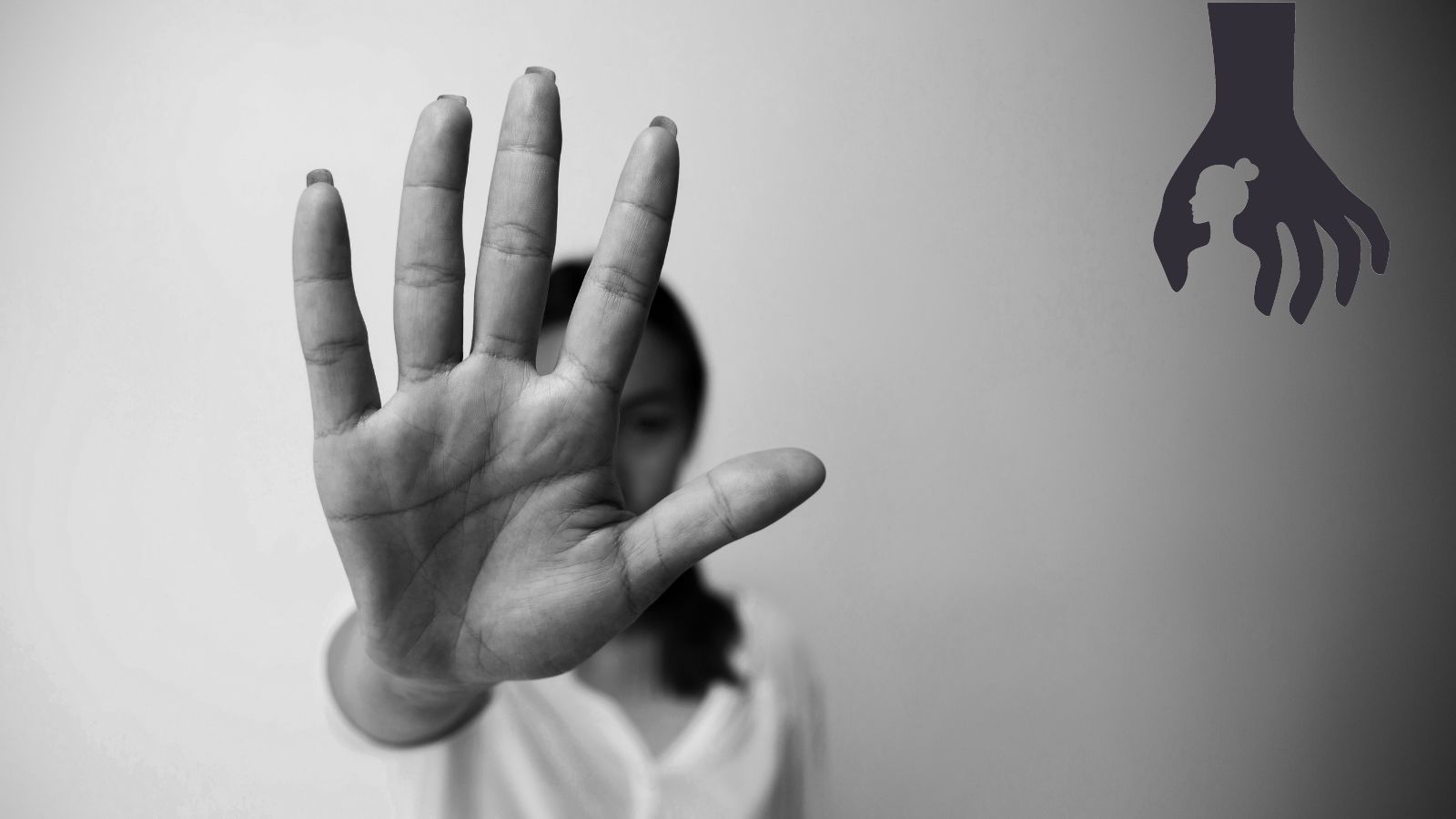
 “In 2019, my life changed as it marked my first year in journalism. I chose this field because I love it passionately. Unfortunately, my joy was cut short because I was harassed by my boss in the early steps I made in this field. I did not at all expect this kind of behaviour from a professional person like him. When I remember that moment, I feel helpless, as the incident has affected me greatly.”
Twenty-four-year-old journalist Shaimaa (a pseudonym) preferred to hold on to her anonymity as she recounted her bitter experience.
“One day, I had to stay behind to do few extra work hours as usual, immersing myself in my writing to meet a deadline. For hours I did not feel anyone’s presence in the office, until I felt the strange sensation of fingers placed on my shoulder. My heart raced when I heard my director’s voice saying, “You look tired, would you like a massage?” I stepped away immediately and yelled at him, and my reaction made him leave, with anger written all over his face. Since then, I have been treated like an outcast at my workplace, and he would often look at me suspiciously as though I were guilty. I no longer felt comfortable working there and decided to resign because my psychological wellbeing deteriorated. I felt great sadness and depression to the point that I could not start another job for a long time.”
Shaimaa did not reveal her secret to her family or friends for fear of creating a scandal, but her silence added to her psychological stress. She lived in a state of panic for a long time despite distancing herself from that company, especially after she started suddenly to receive strange messages on her Facebook page.
“I started receiving strange messages on Facebook in which anonymous people described me in the worst of terms. I thought of reporting the matter to the electronic crimes unit at the police station, but when I remembered the power and authority of the person who harassed me, I changed my mind.”
Many Moroccan women journalists can relate to the psychological stress Shaimaa endured. Daily battles against sexual discrimination and harassment are waged by female workers at the workplace in a field whose ultimate purpose is to convey the truth. Unfortunately, the voice of some women like Shaimaa has been lost in the chaos and corruption as some people have abandoned their morals and principles.
Just like other women, Shaimaa wanted to be able to exercise her right to work in peace, which is one of the basic rights that all people of all races and colours should enjoy without encountering any form of discrimination, harassment or marginalization.
The sexual harassment that Shaimaa and a large percentage of women experience in their workplaces is a form of violence and discrimination based on gender that includes any explicit or implicit act that is sexual in nature, in any form that is not welcome or is unwanted and in a way that offends, belittles, intimidates, humiliates, threatens or frightens the person.
In our conversation with Shaimaa, she could not stop mentioning her strong desire to be simply treated as equal to men, an issue that remains an urgent demand for most Moroccan women who want to attain what their female counterparts have achieved by enjoying their full rights at all levels. The Moroccan female presence at the workplace that has been witnessed in recent years was the result of years of perseverance, and women in media were no exception either. In 2021, 953 out of 3394 working female journalists have obtained their professional journalism accreditation cards, granted annually by the Ministry of Communication in Morocco. According to the Moroccan National Press Council, this is a high number that has not been recorded previously. For decades, the media sector was limited to men only, but that did not prevent women from becoming part of that industry too, due to their talent and perseverance in a field that has for years been considered dangerous due to some topics covered, and the high volume of travel involved.
It is worth remembering that the number of women who hold senior positions in media organizations remains low, due to gender discrimination as explained by Ibrahim Al-Shaabi, head of the National Council for Media and Human Rights in Morocco. In his interview, Al-Shaabi highlighted the gravity of the sexual harassment phenomenon, which is increasing dramatically all over the world. This prompted many human rights organizations and international bodies to file reports that confirm the excessive rise in this phenomenon and how to deal with it.
He added that this disgraceful practice haunts women working in media at their workplaces and that these issues are not new, as women have suffered sexual harassment for many decades but remained silent for fear of being judged by society and to preserve their privacy and jobs. Al-Shaabi added that women journalists do not only experience sexual harassment in their workplaces but also outside it and even at home. The rate of this disgraceful practice in the virtual world is even higher than in real life, as some women face psychological terror due to verbal abuse and harassment on daily basis and in various shapes and forms that makes efforts to curb them near impossible.
Malakah Iyyad, a researcher in sociology, believes that Moroccan female media professionals have been able to distinguish themselves in this field despite the patriarchal social structure controlling the field, wherein a high percentage of men believe that they can flirt with women who work with them. Their treatment of women vary but all could be classified as “sexual harassment” without seeming to realise the gravity of their deeds.
The researcher in sociology, asserts also that these practices are best reflected through how some female media professionals are selected for their appearances rather than their competencies. All these negative points must be overcome in order to improve the status of Moroccan women media professionals and to provide them with a healthy environment that is suitable for work and innovation.
According to experts and psychologists, the severe psychological trauma that occurs as a result of a sudden and painful accident has serious effects on the body and soul, especially in the case of unreported abuses that cause dysfunction. If such traumatic events are left untreated, the memories associated with them remain intense and engraved in the brain and manifest in the indviduals at moments of vulnerability. Victims remain silent about these incidents for many reasons, the most common of which is a sense of shame and embarrassment. The fear of shame, especially in conservative societies, ranks first since some women blame themselves and feel responsible for what has happened to them. Additionally, the lack of self-esteem by victims of sexual harassment sometimes makes it difficult for them to appreciate their bodies or their safety, to the extent that they do not consider what happened to them as serious or of high significance. Moreover, sexual violations often distort the personal image of victims and rattle their self-confidence, making them feel helpless and frustrated.
Shaimaa and many victims of sexual harassment usually find it difficult to prove the crime committed against them. In most cases, the harasser chooses the scene of his crime meticulously by approaching his victim in a closed place that is clear of witnesses and surveillance cameras. This makes the task of proving the crime of harassment hard for the victim.
From a legal perspective, it is not easy to verify that this disgraceful act has occurred, as evidence has to be provided to show that the perpetrator used certain means, such as issuing orders, threats, coercion or exerting pressure with the aim of forcing the victim to respond to his desires. Additionally, the evidence must be presented verbally and in the presence of all parties concerned during the trial, and this makes some victims refrain from reporting the incident so that it could take its legal course. The doctorate degree thesis “The Crime of Sexual Harassment from the Perspective of Moroccan Criminal Law” by Dr. Ikram Moukhtari, a criminal law and forensic science expert, explains that criminal sentencing is based on certainty, definitiveness and on the judge’s full conviction that a crime took place through a valid and legitimate proof.
The crime of sexual harassment was only included in the provisions of the law criminalizing violations of honour, in general, after the amendment of the criminal law as per Law No. (24.03) on changing and supplementing criminal laws. Moroccan legislation followed the global legislation by including a supplementary text in criminal laws for the first time stipulating that sexual harassment shall be punished. The new addition states that “A penalty of imprisonment from one to three years and a fine of 5,000 ($500) to 50,000 Moroccan Dirhams ($5000) shall be imposed for the crime of sexual harassment and against every person who uses orders, threats, means of coercion, or any other means against others by exploiting his position of authority for sexual purposes.”
Shaimaa’s case falls under the category of sexual harassment at the workplace, and Moroccan legislation addresses this through Article (40) of the Labour Code, which classifies sexual harassment among the grave mistakes committed by the employer or direct manager against the employee, and may lead to the right in compensation for being dismissed.
Shaimaa and many women have chosen to remain silent about their mistreatment, but others raised their voices and decided to put an end to their misery for which they are not to blame.
Twenty-eight-year-old photographer and editing technician in a production company Narjes recounts her story with workplace harassment: “I was in charge of the recording camera during a press interview with the director of a company, when I was verbally harassed by that director while my journalist colleague was witnessing what was going on. After completing the recording, and as I left the company, the same director chased after me requesting I give him my telephone number. I yelled at him and told him that I would inform the police of what happened. He did not care for my words and criticized my clothes and described me in obscene words. He did not stop at that, and he went on to complain to my manager and told him that I had harassed him. My director did not believe him and interviewed me to hear my side of the story. He emailed the company to report the incident and stopped working with it altogether.”
Unlike the case of Shaimaa, Narjes received great support from her manager who did not condone the harassment and abuse she experienced. This turned into one of several sexual violation cases that developed into public opinion cases and created a great controversy in Moroccan society.
Al-Shaabi assures us that, in general, Moroccan media institutions condemn these immoral acts, but each institution deals with them in a different way. Some institutions have committees to follow up on these types of problems, and have rules, procedures and signed commitments by employees to observe those rules to avoid the occurrence of any kind of harassment or discrimination in the work environment. However, it is not always possible to rely on these committees because they are often under the direction of the publishing director or editor-in-chief; therefore, such cases are rarely published, especially if media officials are behind the disgraceful act.
Sexual harassment is a global humanitarian issue which women endure to a great extent, in their workplaces. The risk in the context of media lies in the exacerbation of this disgraceful act, as often women are subjected to injustice besides the inability to express themselves as they hide deep pain behind their smiles. The difficulty of proving guilt and the fear of societies that easily blame women corners many harassment victims into silence for a long time.
Shaimaa has put on a mask and talked about her pain to free herself, even if by a little, from the guilty conscience that nagged her for years. Her case is only part of a long, endless story of oppressed voices, some of the heroines revolted while others were imprisoned in the dark pits of injustice. Other stories were buried along with the women while others still struggle with the hope of exterminating this social illness or developing means to avoid it.