Importing Poison:
Banned European Pesticides Exported to Arab Countries

Firas Taweel and Mahmoud Elsobky

29 Oct 2024
Firas Taweel and Mahmoud Elsobky
29 Oct 2024
The report highlights the continuing state of chaos in the pesticide market in the West Bank, accompanied by a lack of oversight and lax licensing of pesticides which are banned for use in European countries.
The ARIJ Investigation reveals continued disarray in pesticide markets
across the West Bank and the Global South, uncovering the damage
caused by regulatory negligence of harmful chemicals offloaded from
Europe onto vulnerable countries.
A 2020 ARIJ investigation into malpractice in the West Bank pesticide
market has uncovered severe illegalities that have yet to be resolved
by local authorities. The Palestinian Authority continues to permit
the importation of harmful pesticides banned or restricted by the
European Union (EU).
ARIJ’s 2020 report uncovered the use of 13 different pesticides in the
West Bank between 2018-2023 which the EU has either restricted or
banned entirely, according to the European Chemicals Agency (ECHA) .
“Banning an item in Europe doesn’t imply its harmfulness locally, as
the reasons for it being prohibited there do not necessarily apply to
us here,” West Bank official sources told ARIJ. .
Pesticides officially banned in EU markets since the beginning of this
century are readily available to both small and large-scale farmers,
who neglect to inquire into their effects, in several countries across
the Global South including Palestine.t Neither the exporting or
importing countries take any precautionary measures. This raises the
question regarding why these products continue to be exported by
European pesticide companies despite causing serious diseases and
health risks.
Among pesticides banned in Europe and marketed in the West Bankis
Mancozeb. Its use was prohibited locally in 2012, but the Palestinian
Ministry of Agriculture’s Scientific Committee allowed its use again
in 2017. US-based BASF, a global leader in the chemical production of
pesticides and insecticides, and Swiss-based Agtech giant Syngenta
sell it under a variety of names including Acrobat and Ridomil Gold
MZ. The commercial fungicide can disrupt the function of human
endocrine glands by offsetting hormonal balance, according to a report
by The European Food Safety Authority, leading to itsre-banning in
Europe in 2020. Despite scientific evidence that Mancozeb can impair
both male and female reproductive function, it continues to be sold as
a fungicide in the West Bank for use against potato and tomato blight.
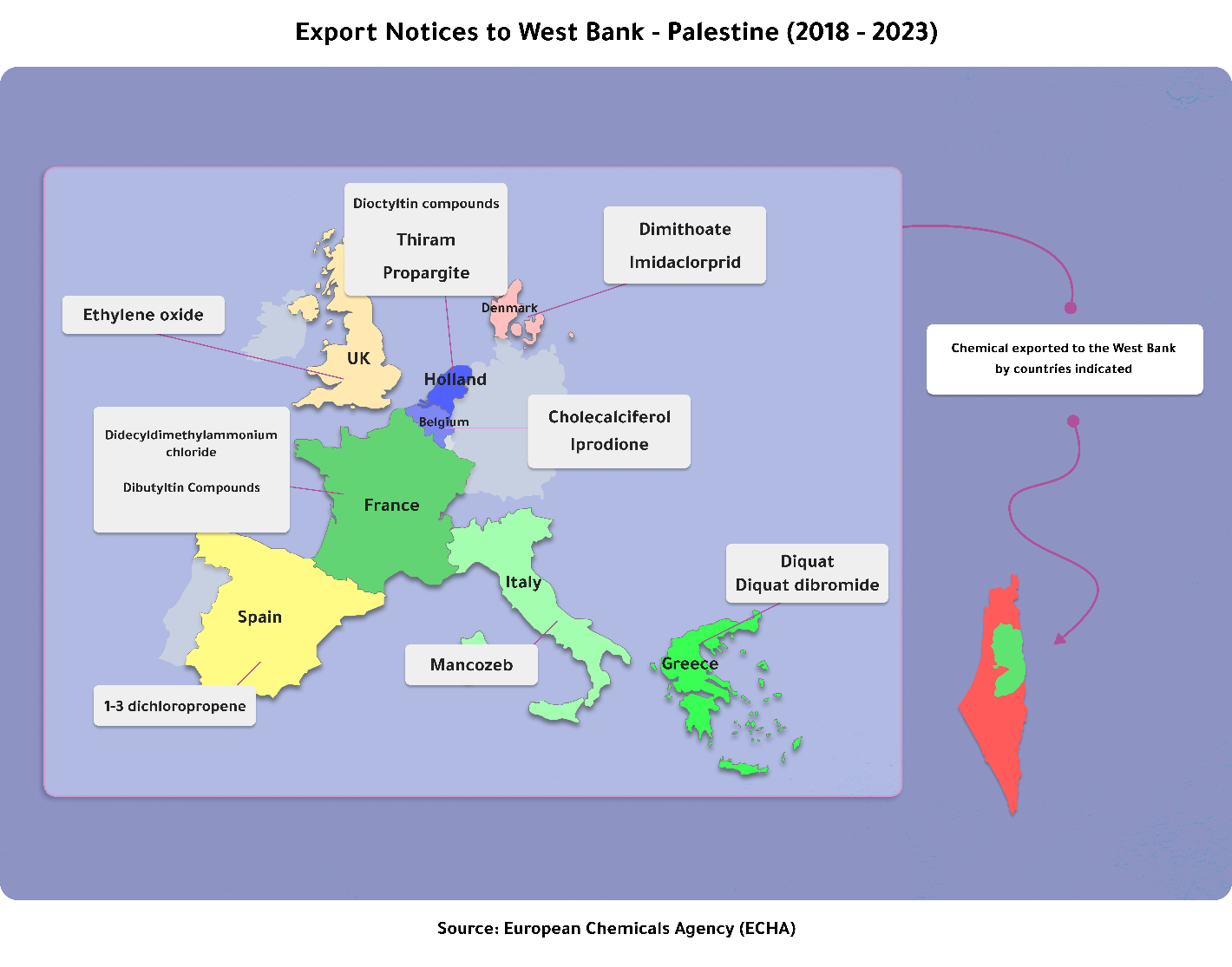
The same applies to imidacloprid, a systemic insecticide that targets the central nervous system of insects, causing paralysis by binding to the receptors of their nerve cells and killing them within hours. . However, plants also absorb these agrochemicals, which is one of the reasons that multiple scientific studies have documented a decline in the number of environmentally-crucial pollinators such as bees. Consequently, European markets banned imidacloprid, and yet it continues to be sold and utilised in the West Bank under brand names like Confidor, as a revolutionary solution to termites, aphids and other insects that attack tomatoes, avocados, mangos, oranges and other crops.
The West Bank imported 2.9 million litres of agricultural pesticides between 2021 and August 2023, according to the Ministry of Agriculture. The value of pesticide imports in 2021 amounted to $23 million, according to the Observatory of Economic Complexity (OEC ). .
Baskut Tuncak, former UN Special Rapporteur on toxics and human
rights,, criticises what he sees as “double standards” in the export
of toxic pesticides to poor countries while banning them in rich
countries: “When some of the richest countries in the world export
these materials to low and middle- income countries, this goes beyond
hypocrisy. It is an extremely regrettable practice and a political
concession to industry. When laws are made to restrict the use of
certain materials in Europe or North America, they are drafted in such
a way to allow these materials to be made for export. You can’t use
them internally, but you can manufacture them and ship them
elsewhere.”
Laurent Gaberell, a researcher specialising in agriculture and food
affairs at the Swiss non-governmental organisation (NGO) Public Eye,
says: “This is a clear example of double standards and hypocrisy,
because, if something it too dangerous to be used in Europe, it’s too
dangerous to be used anywhere else.”
Laurent Gaberell, researcher specialising in agriculture and food affairs at the Swiss NGO Public Eye
There is no clearer evidence of this than the current situation in the
Palestinian territories, where practically no oversight exists to
empower and incentivize farmers in prioritising food safety. Director
of the Pesticides Department in the Palestinian Ministry of
Agriculture and member of the Scientific Committee, Salama Shabib,
attributes poor supervision to a lack of resources: “We are just three
employees here in the department, including me. Apart from us, there
are 14 inspectors in each directorate in the ministry…just 14 for the
entire West Bank. That’s not enough to do everything, since inspectors
are responsible for shops and plant nurseries, for issuing health
certificates, following up on committee decisions, certifying
pesticides, and a hundred other things... so supervising farmers as
well is a real problem.”
Samer Sawalha, the Ministry of Health’s representative at the
Scientific Committee responsible for approving pesticides for use in
the Palestinian territories, agrees with Shabib: “Monitoring pesticide
use needs facilities, which we don’t have much of. Nor do we have the
necessary logistical capabilities.”
Shabib said that the committee was in the process of re-evaluating
pesticide usage to reconsider whether certain prohibitions will be
required.
Sawalha said inadequate oversight can be overcome by educating farmers
and monitoring the amount of pesticide used. This, he argues, is
better than randomly banning pesticides.
Sawalha added that major pesticide companies pay millions to undergo
and publish studies on the efficacy of any pesticide they produce,
suggesting that the issue could be curtailed should farmers keep to
specific dosages.
A 2021 monitoring report by the Financial and Administrative Control
Bureau in the West Bank illustrated the differing standpoints taken by
members of the Scientific Committee, concluding that the committee was
ineffective due to a lack of procedural guidelines. The monitoring
report also noted that the committee had not cross-referenced the
pesticide guide with international research, failing to adequately
evaluate the use and spread of harmful chemicals.
During investigations in the northern Jordan Valley,known as the
“Palestinian Vegetable Basket”, ARIJ found that farmers were not
taking any preventive measures when spraying crops with pesticides,
and did not abide by the quantities recommended by manufacturers.
Uncontrolled use of pesticides in the Palestinian Jordan Valley
Determining which agricultural pesticides are permitted to be used and how they are used.
Evaluating agricultural pesticides found in the Palestinian areas and re-registering them.
Putting in place a mechanism to monitor and control the quality of agricultural pesticides in circulation.
Looking into any issues presented to it by the relevant authorities and issuing guidelines on them.
Public health, and agricultural and environmental safety are put at risk by weak guidance and loose regulations on pesticide usage, with protocols only implemented in select areas as opposed to all governorates.
The European Parliament's regulation on the marketing of pesticides
(EC 1107/2009) is one of the strictest legislations globally. However,
Laurent Gaberell says it only covers the use of these pesticides in
Europe and not their exportation to other countries and regions. This,
he says, enables companies to continue manufacturing harmful
pesticides for export to countries that still allow their use,
including those in North Africa.
In the abovementioned report by Baskut Tuncak, former UN Special
Rapporteur on toxics and human rights, Tunack joined 35 other experts
on the UN Human Rights Council to underscore the need to stop wealthy
countries from offloading their banned toxic chemicals to poor
countries with lenient legislations.
“The European Union continues to export toxic pesticides and
industrial chemicals, and in low- and middle-income countries this is
leading to widespread violations of the human right to life, dignity
and freedom from cruel, inhumane and degrading treatment,” stated
Tunack in his report.
Anja Hazenkamp, Vice-Chair of the Committee on Environment, Public Health and Food Safety of the European Parliament
According to a World Health Organisation report there are more than a
thousand types of pesticides in use around the world to prevent food
crops being damaged or destroyed by a variety of invasive insects. Yet
each of these pesticides has different properties and produces toxic
effects to varying degrees.
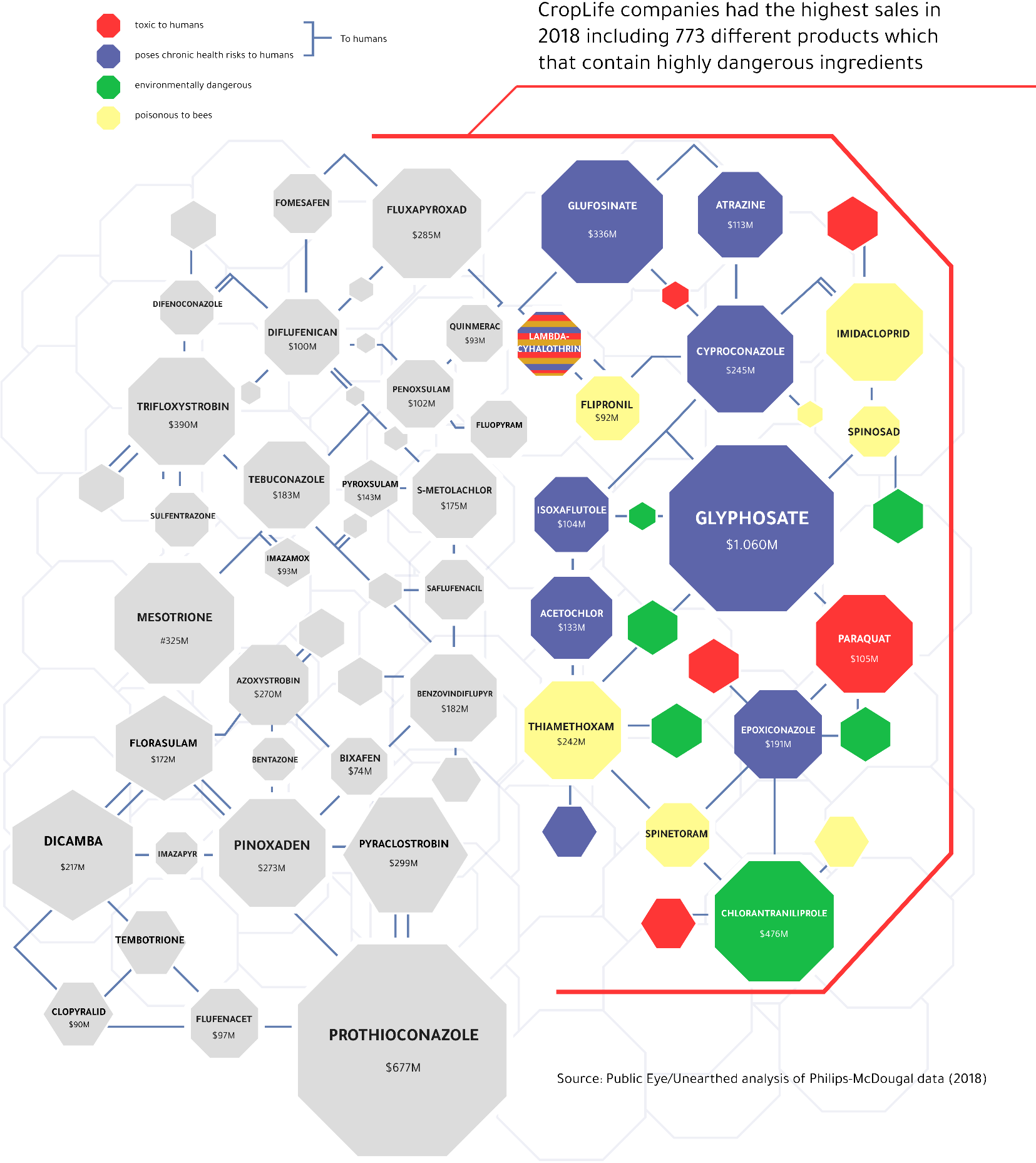
A report published by watchdog NGOs Greenpeace and Public Eye revealed
that about 82,000 tons of highly dangerous pesticides were sold
outside the EU in 2018. These pesticides had been banned in EU
countries because of “the unacceptable risks they pose to human health
and the environment.”
The report stated that the United Kingdom, Italy, the Netherlands,
Germany, France, Belgium, and Spain accounted for more than 90% of
these exports, while three quarters of the 85 countries who imported
these banned pesticides were in the low- or middle-income bracket,
where toxic materials are permitted despite risks.
Upon contacting the EU Commission, ARIJ was told that the legislative
body was considering mechanisms to safeguard against the production
and exportation of hazardous chemicals banned within the E.
The Commission also made clear that the EU was proactively encouraging
the phasing-out of pesticides no longer approved in the EU, pushing
instead for the global use of low-risk substances and alternatives to
pesticides by launching debates on the matter on an international
level.
The Commission went on to say that imposing a ban on exports from the
EU did not mean third world countries would automatically stop using
prohibited pesticides but may continue to import them from elsewhere.
Convincing these countries not to use such pesticides was therefore
crucial.
“The objective of this (Rotterdam) Convention is to promote shared
responsibility and cooperative efforts among parties to the
international trade of certain hazardous chemicals in order to protect
human health and the environment from potential harm.”
A March 2014 legislation by the European Chemicals Agency (ECHA)
necessitates prior consent for any trade in certain hazardous
chemicals banned or severely restricted in the EU. According to the
ECHA, the legislation dictates obligations on the part of companies
seeking to export these chemicals to countries outside the EU, or to
import them into countries within the union.
The Rotterdam Convention website states that prior approved consent
(PIC) is the practical implementation of the convention within the EU,
and promotes shared responsibility and cooperation in the
international trade of hazardous chemicals. It also states that PIC
protects human health and the environment by providing importing
countries with information regarding the safe storage, transportation,
application and disposal of hazardous chemicals.
Before shipping their pesticides abroad, exporters based in EU
countries must notify the national authority, which then informs the
ECHA , of the quantities involved. Export notifications are public
declarations that clarify the volume of international trade in these
banned chemicals, according to European commercial laws. .
Tuncak pointed out that the Rotterdam Convention has been weaponized
and misused as a “shield” to be used by companies and states. He says
that the convention has failed to work as it was supposed to for the
last 15 years.
Baskut Tuncak, former UN rapporteur on human rights, hazardous substances and waste
When Palestine and other importing countries make decisions on whether
to illegalize or import pesticides banned in Europe, they often opt to
allow them in due to different standards between exporting and
importing countries. Duaa Abdullah, a member of the Scientific
Committee, suggests: “Under the Rotterdam Convention, I recently
received entry notices for ten pesticides registered in Palestine.”
She adds that these pesticides are currently being assessed and
decisions on them are pending.
On the question of allowing pesticides into the West Bank that have
been banned in Europe, Abdullah says: “Not every pesticide banned in
Europe is necessarily banned here, since health and environmental
standards are different... Do we have an alternative? Over there, they
have bee farms, water resources, and the sea.”
Sawalha agrees with Abdullah on the difference in standards between
Europe and Palestine: “There are many pesticides banned in Europe for
reasons that don’t apply to us and which don’t worry me... They are
banned there because they affect the water and aquatic life. We don’t
have lakes, rivers and streams here, so why should I ban them? In the
West Bank there is no sea, no fish for me to be concerned about.”
But Palestinian agricultural engineer Saad Dagher, a specialist in
environmental agriculture, calls such justifications “hollow” and is
taken aback by the claim that these chemicals are banned in Europe
because the climate there is different: “It’s a weird but intriguing
idea that our climate should make these pesticides less hazardous to
health and the environment than the climate of Europe".
One to three agricultural workers worldwide suffer from acute pesticide poisoning, and adolescents are most often the victims, according to the 2004 Pesticide Poisoning in Children report from the United Nations Environment Programme.
In May 2020, the EU launched its “Farm to Fork” (F2F) strategy, a
commitment to promoting a global transition to sustainable food
systems within its borders and abroad. The main aim was to maintain
healthy food for EU citizens without consideration of continued
exportation of banned pesticides to poorer countries.
However, pesticide companies work through CropLife International ) to
lobby against restrictions of their products. . Laurent Gaberell, the
researcher specialising in agricultural and food affairs, says: “They
rely on studies submitted and funded by these global companies, which
have no interest in revealing harmful side effects of pesticides. That
is also the reason behind the continued presence of various toxic
pesticides within the European market.
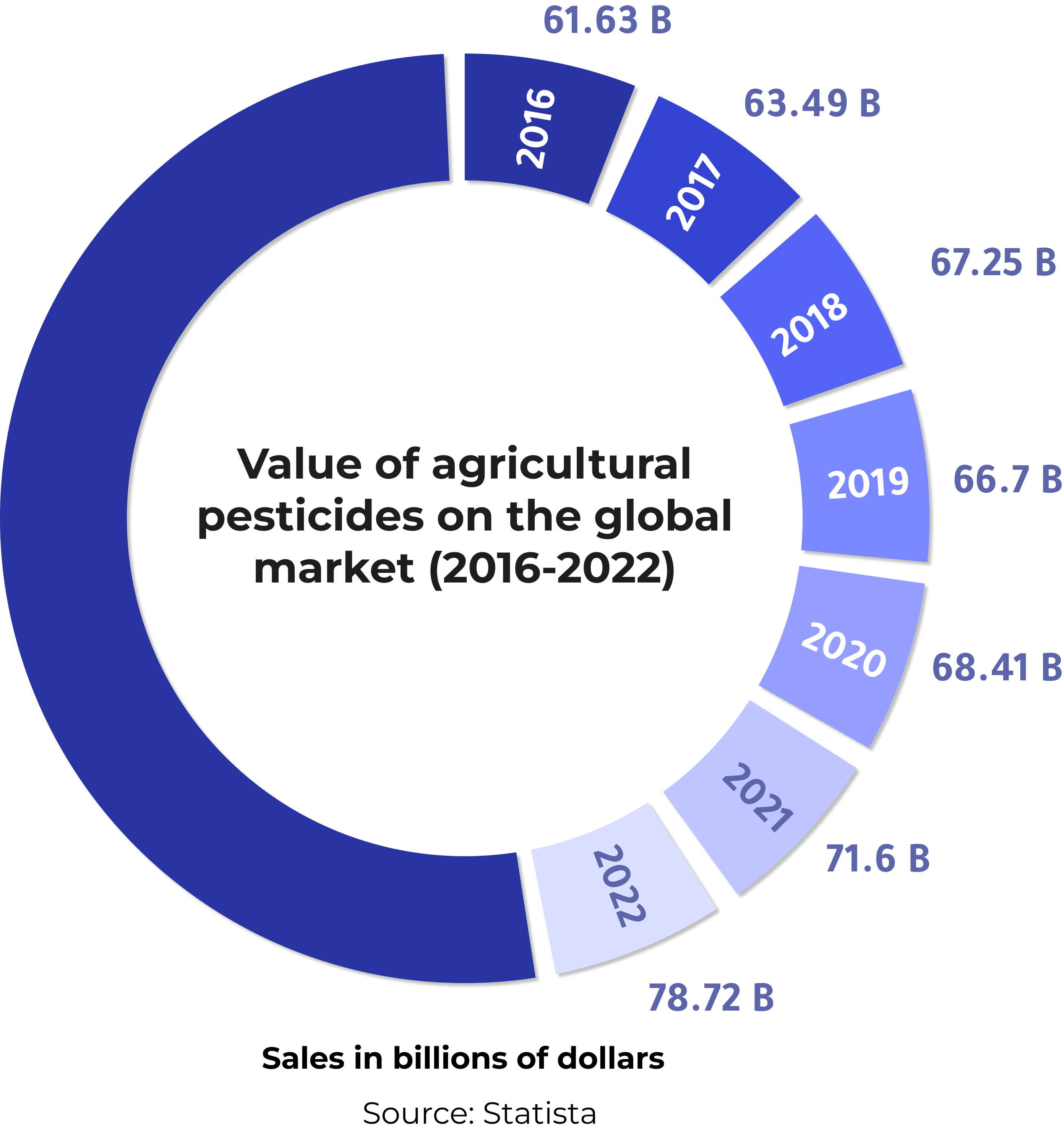
Agrochemical giants Bayer, BASF, Corteva, Syngenta and FMC are among
the largest pesticide producers across the world. Despite being in
competition with each other, these companies are collaborating to
intensify their lobbying efforts.
Tunack says these companies have the means to exert pressure: “It is a
powerful lobby group… no doubt about that. As a result the
agrochemical industry has become incredibly profitable and powerful.”
Michèle Rivasi, member of the European Parliament (MEP) for the French
Green Party (EFA), says that the pesticide lobby is circumventing the
law and manufacturing its products outside Europe to sell them to
countries outside the EU: “There are always these devious methods used
by the pesticide lobby. They say, “It’s not us, it’s the governments
of these (importing) countries that approve the use of banned
pesticides.”
Michèle Rivasi – Member of European Parliament for the French Green Party
According to Gaberell, the pesticide lobby deflects blame by arguing that banning certain pesticides would exacerbate unemployment in Europe and destroy the European chemical industry, which is already struggling in a tense international economy. . Pesticide producers continue to claim that now is not the right time to put new obstacles in the way of the chemical industry in Europe.
CropLife International is a tool used by patrons of the pesticide
industry to “wash their hands of the effects of their environmental
and health toxins.” (may I ask why this is in quotes please and who is
the source that said it?) A quick glance at CropLife’s board of
directors reveals that its chairman is the president of BASF while its
members include CEOs of FMC, Syngenta and Corteva, a board member of
Bayer and the head of its Crop Sciences Division, and the executive
and administrative officer of Japanese agrotech company Sumitomo
Chemical.
A CropLife International report argues that highly dangerous
pesticides should not be taken completely off the market. “Regardless
of the harmful effects of these pesticides, they exist and are in use
because they are an important tool to reduce crop losses and to
support farmers’ livelihoods,” the report states.
The report recommends the use of these pesticides when there is no
viable alternative. Without them, the report argues that farmers would
be limited from producing adequate quantities of food for a growing
population and from making enough income to support their families.
Tunak says such claims are manipulative tactics of intimidation.
CropLife International denies being a source of highly dangerous
pesticides in developing countries: “It must be recognized that most
of the highly dangerous pesticides in the developing world are
produced and sold by companies that are not members of CropLife
International, ” it states on its website.
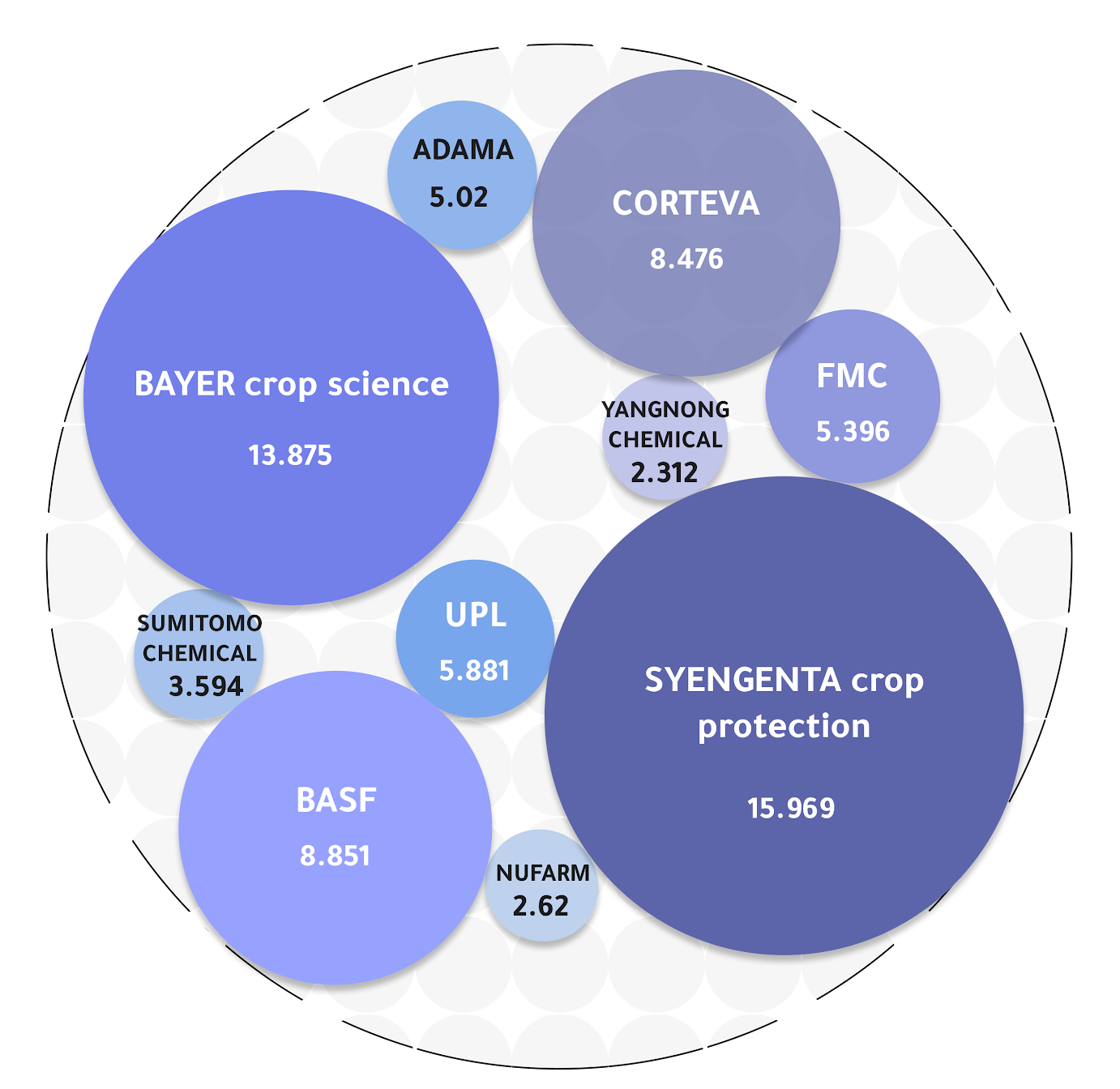
Gaberell responds by saying: “We managed to establish years ago that
they (CropLife) are making a lot of money by selling these banned
dangerous pesticides. And we estimate that they derive between 25 to
40 percent of their sales from so-called high-risk pesticides.”
We contacted CropLife for comment on the accusations made against it.
But, as of the date of publication of this report, we have received no
response.
Tunack calls on the need for political will: “If there is a solution
to the problem of the lucrative trade in hazardous pesticides, it will
be a political one.”
Gaberell sees the EU as principally responsible due to it supplying
markets around the world with pesticides already proven as hamrful.
French Green Party MEP Michèle Rivasi, meanwhile, says that Europe
should be concerned about people's health, whether they are inside or
outside Europe, without employing double standards.
On the Palestinian side, Samer Sawalha, believes that the solution
lies in only importing pesticides from countries that have a developed
registration system, selecting the most effective and least harmful
pesticides, and focusing on raising awareness among farmers through
the Palestinian Ministry of Agriculture.
Meanwhile, Salama Shabib, irector of the Pesticides Department at the
Ministry of Agriculture, says that the Scientific Committee is in the
process of drafting a new guide to pesticides permitted for use in the
Palestinian territories. This is part of a new mechanism that will
require importing companies to provide a certificate showing the
pesticide has been registered in the country of origin “so that we do
not bring in pesticides that are banned in the country where they are
made.”
Despite the danger they pose, many types of pesticides banned in
Europe are still finding their way into a number of Arab countries
under a European legal system that turns a blind eye to the export of
these toxins.
Given the failure to amend laws governing the export of dangerous
pesticides beyond Europe’s borders, pesticide companies are continuing
to make billions of dollars at the expense of the health and
environment of vulnerable populations already struggling under the
weight of numerous humanitarian, political and economic challenges. t.
Moreover, there is yet to be thorough, data-driven investigation into
the ramifications of these pesticides on these vulnerable populations.
This report was completed with support from ARIJ