
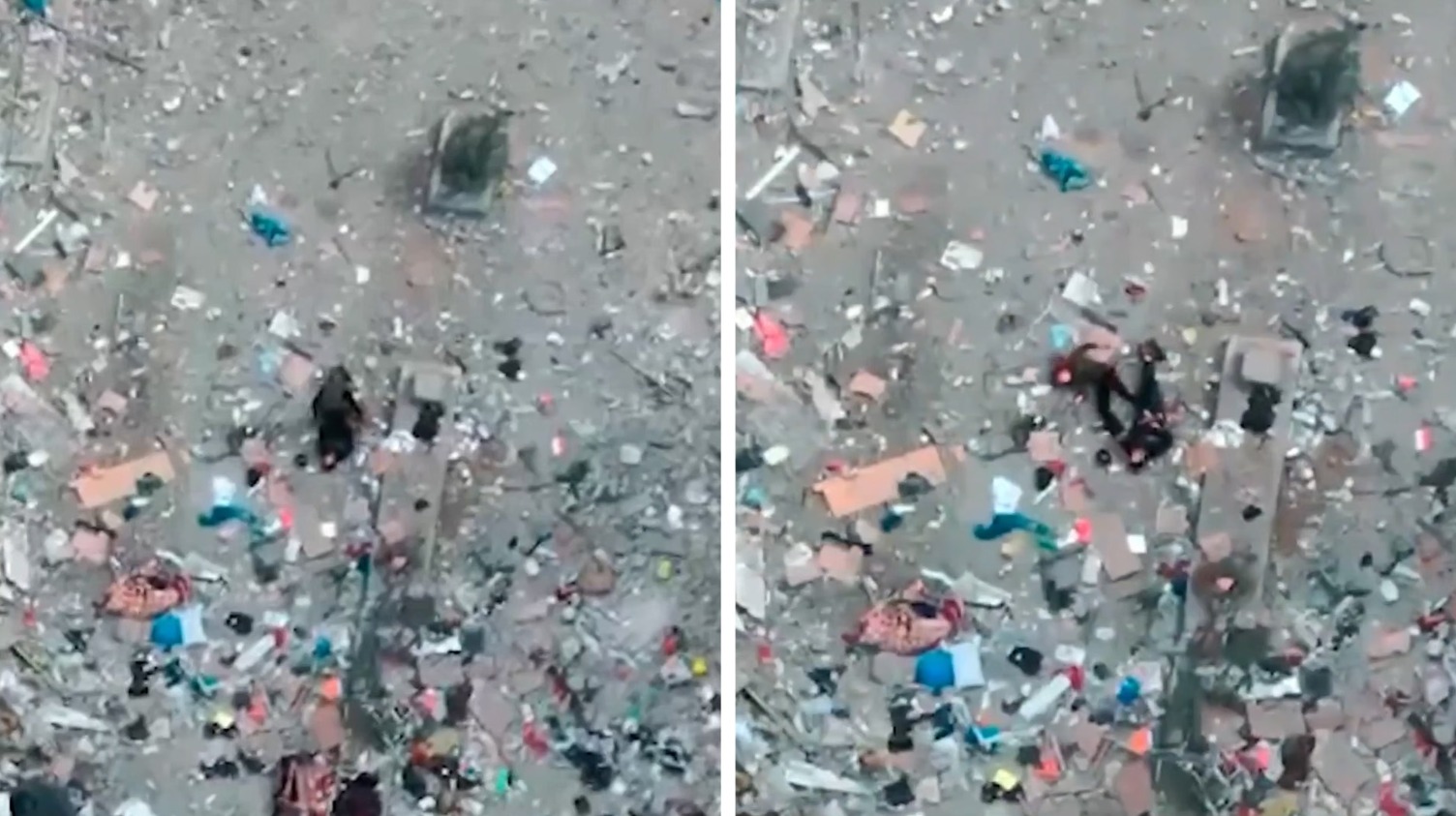
Daniel Raab shows no hesitation as he watches footage of
19-year-old Salem Doghmosh crumpling to the ground beside his
brother in a street in northern Gaza.
“That was my first elimination,” he says. The video, shot by a
drone, lasts just a few seconds. The Palestinian teenager appears
to be unarmed when he is shot in the head.
Raab, a former varsity basketball player from a Chicago suburb who
became an Israeli sniper, concedes he knew that. He says he shot
Salem simply because he tried to retrieve the body of his beloved
older brother Mohammed.
“It’s hard for me to understand why he [did that] and it also
doesn’t really interest me,” Raab says in a video interview posted
on X. “I mean, what was so important about that corpse?”
A five-month investigation by the Guardian, Arab Reporters for
Investigative Journalism (ARIJ) and Paper Trail Media, Der Spiegel
and ZDF has identified six people shot by Israeli snipers on 22
November 2023. And through interviews with survivors, witnesses
and relatives, reviews of death certificates, medical records and
geolocated images we revealed how a family from Gaza City’s Tal
al-Hawa neighbourhood was torn apart in a few hours by men who
grew up in Naperville, Illinois and Munich, Germany.
Israeli snipers killed four members of the Doghmosh family that
day, and injured two others. Their story illuminates patterns of
killing by Israeli troops, who have repeatedly treated unarmed men
between 18 and 40 in Gaza as targets.
The mass slaughter of tens of thousands of civilians is one factor
cited by scholars, lawyers and rights groups who say Israel is
committing genocide.
“They’re thinking: ‘Oh I don’t think [I’ll get shot] because I’m
wearing civilian clothes and I am not carrying a weapon and all
that, but they were wrong,” said Raab, who majored in biology at
the University of Illinois before joining the Israel Defense
Forces. “That’s what you have snipers for.”
After Salem was shot, his father, Montasser, 51, rushed to the
site, and tried to collect his sons’ bodies for burial, but was
also fatally injured by a sniper.
The need for a dignified funeral for loved ones is a core human
instinct, protected in law and explored in art for millennia. It
is at the emotional heart of Homer’s Iliad, one of the earliest
surviving works of literature.
But on that day, Raab treated love and grief as cause to kill.
“They just kept on coming to try and take these bodies,” he said.
The video of Salem’s killing, and footage of other attacks on
unarmed Palestinians, was posted online five months after his
death, part of a montage made by a soldier called Shalom Gilbert
to celebrate a deployment in Gaza.
Raab later said he and another sniper carried out three of those
killings, in an interview carried out under deceptive
circumstances by a team led by the Palestinian journalist and
activist Younis Tirawi.
Raab was approached by a Hebrew speaker who claimed he wanted to
write about the squad’s experiences and to commemorate fallen
soldiers, Tirawi said. Raab was promised anonymity, but Tirawi
posted extracts of the interview online, justifying the decision
by saying it was in the public interest, given the scale of
civilian killings.
Raab did not name his partner, who was later identified from
photos as a German national “Daniel G”.
Raab and his partner did not respond to requests for comment on
the shootings, sent over several months by journalists working on
the investigation.
The Doghmosh family’s tragedy unfolded on a short stretch of Moneer al-Rayyes Street in Gaza City, near the Barcelona Garden park.
Residents knew Israeli forces were in the area, but on the morning
of 22 November 2023 the sound of someone chopping wood in the
street reassured locals there wasn’t active combat in the area. It
was a false sense of security.
When Mohammed Doghmosh set off towards the park with a cousin,
Raab and Daniel G were already in place.
The men were part of a sniper team whose members called themselves
refaim, or ghost. They had no connection to an elite official
special forces unit also known as Refaim.
Many members of the unit were dual nationals, and photos and
videos of their operations posted online have helped human rights
organisations alert prosecutors in Belgium and France to suspected
war crimes by unit members.
Raab and his partner’s location has been traced from photos and
videos taken by Israeli soldiers showing the two snipers aiming
their weapons through a window and a hole in the wall. Using
satellite imagery, the investigative team geolocated that site to
a six-storey building about 400 metres from the killings.
The position gave a clear view of Moneer al-Rayyes Street. A
Palestinian journalist working on the investigation visited the
buildings and found further evidence of the “ghost” snipers’
presence: graffiti showing the number 9 with devil’s horns and a
tail – the squad’s unofficial logo.

The reporter, who also interviewed the Doghmosh family, asked not
to be named because Israel has killed at least 189 journalists in
Gaza.
Mohammed, who was 26 when he was killed, had a high school diploma
and supported the family by gathering waste metal and plastic for
resale. Salem had dropped out after 10th grade and joined him.
Fayza Doghmosh recognised her two sons – Salem’s olive-green
shirt, Mohammed’s black clothes – when she was shown Gilbert’s
footage. She cried uncontrollably as she watched, 18 months after
her boys were killed.
Mohammed, who loved chicken wings and helped his mother knead
dough for family bread each day, was the first to head out. He
picked up his cousin Youssef* at his home nearby, and the two men
headed out.
His last moments may have been filmed by Israeli forces. Gilbert’s
montage includes two grainy videos of targeted killings. Youssef
says he recognises himself, walking with his hands in his pockets
beside Mohammed, his lifelong friend.
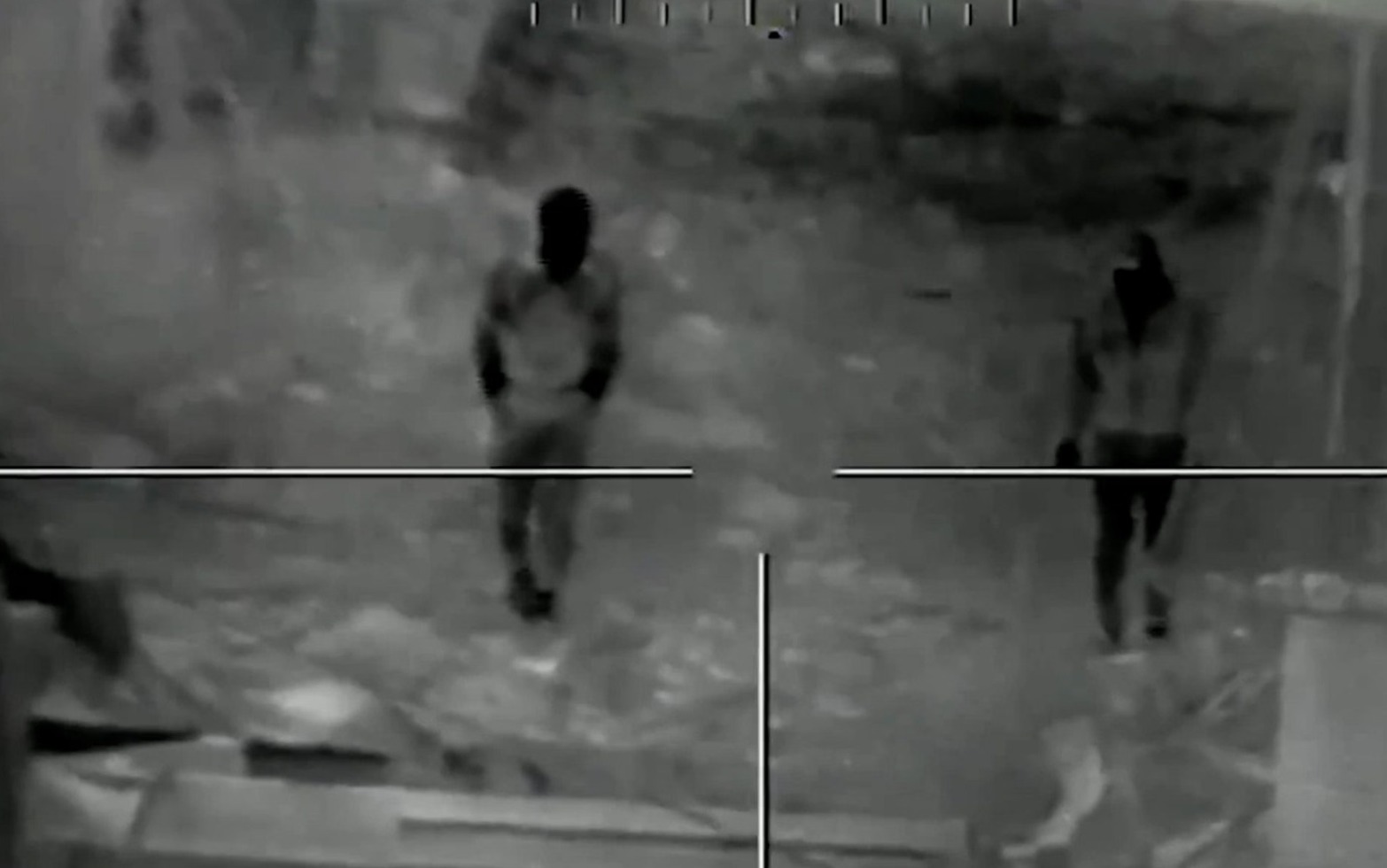
Raab describes that video as his partner’s “second elimination”,
in their first days in Tal al-Hawa. Daniel G, who grew up in
Munich, can be seen in Gilbert’s video, and his identity was
confirmed by facial recognition technology and interviews with
former classmates.
Aspects of the video raise questions about whether it shows this
shooting, however. Weapons experts who examined it were divided
over whether a projectile visible in several frames was a bullet
from a sniper rifle. The images show a man hit in the back, while
Youssef says Mohammed was shot from the front.
But if what Raab and Mohammed’s relatives say is true, Daniel G
appears to have killed Mohammed because he was in the wrong place
at the wrong time. Neither man was carrying a weapon.
In November 2023 Israeli forces operating in the area decided that
section of Moneer al-Rayyes Street was off-limits to civilians,
without notifying Palestinians. Raab described it as a “combat
zone” where any man of military age was “marked for death”.
Establishing an invisible “security perimeter” then shooting
civilians who cross it has become common practice in Gaza, Israeli
soldiers have testified.
When asked how his squad decided whether to shoot unarmed
Palestinians, Raab said: “Its a question of distance. There is a
line that we define. They don’t know where this line is, but we
do.”
The Fraunhofer Institute for Secure Information Technology
examined the videos containing the most critical statements and
found “no indication” to suggest the content had been altered.
After Mohammed was killed, Youssef ran to tell his brothers,
inadvertently sealing Salem’s fate. Raab describes on camera how
he shot the teenager when he came to collect Mohammed’s body.
The recovery of dead bodies is protected under international law.
The Israeli military’s own regulations also stipulate that people
collecting bodies are not legitimate targets, according to former
soldiers and Asa Kasher, who co-authored the Israeli Defense
Forces’ ethics code.
“If you see someone recovering a body or helping a wounded person,
that’s a rescue operation, it should be respected,” Kasher said.
“Someone like that should not be shot.”
The next victim was Salem and Mohammed’s father, Montasser. “My
boys,” was all he could say when he saw them lying dead in the
street. He tried to approach them and was shot.
Then, snipers targeted a cousin, Khalil*, who raced to help
Montasser. “I had taken about eight to 10 steps carrying him when
I was shot and it felt like my arm was blown off,” said Khalil,
who managed to stagger out of range before losing consciousness.
The two men were taken to hospital, but Montasser died the next
day. The family decided they could not risk more loss, and the
brothers’ bodies were left in the street until a ceasefire began
on 24 November.
“Anyone who came close got shot,” said Khalil. He still struggles
with the damage from bullets that struck his torso just below his
armpit, with such force he initially thought his arm had been
severed. “If I walk a little, I get tired. If I work, I get
tired.”
There is no video of his shooting but Raab describes someone from
his squad hitting a Palestinian near the brothers’ bodies, causing
a severe arm injury. “It really knocked away his arm, and we
assumed he wouldn’t survive,” he said.
The attacks match a pattern described by a former Israeli
reservist, who told the Guardian that soldiers he served with in
Gaza repeatedly shot unarmed Palestinians trying to collect
bodies.
“It’s something I saw myself,” he said, adding that these killings
often came after a first unarmed individual was targeted for
crossing an invisible “security perimeter”.
“Once he has been declared an enemy before he has been shot, then
the assumption is that everyone going to collect him is his
co-conspirator,” added the former reservist, who refused to return
to Gaza on the grounds that the war had become “immoral”.
Mohammed, Salem and Montasser were not the only members of their
wider family shot near Barcelona Garden that November day.
Mohammed Farid, 47, a distant cousin of the Doghmosh brothers,
lived on Moneer al-Rayyes Street. He had evacuated his family to a
less exposed building earlier in November but wanted to check if
their home had been damaged. Walking back he bumped into another
cousin, Jamal*, finishing a similar errand, and they continued
together.
As they reached the corner of Jamal’s street, a few metres from
his home, Farid was shot. Jamal’s wife, Amal*, watched in horror
as Farid crumpled to the ground and her own husband raced for
cover.
In the Gilbert video, there is a third clip showing a killing,
which Raab also identifies as the work of his partner.
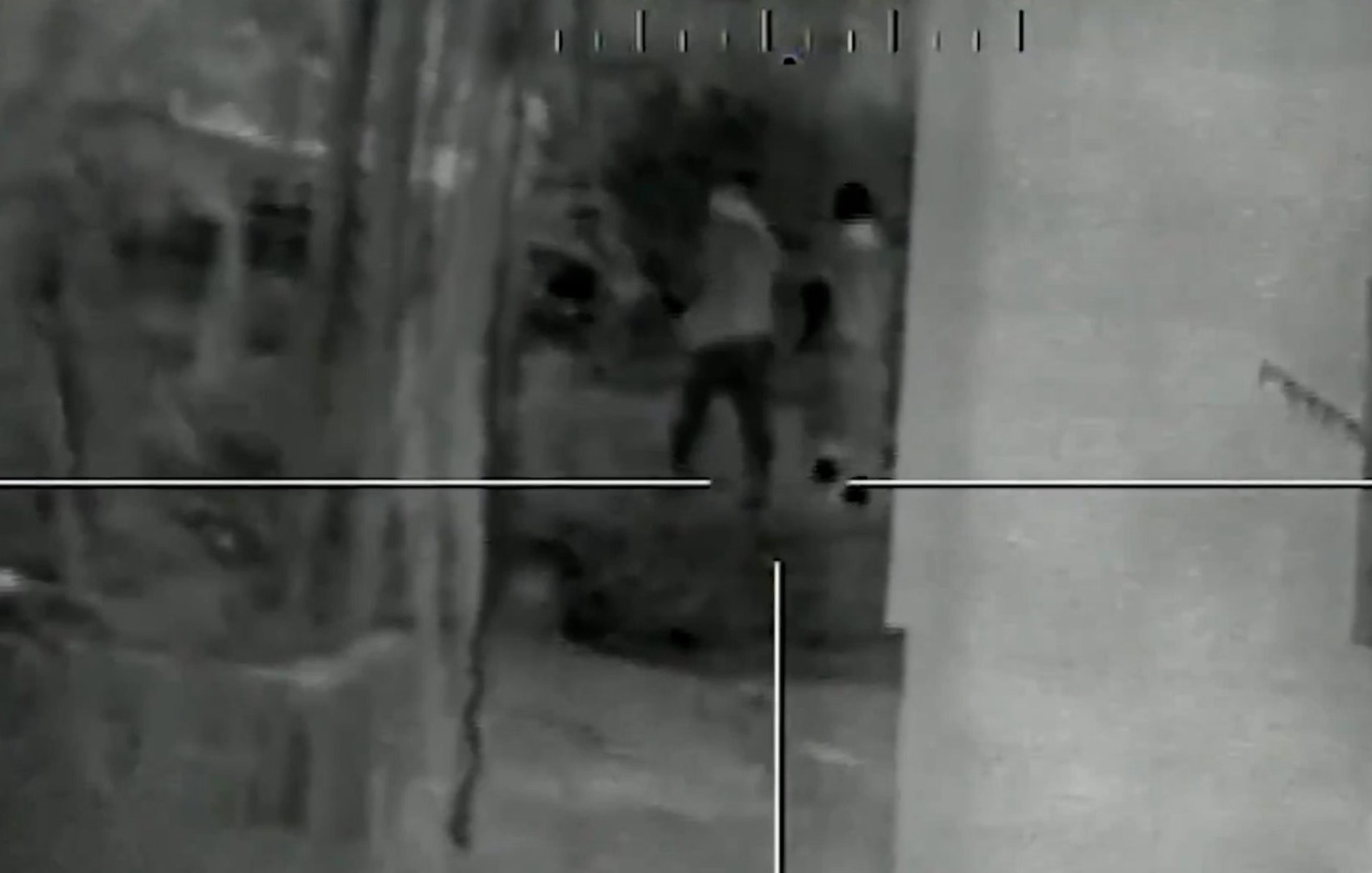
Footage shows two men walking away from the camera down a street
filled with rubble. Neither appears to be carrying a weapon. A
shot rings out, one man falls to the ground and the other
scrambles to get out of the line of fire.
Witnesses including Farid’s immediate family and his cousin Jamal
identify the victim as Farid, citing his distinctive durag-style
head covering. He was taken to hospital, but declared dead within
half an hour.
Raab says Israeli snipers shot eight people in two days near the
Barcelona Garden park. Six of them were most likely from the
Doghmosh family. Mohammed and Salem, their father, Montasser, and
Mohammed Farid were killed, and two cousins were injured. There
were also two unidentified bodies in the area at the time,
witnesses and survivors say.
In total, Raab says his “team” had killed 105 people by the time
his deployment in Gaza ended. “That’s really impressive,” he said
of the toll.
The Israeli military did not respond to specific questions about
the killings of the Doghmosh family or rules of engagement,
including the shooting of civilians recovering bodies. A
spokesperson said its forces operated “in strict accordance with
its rules of engagement and international law, taking feasible
precautions to mitigate civilian harm”.
International law protects unarmed individuals and the collection
of bodies. The shootings on Moneer al-Rayyes Street appeared to
violate that, experts said. “The available evidence points to a
war crime,” said Tom Dannenbaum, a professor of international law
at Stanford law school.
Nearly two years after the shootings, surviving Doghmosh family
members have more hope in divine justice than human courts. Fayza
remembers standing by her house when they brought the bodies of
her two sons to her. Of Raab, she says: “Even if I forgive him,
God will not.”
* The names of survivors and witnesses have been changed due
to security concerns
Reporting team: Maria Retter, Daniel Laufer, Frederik Obermaier,
Maria Cristoph (Paper Trail Media)