The Gaza Project is a global collaboration with between 13 media
outlets organised by "Forbidden stories", the project investigated the
targeting of journalists in Gaza and pursued the work of journalists
who have been killed or threatened in Gaza and the West Bank since
By Phineas Rueckert & Youssr Youssef (Forbidden Stories)
Since October 7, journalists in the West Bank have reported an
increase in harassment and violence by the Israeli military and
settlers. Settlements have continued to expand. Forbidden Stories
and its partners pursued the work of journalists attacked while
covering West Bank settlement expansion and the forced displacement
of Bedouin communities.
Key findings
West Bank journalists describe zones that have become increasingly
difficult to access due to Israeli military and settler attacks,
checkpoints, and threats
Since a Bedouin community at Wadi al-Siq was forcibly displaced in
October, new settler infrastructure has been built
Israeli settlers have publicized illegal expansion online, listed
properties on Airbnb, and claimed Virginia County Sheriff’s
Departments sent them equipment
Eran-Vardi, an Israeli photojournalist and activist, had learned that
Israeli settlers had threatened the roughly 200-person Bedouin
community with eviction.
That day, Eran-Vardi – who agreed to publicly share his account for
the first time with +972 Magazine, a partner on this project – began
to document the eviction and speak with residents.
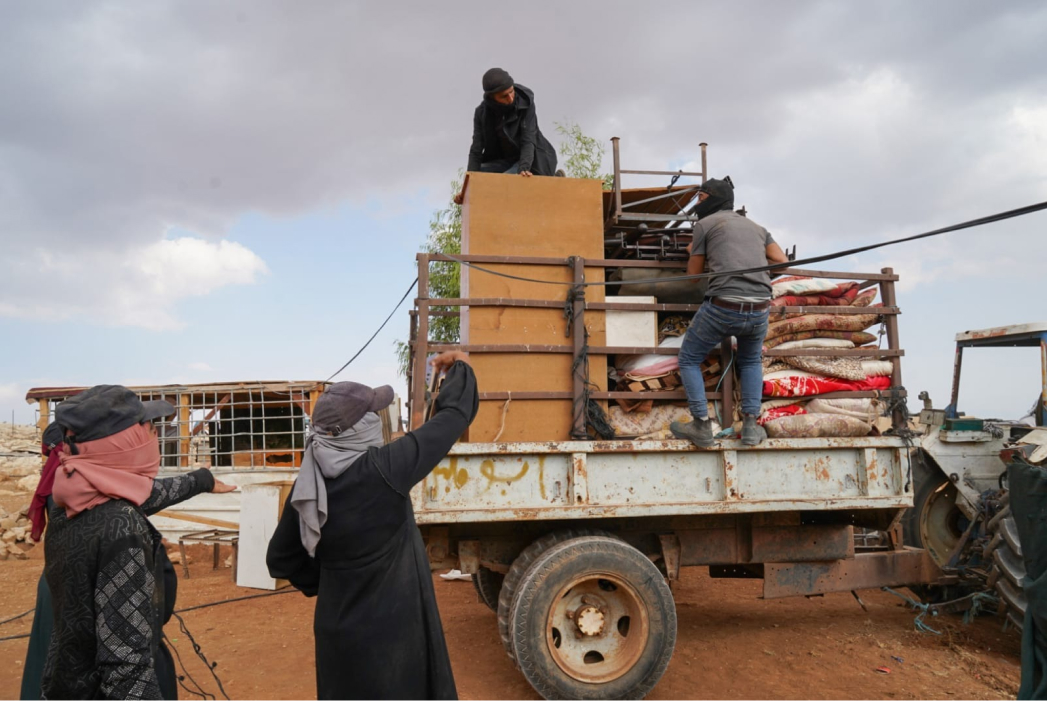
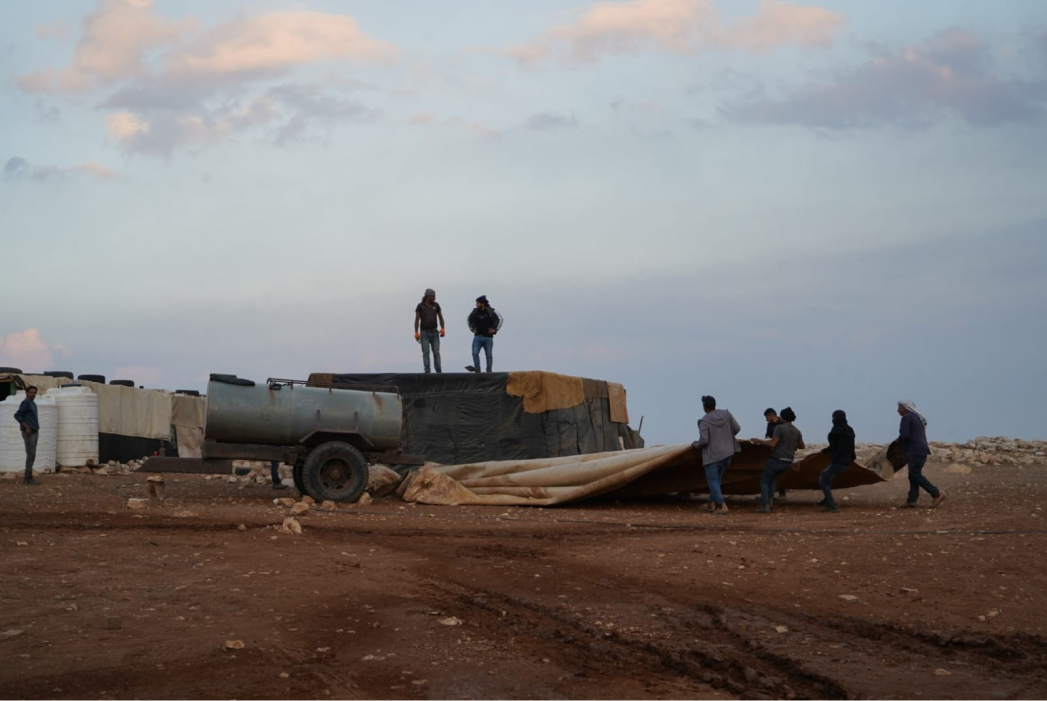
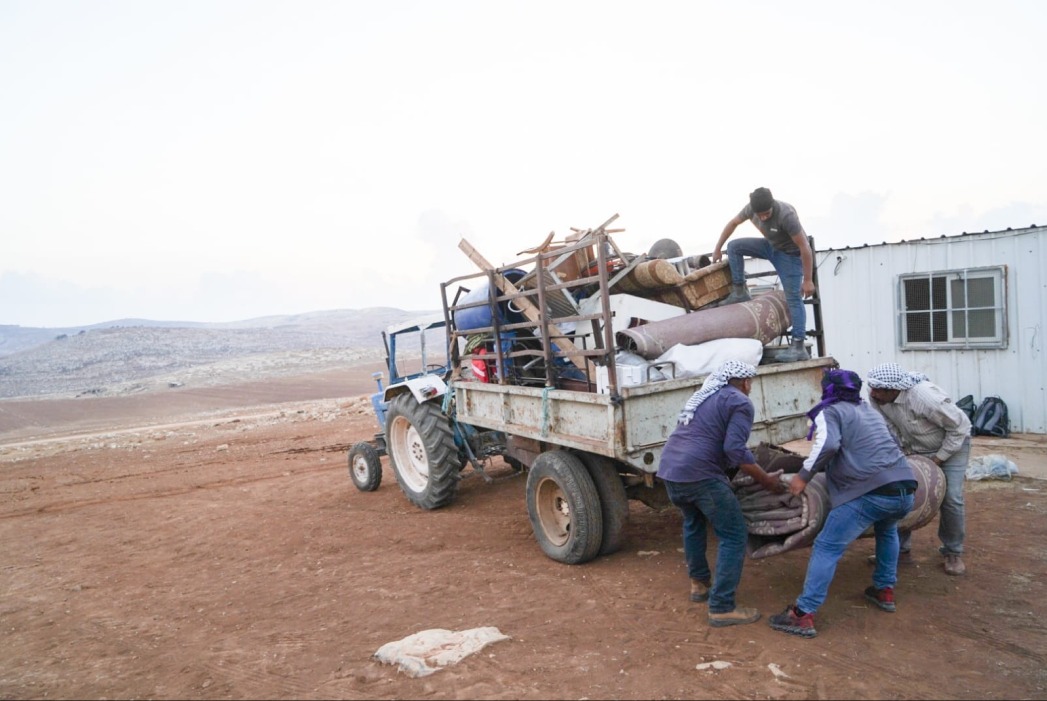
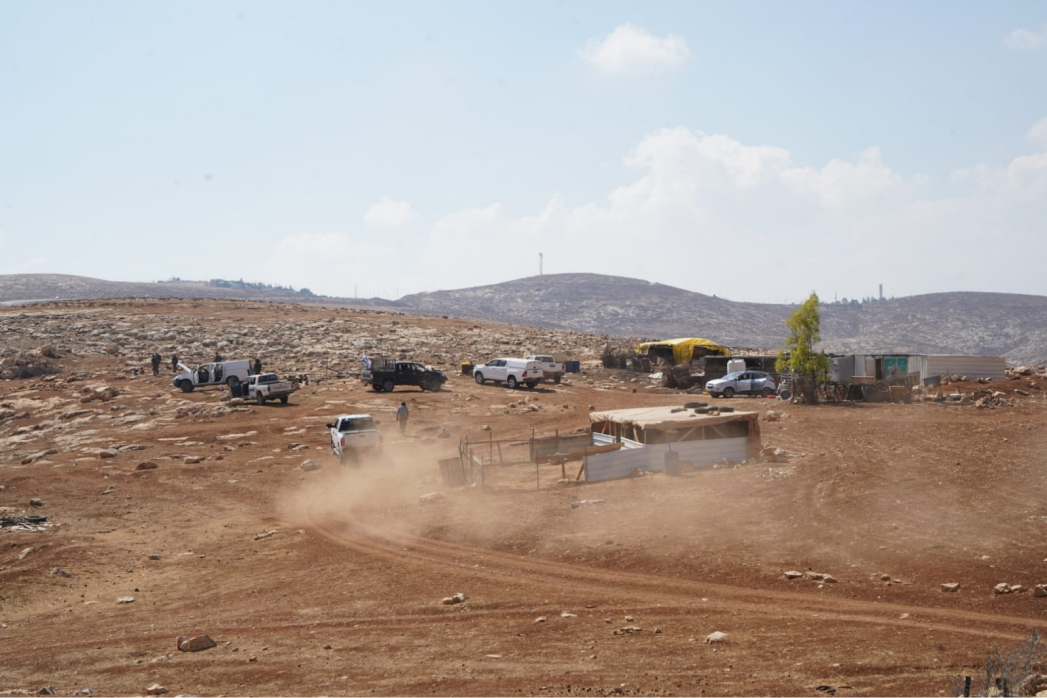
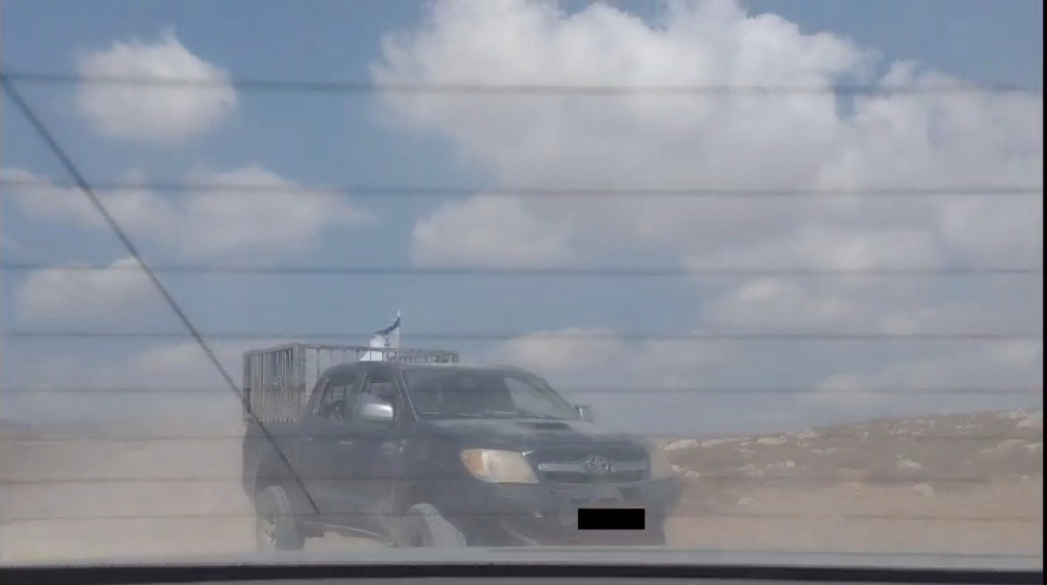
Photos shared with Forbidden Stories show the eviction of a Bedouin
settlement at Wadi al-Siq. Photos: Omri Eran-Vardi.
The next morning, after spending the night in a nearby Palestinian
community, he returned to Wadi al-Siq to continue reporting. Sometime
after noon, Israeli settlers and masked soldiers from the Desert
Frontier unit, an Israeli military unit known for its violent
treatment of Palestinians and comprising mostly conscripted “hilltop”
settlers, arrived at Wadi al-Siq. The eviction took on a new tenor:
soldiers began using violence against the community, in some cases
torturing and imprisoning activists and residents.
Israeli activist and photojournalist Omri Eran-Vardi recounts
being chased by settlers, before managing to evade them a first
time on October 12, 2023. Photo: Omri Eran-Vardi.
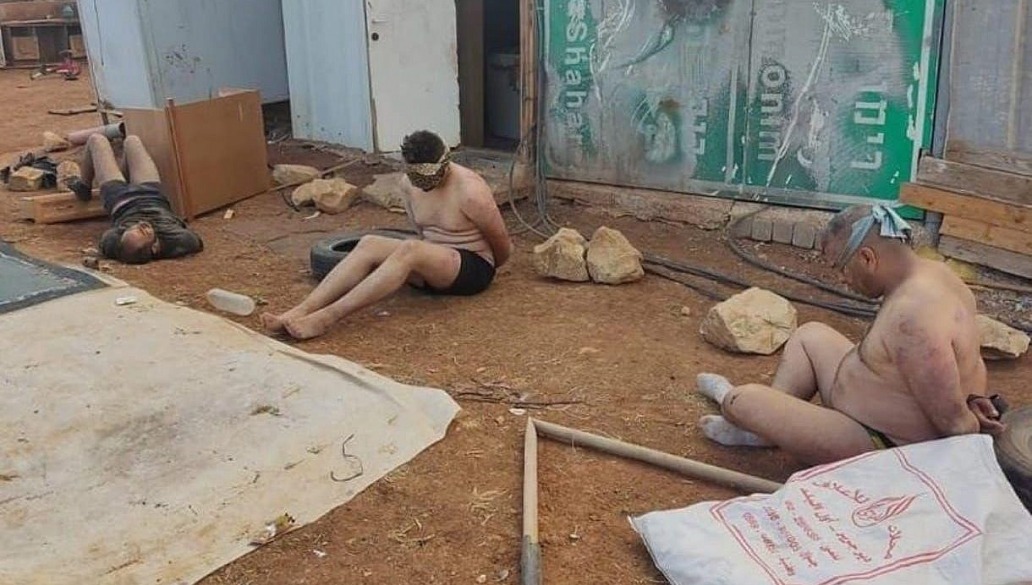
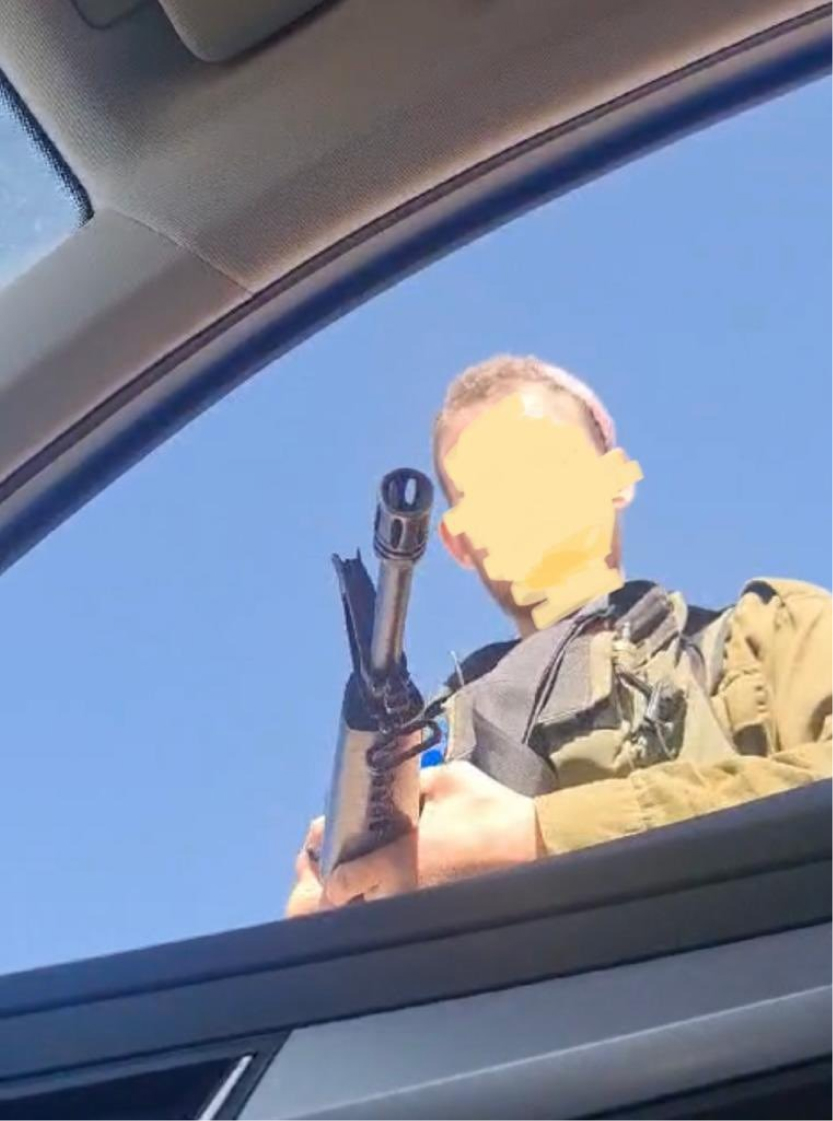
In another part of the village of Wadi al-Siq, Palestinians were
detained by Israeli settlers and soldiers. Image taken from social
media.
The video (screenshot here) and the picture from social media are
the little existing documentation of the attacks on that day.
That afternoon, Israeli soldiers, accompanied by settlers, apprehended
a Palestinian family attempting to flee. “They removed the family from
the vehicle, laid all the men, about five, including two boys, face
down on the gravel,” Eran-Vardi recounted. Eran-Vardi approached them
to inquire. One of them responded by punching him in the nose, he
said. A settler claimed the villagers supported Hamas. A soldier
handcuffed Eran-Vardi and took his camera.
Later, a group of men took Eran-Vardi and two Israeli activists into
one of the residents’ homes and threatened the group before letting
them go. “You should say thank you that you are getting out alive and
don’t come back here ever again,” he remembered one person – who could
have been a soldier or a settler in uniform – telling the group. “If I
see you, I will kill you,” the individual allegedly said.
(In a written response to Forbidden Stories and its partners, a
spokesperson for the Israel Defense Forces (IDF) said that during the
Desert Frontier Unit’s activity, “there were a number of sensitive
ethical and operational incidents in which the soldiers acted
inconsistently with the values of the IDF,” adding that the unit was
transferred to the Northern Command, on Israel’s border with Syria and
Lebanon.)
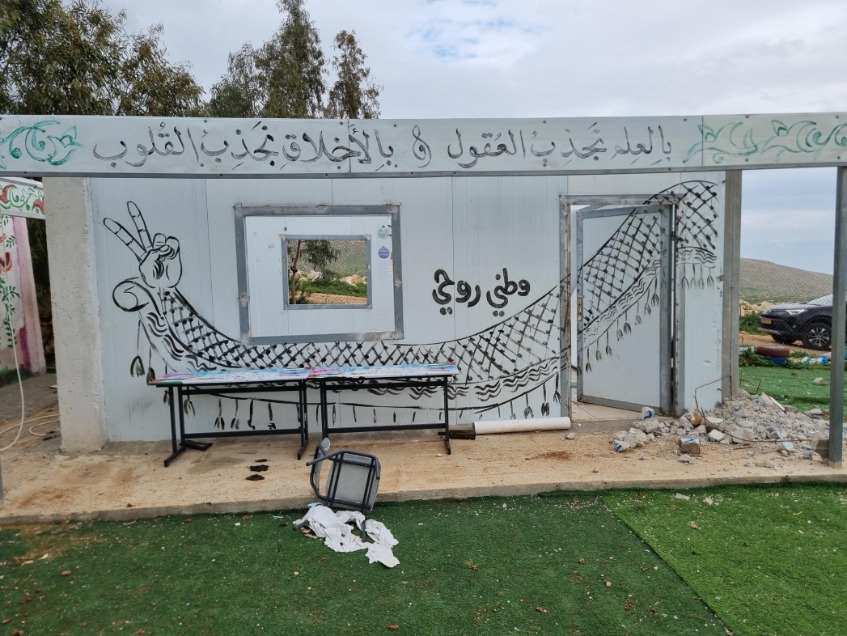
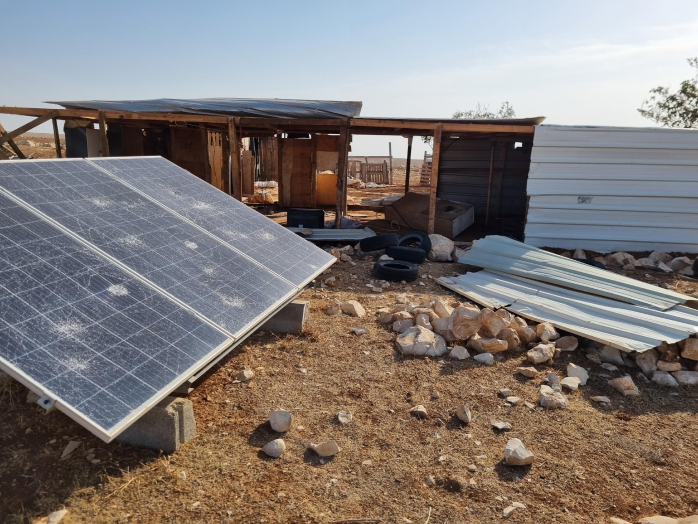
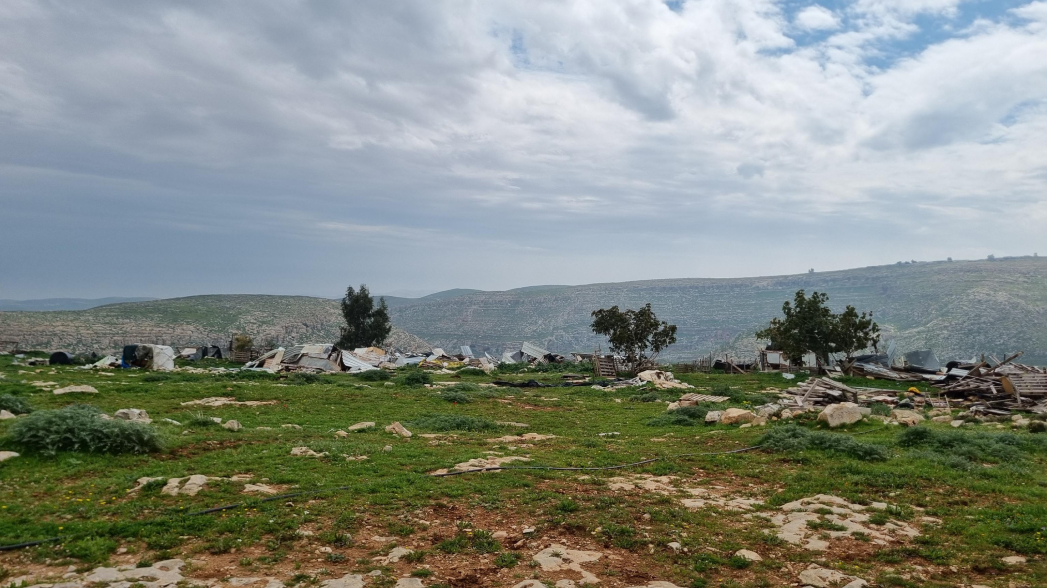
Today, Wadi al-Siq sits empty. Images from B’Tselem, the Israeli
Information Center for Human Rights in the Occupied Territories,
shared with Forbidden Stories, show debris scattered across the
community, smashed solar panels, and fallen, corrugated tin roofs
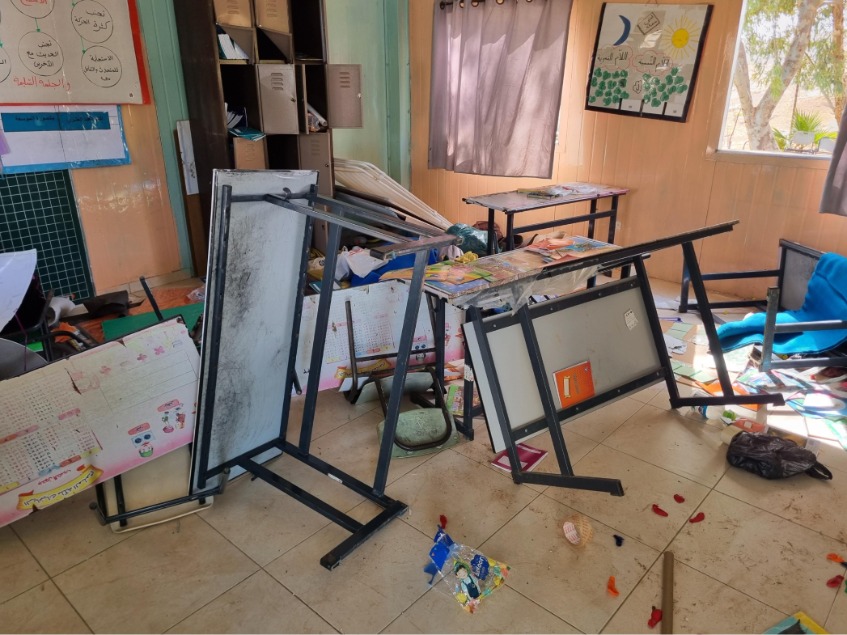
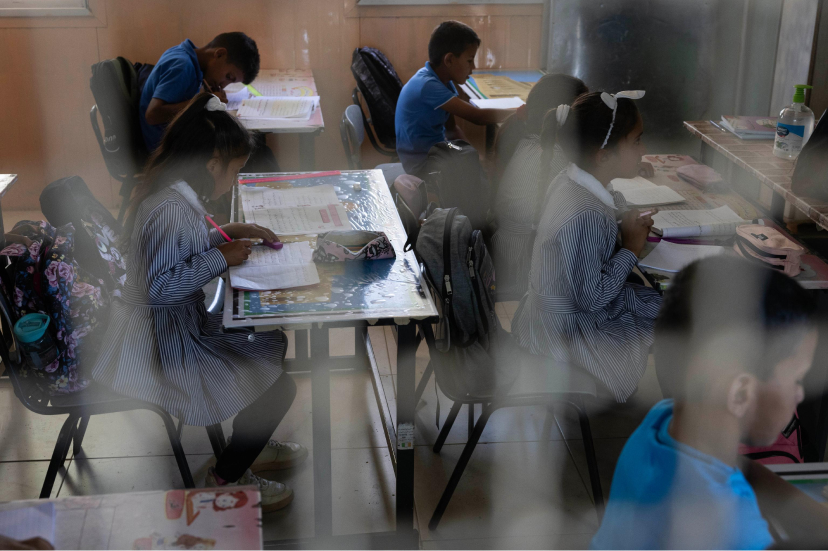
baking in the hot sun. A European-funded school that once served as
many as 120 children from across the region is fenced off; inside,
desks are upturned, and tables and chairs are in disarray.
The damage done to the Wadi al-Siq community and school during and
after the raid. Photos: Sarit Michaeli/B’Tselem
The photos depict the community’s new reality months after Eran-Vardi
captured the eviction. Before soldiers forced him to delete photos
from his camera, Eran-Vardi managed to transmit his reporting to
activists, later shared with journalists, including at Forbidden
Stories. Some of these images are being published today for the first
time as part of the Gaza Project.
The Gaza Project is a global collaboration between 13 media outlets
that investigated the alleged targeting of journalists in Gaza and
pursued the work of journalists who have been killed or threatened in
Gaza and the West Bank since Hamas’s terror attacks on October 7,
2023.
In the West Bank, nearly a dozen journalists, including Eran-Vardi,
told Forbidden Stories that reporting on Israeli settlement expansion
– illegal under international law – the destruction of Bedouin
communities, and settler violence has become increasingly dangerous.
Wadi al-Siq is one of 18 communities that settlers forcibly evicted
since the beginning of Israel’s war on Gaza, according to data from
the B’Tselem. Between October 2023 and May 2024, the UN measured 958
incidents of settler violence against Palestinian communities and
property in the West Bank – versus 790 during that same time period
one year prior, a more than 20 percent increase.
Forbidden Stories and its partners set out to pursue the work of
journalists in the West Bank censored from covering the expansion of
settlements and violence against Palestinian communities. We used
satellite imagery and open-source research to map the expansion of
settler infrastructure amidst an uptick in violence against
Palestinians that the United Nations has denounced. Our analysis
indicates a growth of infrastructure, including in Wadi al-Siq and
other areas where settlers and soldiers have allegedly threatened
journalists. Our findings also show how settler communities publicized
their expansion online, including in Airbnb listings, YouTube videos,
and social media posts.
“This can happen these days if you want to report on the sharply
increased settler violence in the occupied #WestBank in the shadow
of the war in #Gaza. Many of the soldiers there are settlers
themselves. Journalists are generally not welcome,” tweeted
correspondent Jan-Christoph Kitzler after he and his team from ARD,
German public broadcasting network, was threatened and detained for
more than an hour by Israeli soldiers in November 2023, south of the
Palestinian city of Hebron.
“Since October 7th, everything changed in the West Bank,” Issam
Rimawi, a photojournalist at Turkish press agency Anadolu, told
Forbidden Stories. “There are no longer any red lines, be it from the
settlers or the Army,” he said of the violence.
Gravel line in the sand
Abu Bashar, now 48, was born and raised in Wadi al-Siq. His father and
grandfather were displaced twice – first in 1948 and again in 1967 –
before the family settled in the region. Abu Bashar, a Bedouin farmer,
raised a flock of sheep and four children in Wadi al-Siq, where he
also served as village head. “It was farmland, pastures and prairies,”
Abu Bashar told Forbidden Stories by phone. “There were no problems.
We took water from the wells, planted wheat and barley. Things were
good.”
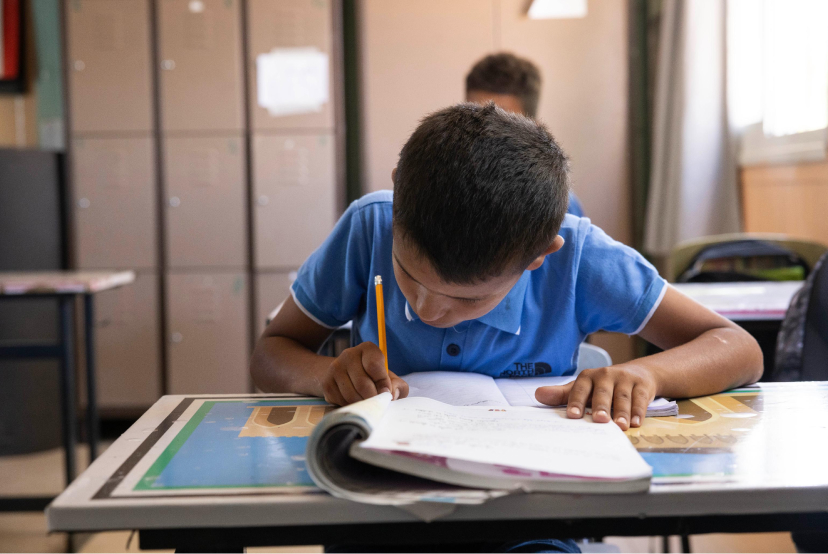
Students at the European-financed school at Wadi al-Siq before the
eviction. Photos: Oren Ziv/+972 Magazine
Students at the European-financed school at Wadi al-Siq before the
eviction. Photos: Oren Ziv/+972 Magazine
But in February 2023, settlers approached the Bedouin community, Abu
Bashar explained, in some cases attacking community members and
damaging property. After October 7, the same settlers surrounded the
community. It was a “hellish situation,” Abu Bashar said. Then, on
October 12, as Abu Bashar remembers it, the community was given one
hour to vacate. “You are not allowed to go to your house or to take
your car, you just take your children and your livestock and go out
walking,” Abu Bashar recalled being told.
In December, after an internal investigation, the Israeli military
halted Desert Frontier unit operations and dismissed five soldiers who
took part in the violent dismantlement of Wadi al-Siq. “Each incident
will be reviewed and significant disciplinary measures will be taken
according to the case and commanders’ decisions,” the IDF spokesperson
said of the status of the investigation.
Still, Forbidden Stories found that settlers in this region have since
expanded their infrastructure. Jake Godin, a researcher at Bellingcat,
an open-source investigative collective, analyzed satellite imagery
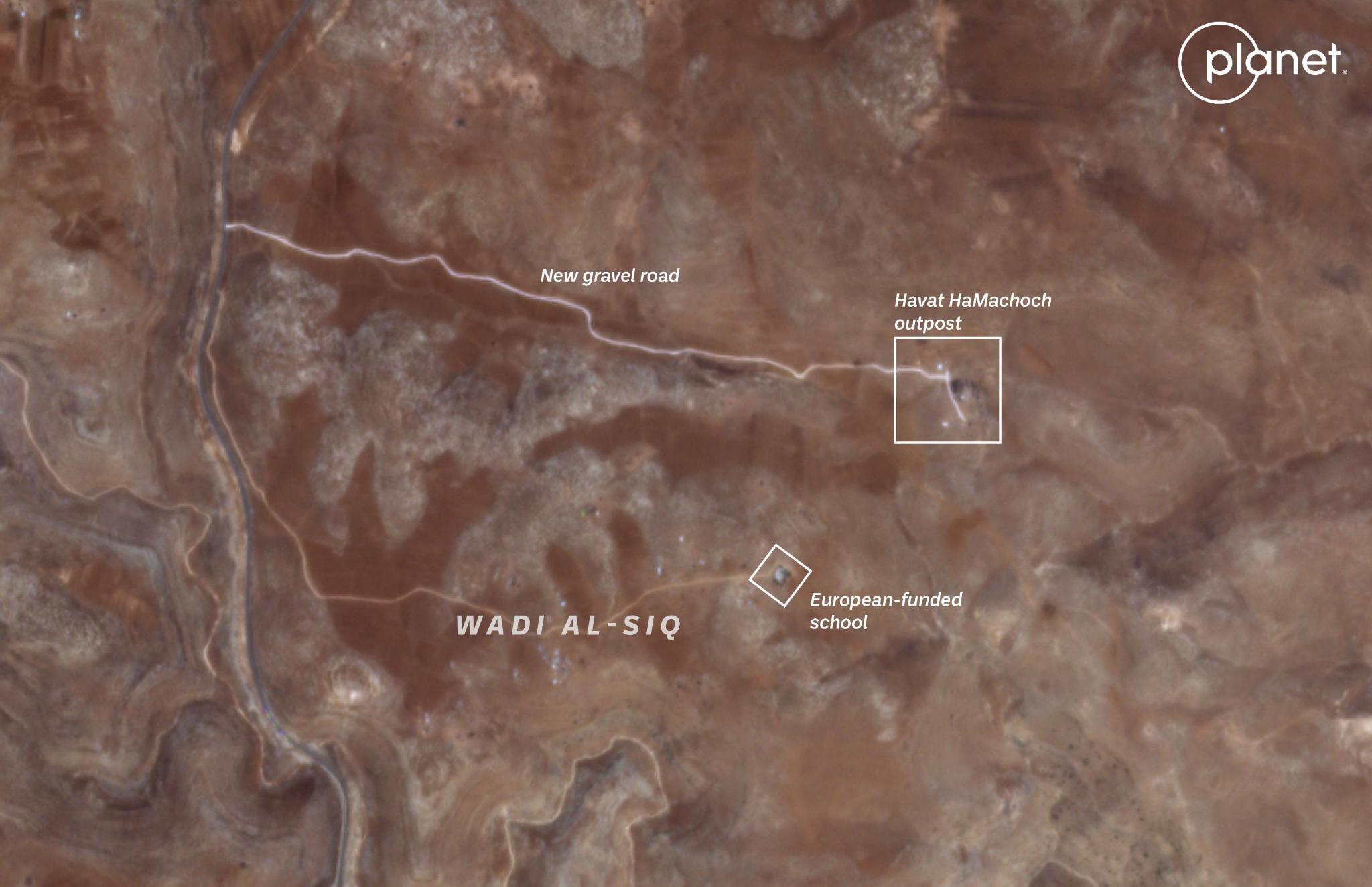
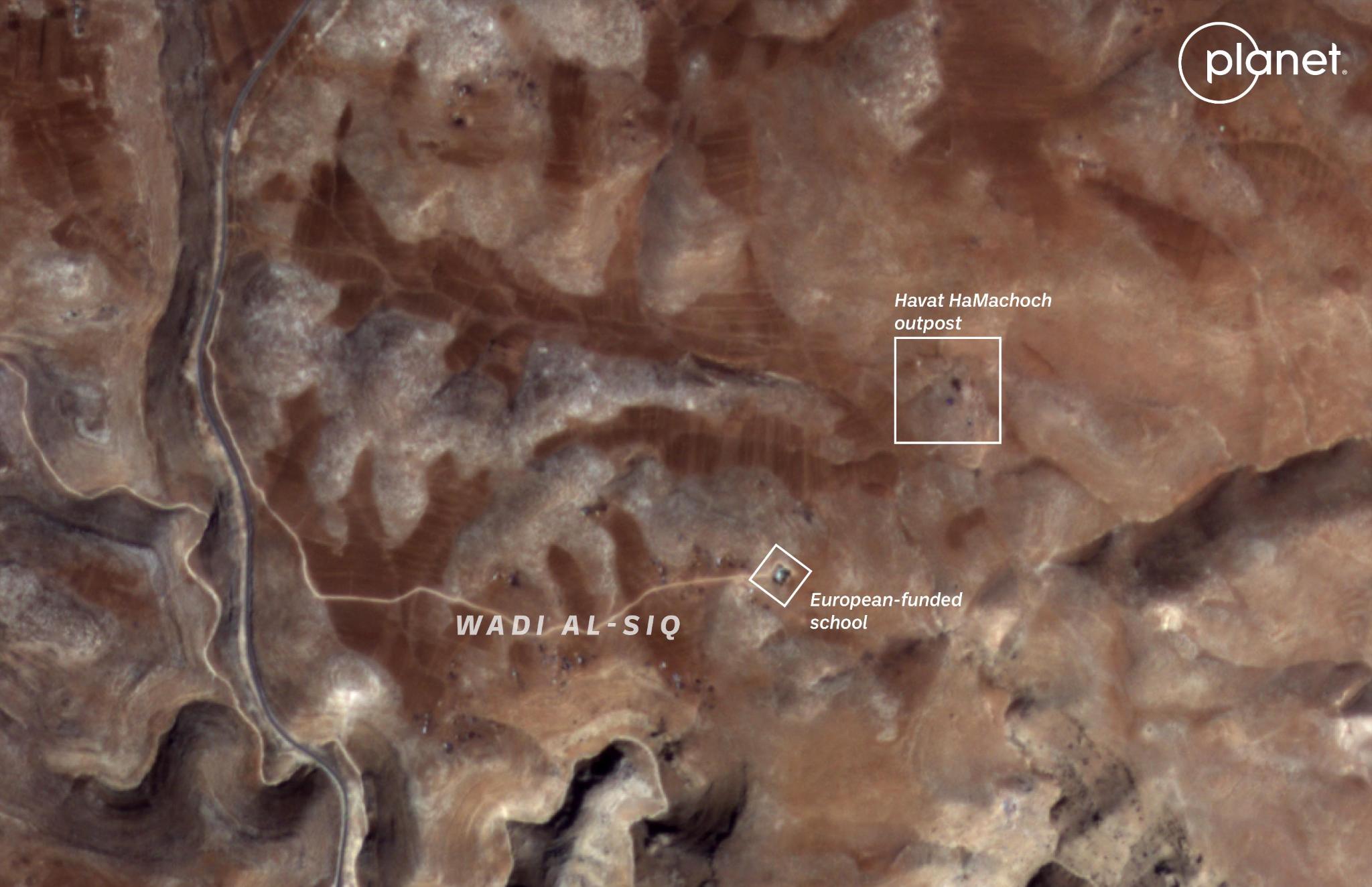
for Forbidden Stories. The imagery, from Planet Labs, shows that since
the eviction of Wadi al-Siq, a long, gravel road was built just north
of the town, leading to several structures that appear to be a settler
outpost – an unsanctioned or illegal community built without official
Israeli government approval. “The outpost continues growing over time
and, by comparing April 4 imagery from Sentinel-2 with more recent
June 13 imagery, we can see that there appear to be new buildings
constructed at the outpost,” Godin said.
Move the slider to view the image before and after
13 June 2023
7 octobre 2023
Satellite images show the expansion of the outpost north of Wadi
al-Siq from October 7, 2023 (left) to June 13, 2024 (right). Photos:
Jake Godin/Planet
According to multiple Israeli media outlets, this outpost – called
Havat HaMachoch – belongs to Neria Ben Pazi, a settler under US
sanctions since March. As Haaretz reported in June, Ben Pazi received
roughly $3,200 from Israel’s Agriculture Ministry to fund agricultural
projects. Residents of Wadi al-Siq who spoke to +972 Magazine said
that the community was attacked by settlers coming from the direction
of Ben Pazi’s farm. (Ben Pazi did not respond to requests for
comment.)
“The life we lived in Wadi Al-Siq, we can't live it today”
Abu Bashar
FARMER AND FORMER HEAD OF THE WADI AL-SIQ VILLAGE
Meanwhile, displaced Bedouins fear their living conditions will
deteriorate in the coming months. Since the eviction, Abu Bashar has
bounced from place to place near the town of Rammun, north of Wadi
al-Siq. Two of Abu Bashar’s four children have been forced to quit
school. He also lost about 50 of his sheep, which he said settlers
took.
“The life we lived in Wadi Al-Siq, we can’t live it today,” Abu Bashar
said.
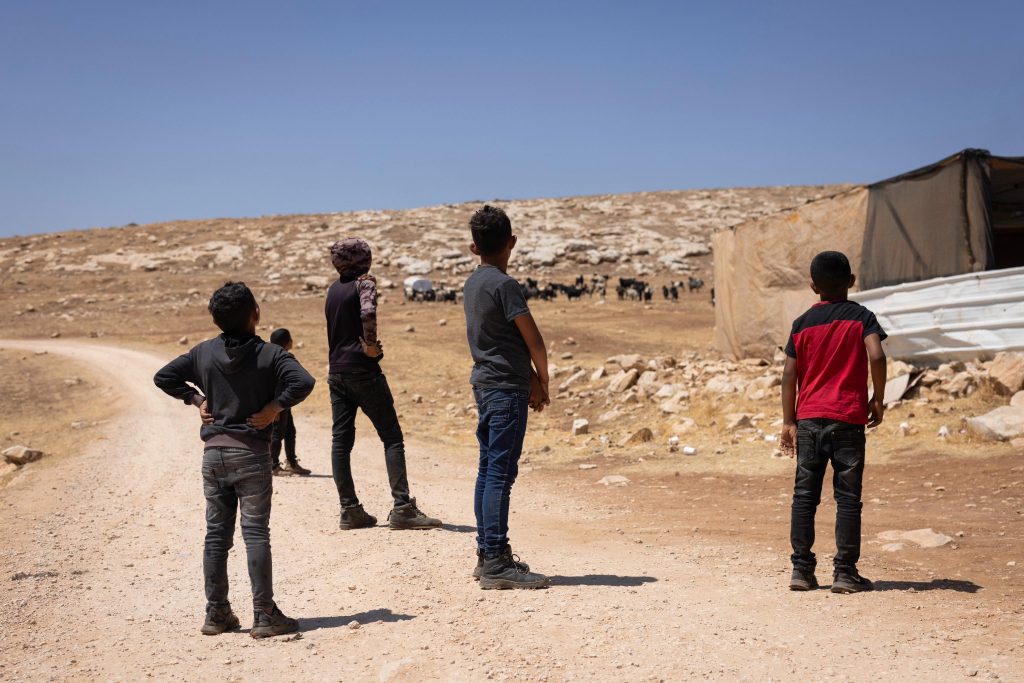
Children at Wadi al-Siq before the evacuation. Photo: Oren Ziv/+972
Magazine
“We constantly feel targeted”
On February 19, 2024, Omar Abu Awad, journalist and director of the
Jericho office of Palestine TV, the official channel of the
Palestinian Authority, and his crew – cameraman Mohammed Zghb,
journalist Elham Hadeeb, and driver Samer Abu Salman – piled in a car
and drove to the region of Wadi al-Qelt, a popular, touristic zone of
bluffs and rolling hills just outside the city of Jericho, to document
settler activities.
After scouting out a first location, a group of men intercepted their
car. They carried weapons and protective gear, but the Palestine TV
crew was unable to identify if they were settlers or soldiers. Though
the crew’s car was marked “Palestine TV,” the men called the Israeli
military, who arrived soon after.
Awad and his colleagues told Forbidden Stories that after confiscating
their phones, soldiers brought three of them to an interrogation
center, where they were held for nine hours with no food or water and
allegedly subjected to torture. According to Awad, soldiers forced him
to walk blindfolded so he rammed his head against a wall, and pushed
him down a flight of stairs.
The Israeli military eventually released the journalists, but the
incident shook Awad. “We constantly feel targeted,” Awad said. “I
remember one day saying goodbye to my children and wife when I left
for work because we face daily incidents of being stopped, shot at,
and attacked by settlers.”
In a written response, an IDF spokesperson said: “As for the claims of
violence in the Wadi al Quilt area last February, the claims have been
checked and the IDF is not familiar with such incidents.”
Continuing Palestine TV’s work, Forbidden Stories investigated settler
activities in the Wadi al-Qelt area, which Awad fears has become more
dangerous for Palestinian journalists. Through open-source research,
Forbidden Stories focused on two settlements near where the
journalists were stopped: Mitzpe Yeriho and Vered Yeriho. In the
larger of these two settlements, Mitzpe Yeriho, satellite imagery
shows that 19 structures have been built since 2018, according to
Godin, the researcher at Bellingcat.”
Satellite imagery showing the expansion of the settlement Mitzpe
Jeriho in the West Bank. Photo: Governmental maps of Israel
Under international law, settlements – Israeli-government-approved
communities built on occupied Palestinian land since the 1967 Six-Day
War – are illegal. “Every single settlement, every single construction
of a settlement, every single facilitation and ongoing maintenance of
the settlement is a war crime,” Tara Van Ho, a senior lecturer at
Essex Law School and former co-president of the Global Business and
Human Rights Scholars Association, said.
“The line that divides between settlers and soldiers has been
blurred for a long time now”
Joel Carmel
MEMBER OF THE NGO BREAKING THE SILENCE
Still, settlements continue to grow and several outposts, illegal even
under Israeli law, have been constructed since October. Al Jazeera
counted 15 new outposts in the first few months of Israel’s war on
Gaza. Working with Bellingcat’s Global Authentication Project, Scripps
News and Bellingcat also identified dozens of sites throughout the
West Bank, with new roads, buildings, or cleared lands near
settlements or outposts.”
Move the slider to view the image before and after
13 June 2023
7 octobre 2023
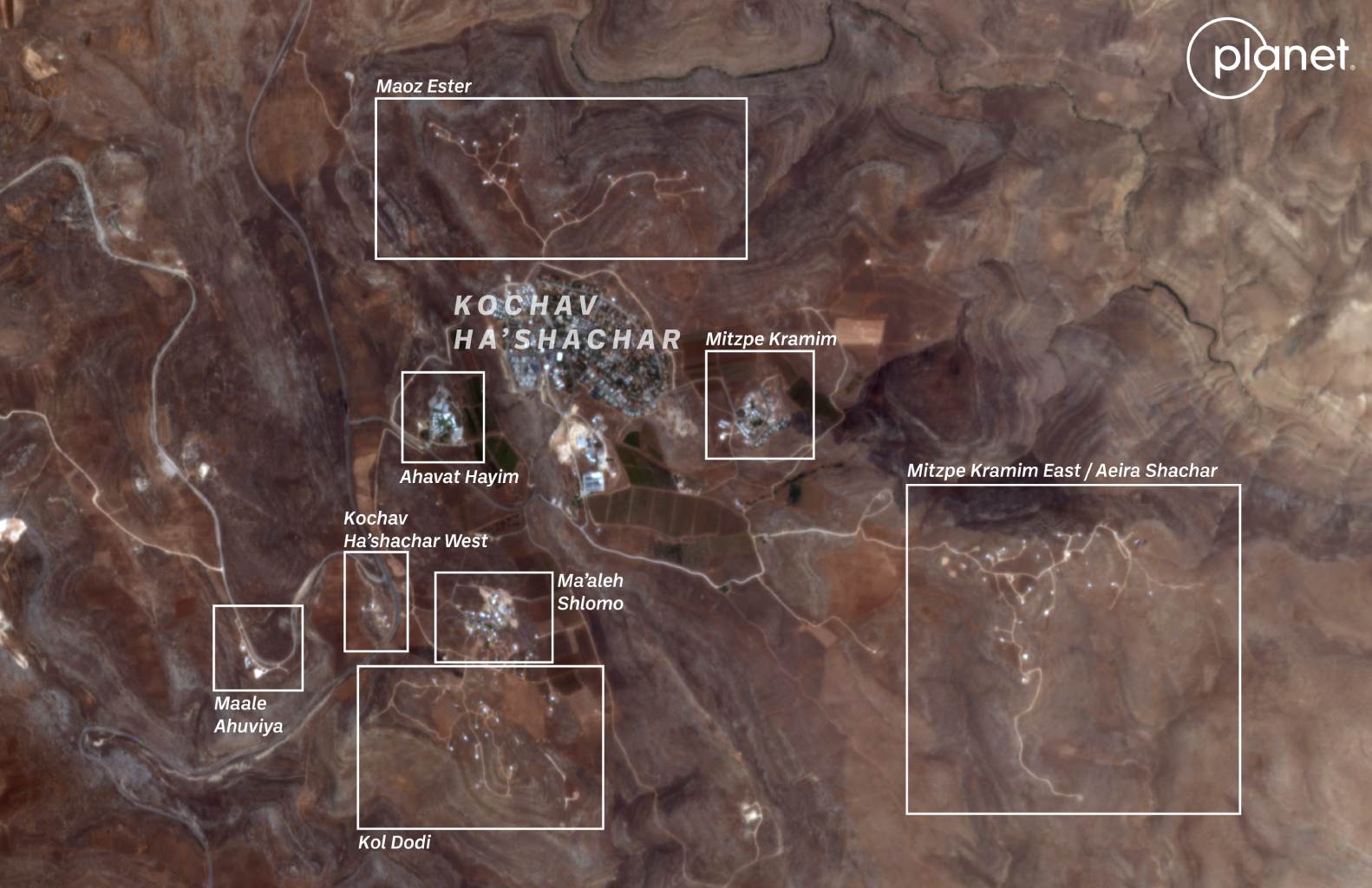
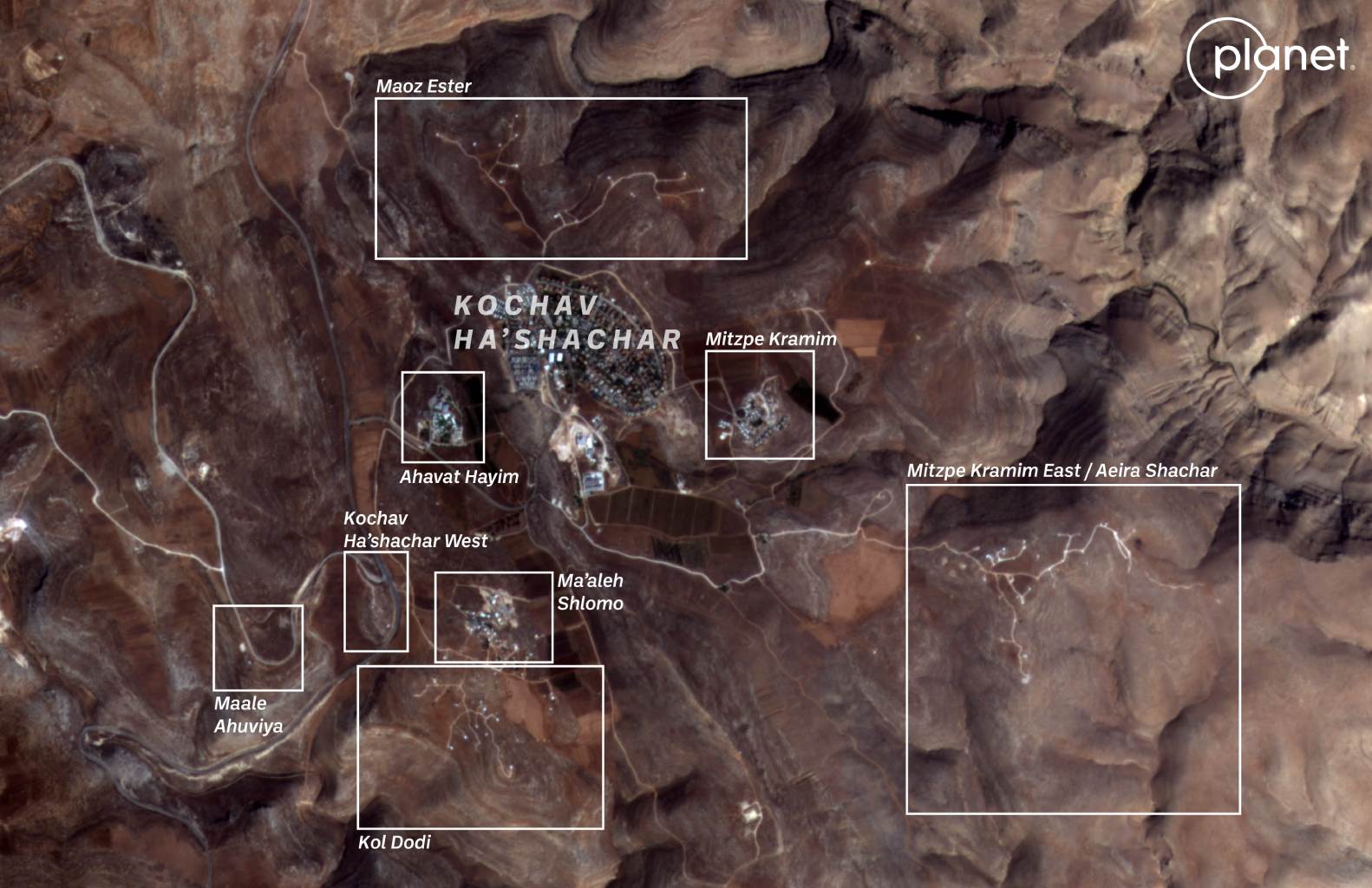
Other Israeli settlements and outposts in the region, with their
growing infrastructure from October 7, 2023 (left) to June 13, 2024
(right). Data: Peace Now. Photos: Jake Godin/Planet
Settlement expansion seems to be part of Mitzpe Yeriho’s long-term
plans. In an October 8, 2023 interview, the mayor Aliza Pilichowski
vaunted the settlement’s “tremendous growth,” including the
construction of an indoor sports complex, a swimming pool, and 365 new
homes to be inhabited in the next three to five years. (Pilichowski
did not respond to requests for comment, nor requests sent through her
husband.)
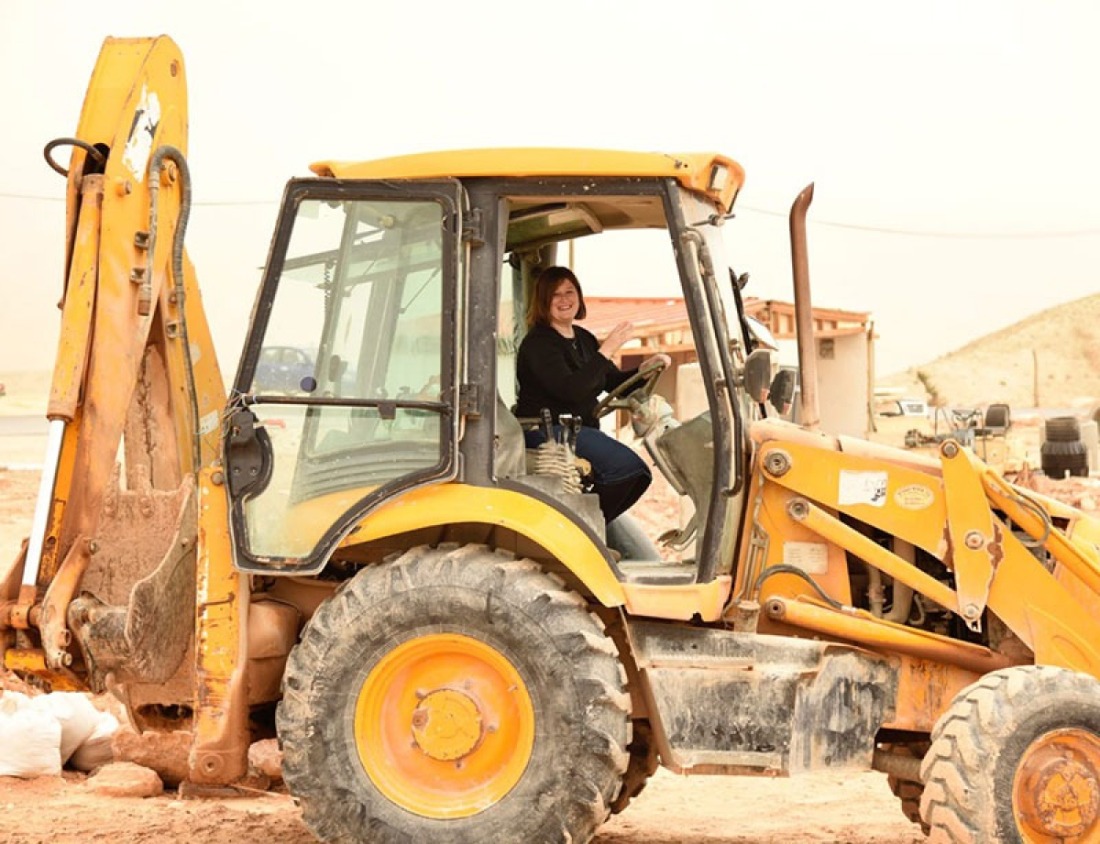
Mayor of Mitzpe Yeriho, Aliza Pilichowski, sits on a tractor. Photo:
Mizrachi
Since October 7, Mitzpe Yeriho has also sought to bolster its
semi-professional security team. Run by Yehoshua Strauss, a Mitzpe
Yeriho settler, the unit claimed in a Facebook video to have bought
uniforms on Amazon. “Yes, we’re building an army here to keep
ourselves safe,” he then said. (Contacted via Facebook, Strauss did
not respond. In an email, an Amazon spokesperson said the company
complies with “all the laws and regulations in all jurisdictions where
we operate,” including export laws. “This video suggests these
individuals have not purchased anything other than some clothing,” the
spokesperson added.)
Mitzpe Yeriho settler Yehoshua Strauss claims to have bought military
uniforms on Amazon. Facebook video.
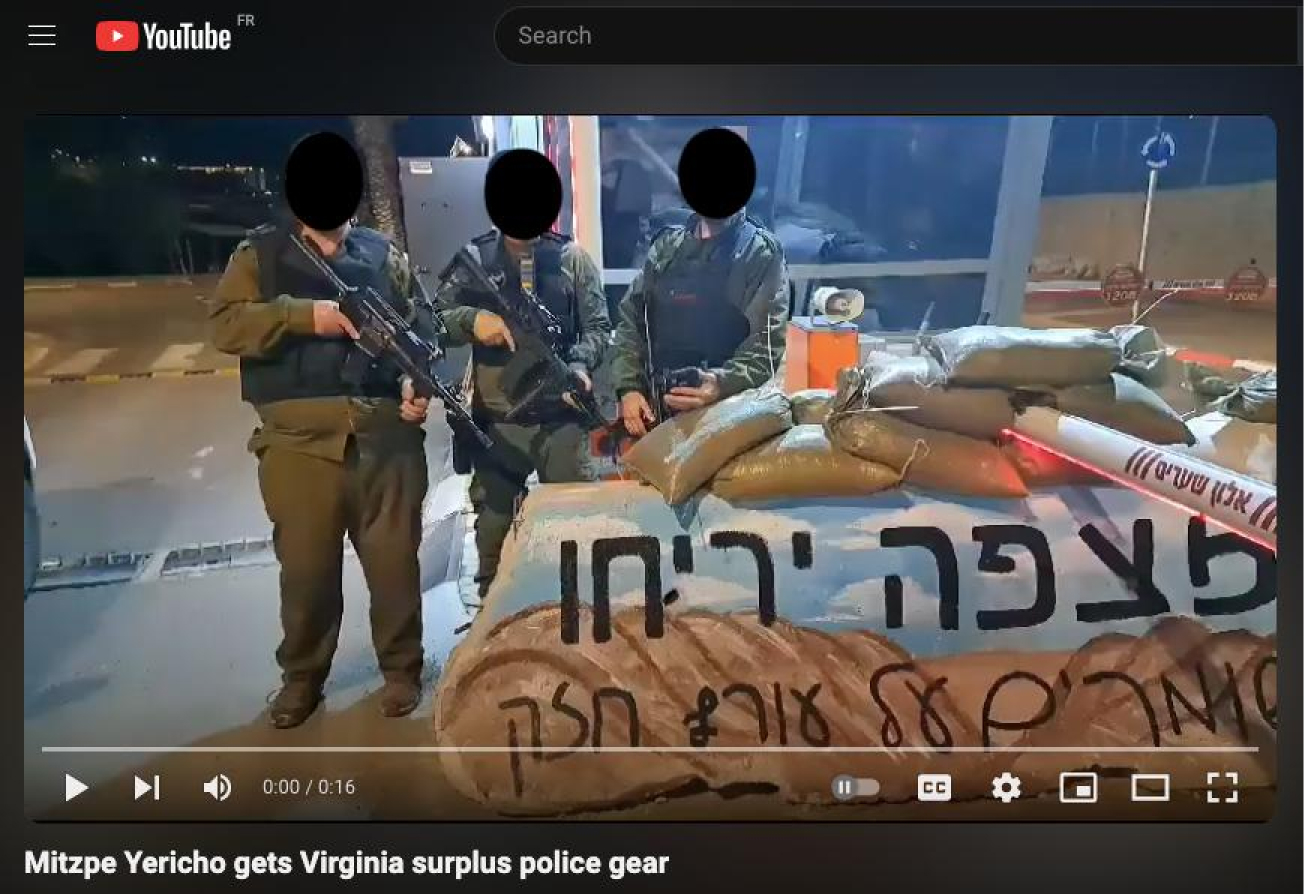
In another video, settlers celebrated police equipment received from
the US state of Virginia. This came after Virginia’s Attorney General
Jason Miyares asked County Sheriff’s Offices to donate equipment to
Israel in October 2023. “Equipment donations went to civilian first
responders (for example, civilian paramedics) and did not include
armaments or artillery,” a spokesperson from the Virginia Attorney
General’s office wrote in an email. “Examples of donated equipment
include protective supplies such as bulletproof vests, helmets, K9
protective vets, and elbow/knee guards.”
Mitzpe Yeriho settlers in a video thanking Virginia law enforcement.
YouTube video.
Joel Carmel, a member of the NGO Breaking the Silence, made up of
former Israeli military soldiers, explained that settlements often
have teams of volunteers with access to weapons and minimal training
that act as a “rapid response team in case the settlement comes under
attack.” For Palestinian residents, that has meant that “the line that
divides between settlers and soldiers has been blurred for a long time
now,” he said. During the war, he added, it has been “erased
completely.”
(The Israeli military is in “constant contact with all of the civil
defense squads and the completion components subordinate to it,”
according to an IDF spokesperson who did not respond to questions
about Mitzpe Yeriho.)
Business as usual
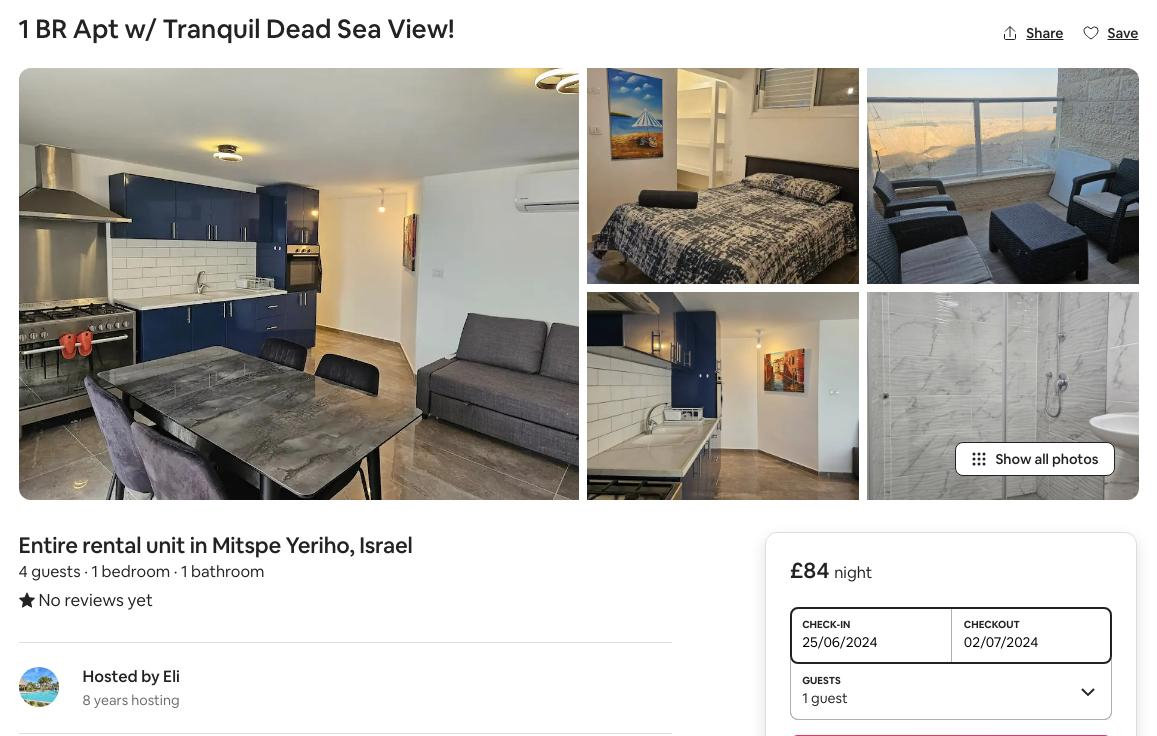
For settlers, however, it’s business as usual. Forbidden Stories found
at least four current Airbnb listings in what appears to be a newly
built subdivision of Mitzpe Yericho. All of them are connected to
employees of EroRentals, a Florida-based vacation home rental agency,
and their relatives. One claims to offer guests an “escape to
tranquility.” “I highly recommend anyone who wants a great experience
and phenomenal host in a beautiful place with breathtaking views of
the mountains and the dead sea,” an Airbnb guest wrote in a review
posted in November 2023. (Airbnb and EroRentals did not respond to
requests for comment.)
One of the Airbnb listings in the Mitzpe Yeriho settlement. Photo:
Airbnb
In May 2024, a collective of NGOs made public their legal complaint
against Booking.com for renting houses in the settlements. One of
them, located in the settlement of Vered Yericho, states “there is no
entry [allowed] to a Palestinian ID card[holder],” in accordance with
“security directives.” (In a statement, a Booking.com spokesperson
said the listing in question was “actively being assessed in line with
our policies,” adding that: “Any potential necessary actions will be
taken as a result of that process, which is still ongoing.”)
Both Airbnb and Booking.com are named in a list of companies that have
“directly and indirectly, enabled, facilitated and profited from the
construction and growth of the settlements,” according to the UN
Independent International Fact-Finding Mission.
To Van Ho, such settlements and the companies that legitimize them
represent a long-term challenge for peace in the region. “Until we
force Israel to dismantle the settlements and to withdraw to its own
borders, we cannot have peace in this area,” she said.
This investigation was published in Arabic on the following: