Israel Falsely Warned It Would Bomb a Media Office. The Actual
Airstrike Killed Journalists on a Nearby Street
A monthslong investigation unpacks a false warning and an Israeli
airstrike in the deadliest war for journalists on record
The Gaza Project is a global collaboration with between 13 media
outlets organised by "Forbidden stories", the project investigated the
targeting of journalists in Gaza and pursued the work of journalists
who have been killed or threatened in Gaza and the West Bank since
Hoda Osman, Farah Jallad, Firas Taweel (ARIJ)
31 July 2024
The clock had not yet struck midnight on October 9, when Said
Al-Taweel fell into a deep sleep in his office in al-Ghefari Tower,
Gaza City’s tallest building. Alaa Abu Mohsen, Al-Taweel’s colleague,
heard him snoring.
It was the early days of Israel’s war on Gaza, and Al-Taweel wasn’t
getting much sleep. Neither, for that matter, was Abu Mohsen.
Al-Taweel, the 37-year-old editor-in-chief of Khamsa News Agency, had
been more or less living in his high-rise office, working constantly,
late into the night, to cover the Israeli onslaught.
More than an hour after Al-Taweel drifted off to sleep, sometime after
1 a.m., word began to spread that Haji Tower, another high-rise near
the al-Ghefari building, was going to be attacked by the Israelis.
Haji Tower is home to local and international media offices, including
Agence France-Presse. The rush of people leaving the 12-story tower
came after an Israeli military officer spoke by phone to at least four
people to order the evacuation of Haji Tower, according to the
accounts of two direct recipients of warnings as well as video of a
call.
As people streaming from the building scrambled to get into their cars
and flee, several of the journalists in the area instead drew nearer
to Haji Tower. They wanted to get the story: An Israeli attack on a
building known to house so many reporters would resonate
internationally.
Abu Mohsen had by then drifted off to sleep himself and, when he
awoke, he didn’t see Al-Taweel, he later recalled. He glanced at his
phone. He had missed two calls from Al-Taweel. “I’ll see him
downstairs,” Abu Mohsen thought to himself, resolving to go down to
check things out at street level.
Though many Israeli attacks come unannounced, the military also
sometimes issues warnings before striking buildings where civilians
could be present. In the early hours of October 10, such a warning was
issued, but what unfolded nonetheless proved tragic.
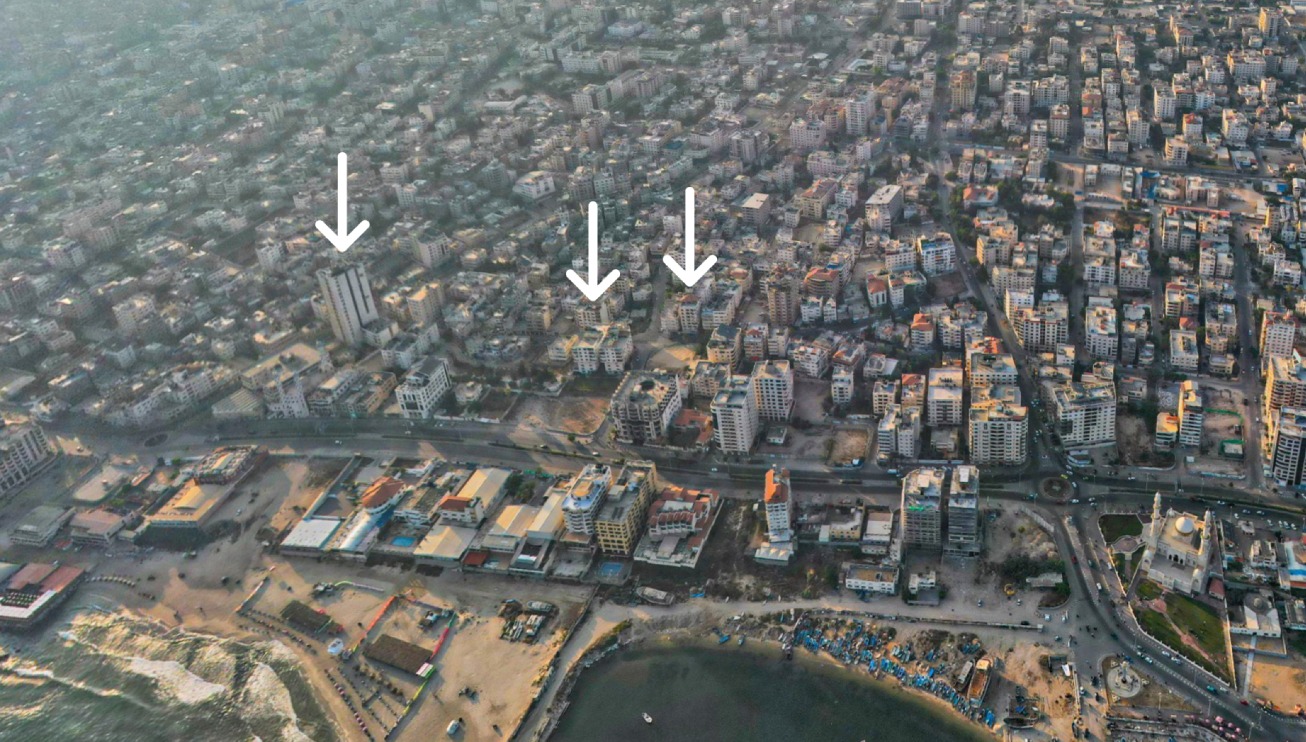
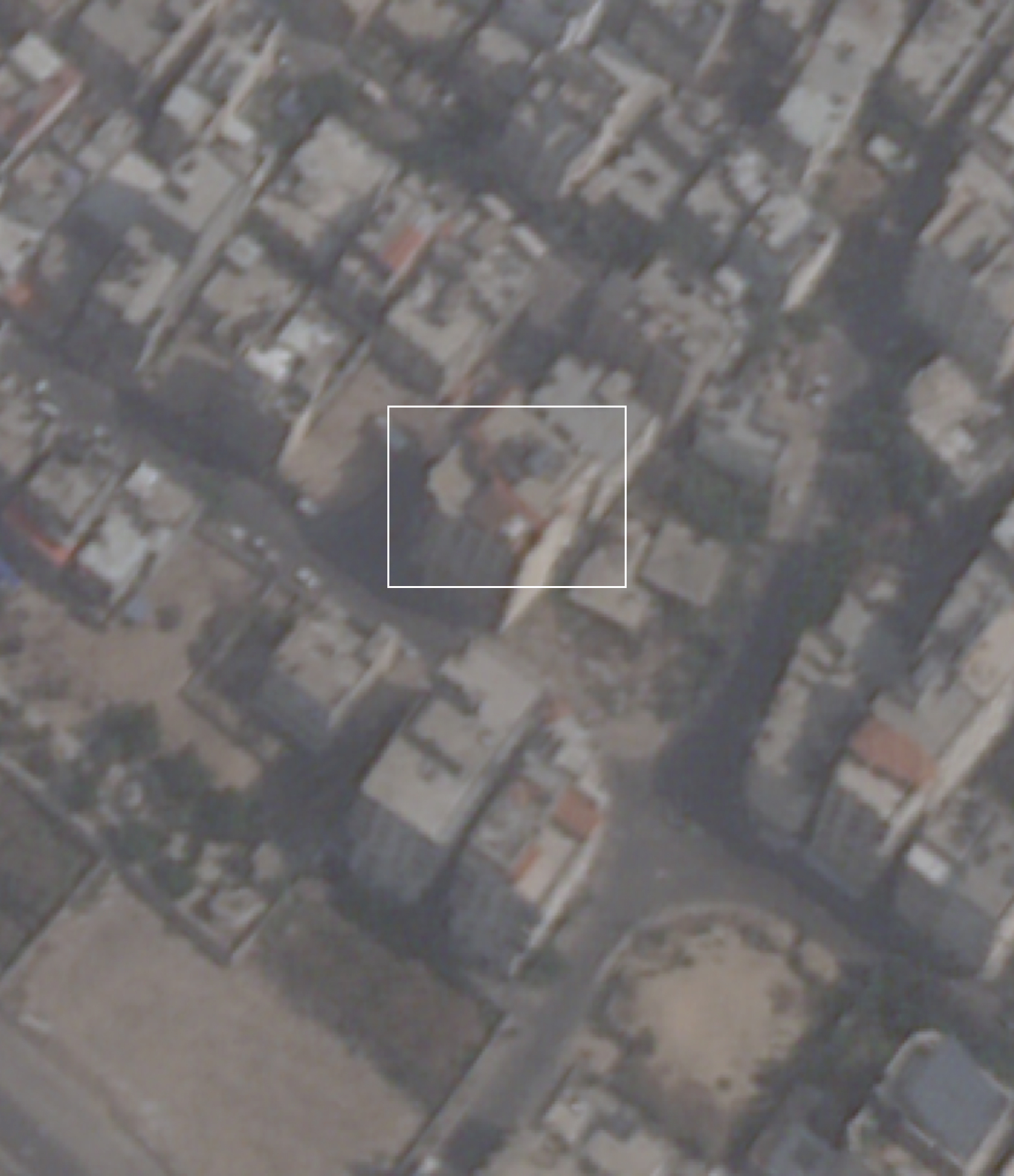
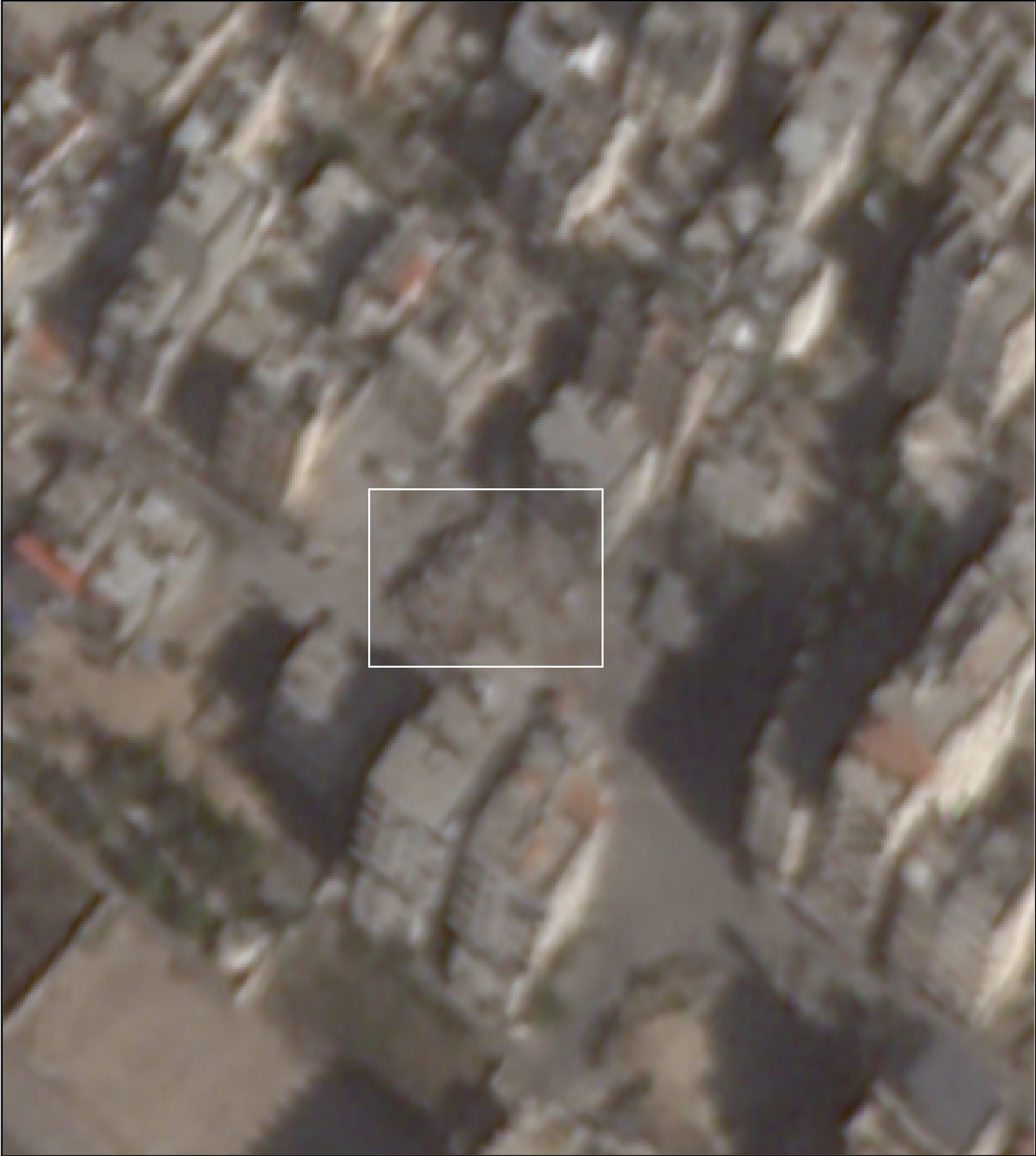
When the airstrike finally came, it did not hit al-Ghefari nor Haji
Tower. Instead, it destroyed a third structure: a six-story
residential building called Babel that lay directly on the road
between the two towers. As Babel collapsed into rubble, at least nine
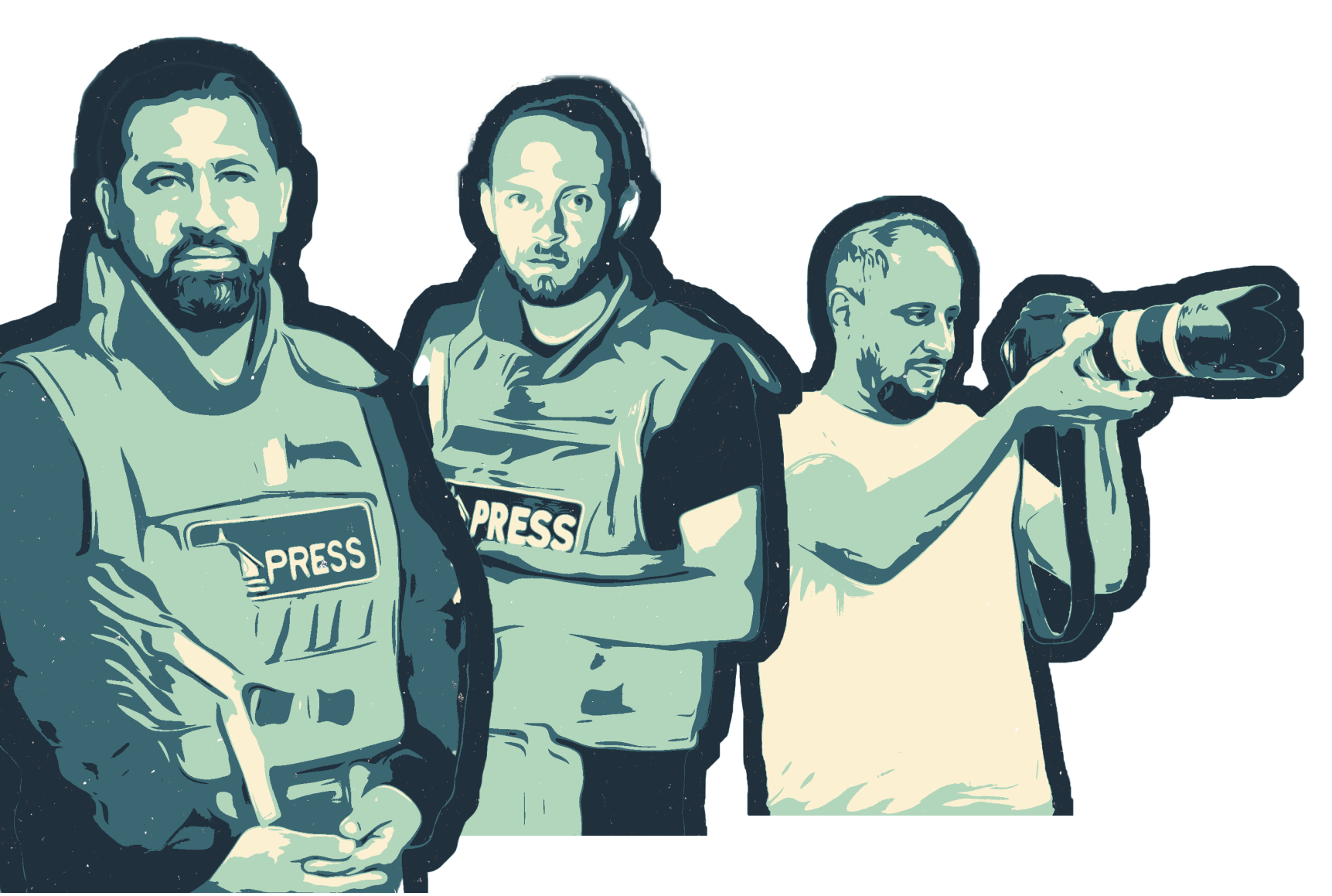
people were killed, including three journalists who had moved into the
building’s vicinity to report on Haji Tower from a safe distance.
“The bodies of the journalists flew into the air from the intensity of
the bombing,” said Mansour Khalaf, the owner of Babel, who witnessed
the attack from the street.
In a written statement, the Israeli military said that, on October 10,
a “facility” used by a senior Hamas member was targeted “in the area
in question.” It had issued “a warning to residents of the building
and the area to evacuate,” the military spokesperson said. “Any claim
that the IDF led people to evacuate to a strike zone is baseless and
absurd.” The statement said that the case is being investigated.
Few hours before the strike, journalists working on the 16th floor of
al Ghefari building
International humanitarian law encourages armed forces to provide
advance warnings prior to an attack when circumstances permit, but the
warnings must be “effective.” In the Babel building attack, the call
contained false information.
The following minute-by-minute account of the airstrike — based on
analysis of videos, audio recordings, and photographs from the attack
and its aftermath — is part of the monthslong investigation by Arab
Reporters for Investigative Journalism. The investigation is being
published in partnership with The Intercept as part of the Gaza
Project, a collaboration of 50 journalists from 13 media organizations
coordinated by Forbidden Stories to investigate attacks on journalists
in Gaza.
ARIJ collected more than 25 interviews, including with family members
of the deceased and nearly 20 eyewitnesses to the strike.
Source: Shadi Al Tabatibi
The resulting findings tell the intertwined story of three structures
in Gaza City — two towers housing media offices and one squat
apartment building — that shows how a purportedly cautionary series of
phone conversations led three journalists to their deaths. They were
among the journalists killed early in the war. The violence meted out
by the Israeli assault has resulted in the deaths of 1 in every 10
journalists in the Gaza Strip.
Source: AFP
Said Al-Taweel’s world had dramatically changed in recent days. It had
been more than two years since Israel’s last major assault on the Gaza
Strip, and life in Rafah, where he lived, had settled into its normal
patterns, albeit under an occupation and a constant, baseline siege.
Three days before the Gaza City airstrike, Al-Taweel had visited with
relatives gifting them knafeh, a syrupy Palestinian pastry, which was
shared with neighbors.
Fatima al Akar, Al-Taweel’s wife, thinks of knafeh as a dessert for
happy occasions. In retrospect, she said, the sweet took on a
different hue that day: “It was like he was saying goodbye.”
Said posts a video of the evacuation of Hijji's tower on his Facebook
page
The next morning, al Akar and Al-Taweel woke up early and sent three
of their children to school. Five-month-old Lujain stayed at home.
Then a roar suddenly echoed across the sky.
“Oh God, the thunder,” al Akar recalled saying. Al-Taweel, she said,
thought it sounded like rockets.
Unbeknownst to them, it was the start of Hamas and other militants’
attacks against Israeli border towns, resulting in the killing of more
than 1,100 Israelis and taking over 200 hostages.
Once Al-Taweel learned what was going on, he expected Israel to strike
back hard. He asked al Akar to pull the children from school and
prepare a bag of clothing and documents, in case they needed to flee.
Al-Taweel himself had work to do. He headed 22 miles north to Gaza
City, where Khamsa News is based. His wife urged him to return home.
“Bokra, bokra, rasmy mrawah,” he told her on October 9. “Tomorrow,
tomorrow, for sure I’m coming back home.”
Al-Taweel wasn’t alone. The journalists congregating in al-Ghefari
Tower, in western Gaza, started work early. The central gathering
place was in Palestinian Media Group’s offices on the 16th floor; it
had a panoramic view of Gaza, according to Mohammed Skaik, a
journalist at PMG.
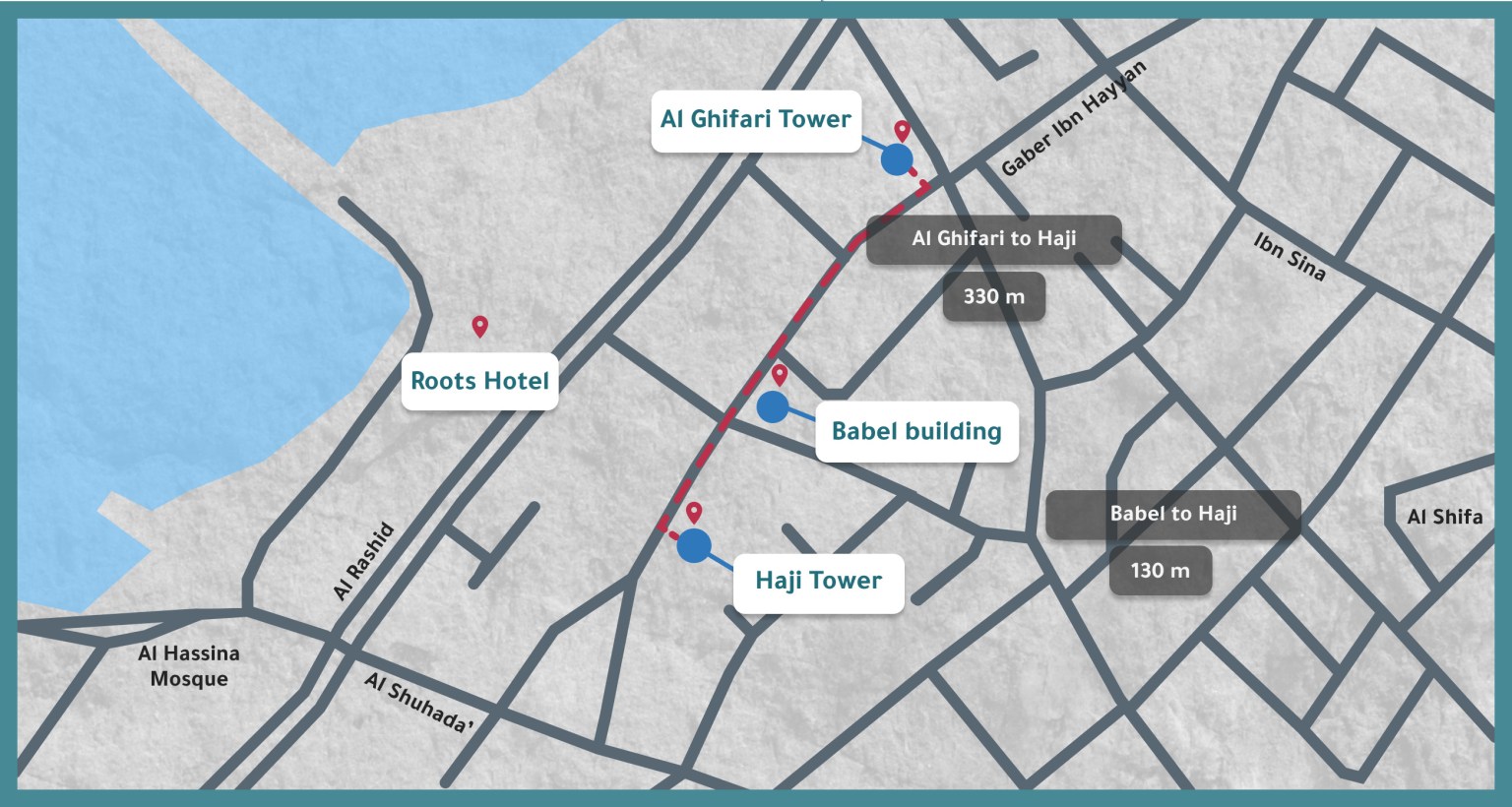
Just down the street, a little over 300 meters away, was another hub
of journalistic activity: Haji Tower, where AFP occupies the top two
floors and Palestinian outlets like Al-Najah TV and Ain Media are also
based.
Al-Taweel and his colleagues spent two days chronicling the war. On
October 8, the Israeli barrage against Gaza had begun in earnest, with
the military announcing that some 130 targets had been struck.
Al-Taweel went about covering the onslaught, posting to his well-read
Facebook page.
After the warning about Haji Tower from the Israeli military reached
Al-Taweel, he put on a flak jacket and hurried toward the building.
Skaik chose to remain in the office, aiming his camera at the tower
awaiting the strike.
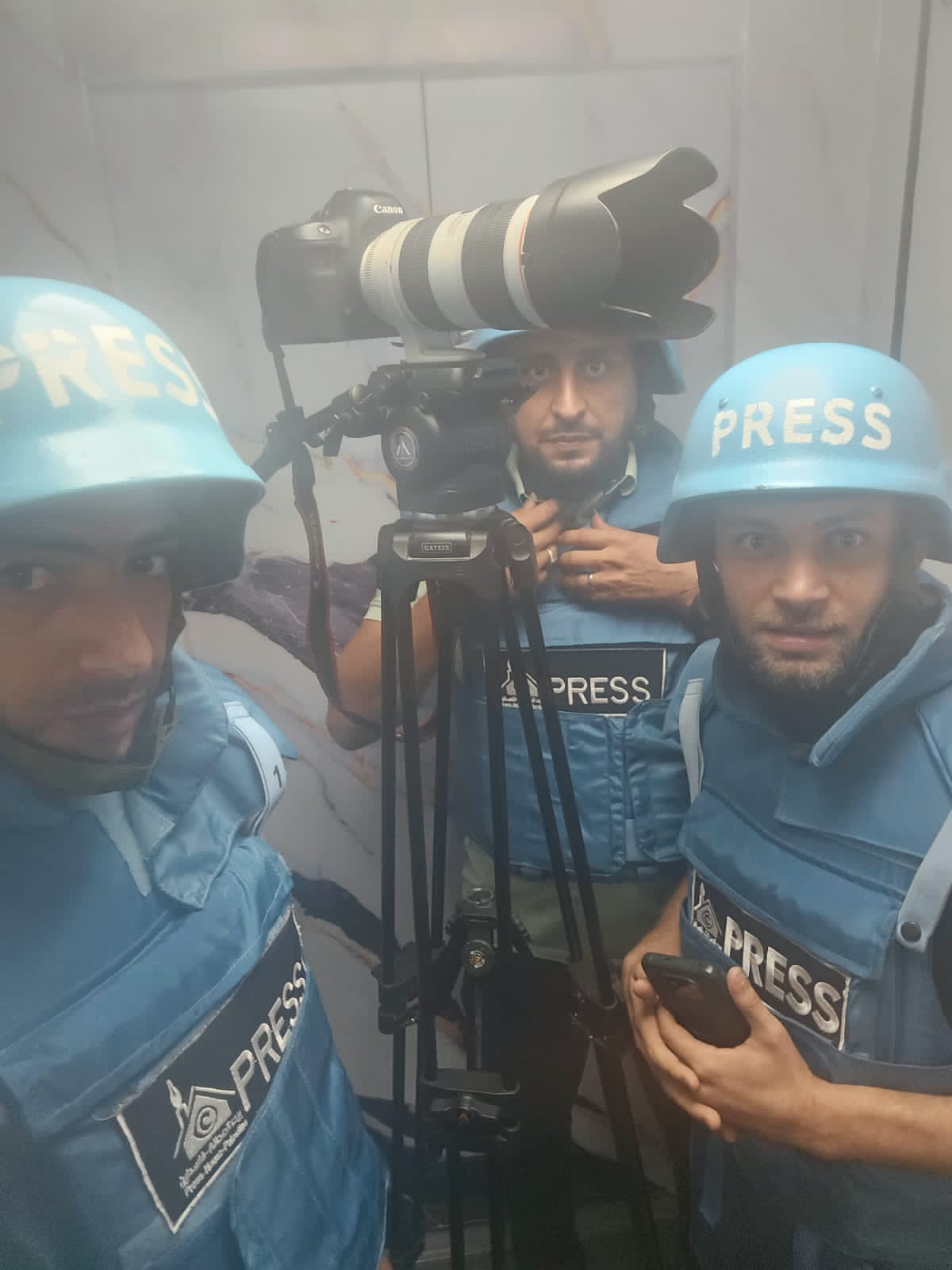
A selfie of Mohammed Sobh and Hisham Nwajha of the Khabar Agency
taken as they went down to street level to cover the expected
bombing of Haji Tower. Samer Za’aneen
Al-Taweel alerted some colleagues of the evacuation order, including
the journalists Mohammed Sobh and Hisham Nwajha of the Khabar Agency,
so they could cover the bombing. They headed in the direction of Haji
Tower along with Samer al Za’aneen, another journalist based in
al-Ghefari Tower that night who said he went because an attack on an
international news agency like AFP would be a big story.
At 2:12 a.m., on their way out of al-Ghefari Tower, Sobh and Nwajha
took a selfie in the elevator, with Sobh’s tripod, camera, and huge
lens in between them.
Sobh had been sleeping in the Khabar Agency’s office in al-Ghefari
Tower since October 7, his wife, Hanadi Qarmout, said. She had grown
accustomed to him staying at the office during Israel’s wars. On
October 9, Sobh returned home to see his wife and their 9-year-old
son.
The night of the bombing, Qarmout was getting increasingly worried
about her husband. “Don’t go up on the roof, don’t go down,” she told
him. “Take care of yourself.” He reassured her that he would take the
photos from the office.
Siham Nadal, Nwajha’s wife, had begged him not to leave Rafah for Gaza
City, mentioning their 3-year-old twins, Ilan and Rakan, to convince
him to stay. He would not, however, be deterred.
On the night of the strike against Babel, Nwajha called Nadal.
“I love you very much,” he said. “I’m heading down to cover the
bombing of the Haji Tower.”
Then he sent her a selfie, the last photo she received from him, and
likely the last he ever took.
It’s unclear how many warning calls Israel issued on the night of the
attack.
According to several eyewitnesses, sometime after 1 a.m., a local
resident received a call from a man identifying himself as an Israeli
officer. The caller said Haji Tower should be evacuated because it was
about to be bombed.
Rushdi Adeeb, a resident of the Babel building, heard a commotion
outside about this time and rushed downstairs to find a man talking
with the Israeli officer on speakerphone. (It’s unclear whether the
officer on the line was the same one who had spoken to the local
resident; in these situations, phones are often passed around between
people in attendance.) Adeeb said the officer was giving evacuation
orders for Haji Tower — and that the officer acknowledged the target
was occupied by some media offices.
Three people who heard the call confirmed to ARIJ and The Intercept
that the officer specified Haji Tower as a target. One of the
eyewitnesses heard it on speakerphone, and the other two heard it
directly from the Israeli officer.
At 2:06 a.m., an elderly man held the phone with an Israeli officer at
the other end of the line, then passed the phone to Manhal Sheheibar,
a neighborhood resident and owner of a car sales company.
“Haji building? No, I don’t know anybody there,” Sheheibar says in a
video of his conversation with the officer as recorded in a video
obtained by ARIJ and The Intercept. Sheheibar then pauses and listens,
and then blurts out a response: “What? In five minutes? Ten minutes,
then, 10 minutes.”
Sheheibar said in a later interview that the speaker on the other end
of the line was speaking in Arabic.
Mohammed Abu Safia, a journalist, also spoke to an Israeli officer —
it’s unclear if it’s the same one — sometime after 2 a.m. Abu Safia
had been asleep on the seventh floor of Haji Tower when he was aroused
by screaming at street level. Abu Safia went down and found a man on a
cellphone refusing to go into Haji Tower and warn people of an
impending attack.
Abu Safia then took the phone from the man.
“Which tower do you want to bomb so we can evacuate it?” Abu Safia
recalled telling the officer at the other end of the line. The
officer, according to Abu Safia, said Haji Tower was targeted for
bombing.
Abu Safia said, “I told him: ‘How much time do I have to check who is
in the tower, who evacuated or not?’”
The officer said the beleaguered journalist had five minutes to
evacuate and, like the man on the phone before him, Abu Safia refused
to go into the tower under threat of attack. Abu Safia said, “I told
him: ‘I want at least 15 to 20 minutes to go into the building, check
it floor by floor, and evacuate myself. Stay with me on the line if
you agree to this.’”
The officer then agreed, telling Abu Safia he had 20 minutes to
evacuate the building.
With the officer still on the line, Abu Safia searched Haji Tower and
found no one inside. The officer, according to Abu Safia, said he and
others should evacuate to the beach.
Late on the evening of October 9, eight journalists were gathered in
the office of Agence France-Presse in Haji Tower. Yahya Hassouna, a
videographer at the agency, was busy editing footage when the
building’s doorman arrived with urgent news: There had apparently been
a call from the Israeli military to evacuate the building.
No one knew why the Haji Tower would be targeted. “We were all in
shock,” Hassouna said. “What was the reason?”
It was nearly 2 a.m. when AFP journalist Adel Zaanoun called Jerusalem
bureau chief Marc Jourdier. “Don’t waste a minute and evacuate,”
Jourdier recalled telling Hassouna. “I’m calling the army and getting
back to you ASAP.” After a quick call, Jourdier sent Haji Tower’s
coordinates to the Israeli military on WhatsApp at 2:03 a.m.
Inside the AFP’s Haji Tower office, staff gathered cameras, tripods,
press vests, and helmets. Within a few minutes, they made their way
out of the building. “We know that when the Israeli army threatens a
tower, it will be bombed, whether after 15 minutes, an hour or 30
minutes,” Hassouna said. “We’ve learnt that through our coverage of
wars.”
As the journalists were leaving the building, Jourdier received a
response from an Israeli military official: “We’re checking to see
what we can do. But right now I recommend you to follow the
instructions you got.”
The AFP journalists headed towards al-Ghefari Tower, except for
Hassouna, who chose to stay closer to Haji Tower for clearer pictures
of the expected strike. He stood near Al-Taweel, Sobh, and Nwajha,
whom he recognized as fellow journalists but did not personally know.
“They thought they were in a safe place,” said Hassouna.
Video footage shows Sobh and Nwajha walking between al-Ghefari Tower
and Babel, passing by as another journalist recounts an evacuation
call.
At 2:19 am, Al-Taweel posted a video to his Facebook page. “The
evacuation of Haji building after getting warnings that it will be
bombed,” he wrote. “The whole area was evacuated in preparation for
the strike on Haji Tower.”
Hassouna had been standing near the three journalists, but he decided
to step back a few meters away.
At 2:24 a.m., Jourdier shared a message on an internal AFP chat,
saying he spoke with a senior Israeli military spokesperson who
advised that the staff should head toward Roots Hotel, a few minutes
away from Al-Ghefari and Haji towers, near the beach.
“It’s Not Haji!”
Video: Hassan Madhoun (Palestinian Media Group), Agence France-Presse
(AFP)
Mansour Khalaf stood in front of his house, across the street from
Babel, about 130 meters away from Haji Tower. Khalaf, the owner of
Babel, saw the three journalists taking up positions and pointing
their cameras at Haji Tower.
Everyone was waiting for the moment of the strike.
At 2:25 a.m, the airstrike began — but the target was not Haji Tower.
Instead, the strike hit the Babel building, the very place where
journalists had gathered for a better vantage point of Haji.
ARIJ and The Intercept obtained three videos showing the strikes: one
from the live feed of the AFP camera in Haji, another from PMG offices
on the 16th floor of al-Ghefari Tower, and a third filmed from the
street by another journalist.
As the explosions started, an AFP video coordinator monitoring the
agency’s live feed messaged a group chat of colleagues: “Strike just
hit v close to the office.”
In one of the videos, filmed in the dark, a person can be heard
screaming: “Said was killed.” In some of the first images of the
aftermath, Al-Taweel is lying prone, a few meters from where he had
been standing, his press vest soaked with blood. Nearby, Sobh is also
dead, the blast having rendered his head unrecognizable. Nwajha was
injured and taken to the hospital in critical condition; he was
pronounced dead a few hours later. At least six others, including
Babel residents and a family member of the building’s owner, were
killed in the strike.
Bystanders quickly realized what happened. “It’s not Haji, man. It’s
not Haji,” a man is heard saying in one of the videos, the anguish
clear in his voice.
“When the ambulances came,” said Adeeb, the Babel resident, “I looked
up and saw the Babel building leveled to the ground, and I looked at
the Haji Tower and saw it was still standing.”
At 2:32 am., Jourdier, the AFP Jerusalem bureau chief, shared new
information with the AFP chat group that he had just heard from the
Israeli military spokesperson: “We managed to stop the strike thanks
to your call,” the spokesperson had told him.
Videos from the day of the strike show that Haji’s structure suffered
no damage aside from a broken glass panel at the entrance.
Hassouna, the AFP videographer, told ARIJ and The Intercept that in
wars, journalists’ lives are frequently in danger. “Usually they know
where to stand and what to film,” he said. After the October 10
attack, he added, “we ended up afraid of dying every minute.”