
Ahmed Ashour
Firas al-Tawil
Amjad Yaghi (from Gaza)

21 July 2024
Th investigation documents – using satellite images – the extent of destruction caused to the ancient port of Blakhiyeh in Gaza and shows that the Israeli army has targeted the site with 2,000 bombs, in violation of the Hague Convention.
The Gaza Strip, which covers an area of 360 square kilometres, includes dozens of archaeological sites. During the war that Israel launched on Gaza on October 7, 2023, missiles and shells have been fired at 43 archaeological and cultural sites, according to monitoring by the United Nations Educational, Scientific and Cultural Organization - UNESCO.

10 Religious building

24 Buildings of heritage or artistic value

3 Memorials

3 Archeological sites

2 store of moveable cultural property

1 Museum
Source: UNESCO
UNESCO reports that these sites were destroyed – in whole or in part -
between October 7, 2023 and April 8, 2024. Among those destroyed was
Blakhiyeh (Anthedon), which includes the remains of Gaza’s ancient
port.
In this investigation, we track the Israeli army’s targeting of the
port, which is included on UNESCO’S Tentative List of World Heritage
Sites. And, by analysing satellite images, we reveal the extent of
destruction to this site, which is a breach of the Hague Convention
for the Protection of Cultural Property.
34 registered archeological sites as of 2009

12 mosques

3 churches and monasteries

1 palace

1 castel

1 archaeological site (Balakhia)

3 ancient mounds

2 ancient cemeteries

1 ancient prayer room

shrines

1 hammam

1 pathway

1 ancient market

5 houses
Ministry of Tourism and Antiquities in the Gaza Strip
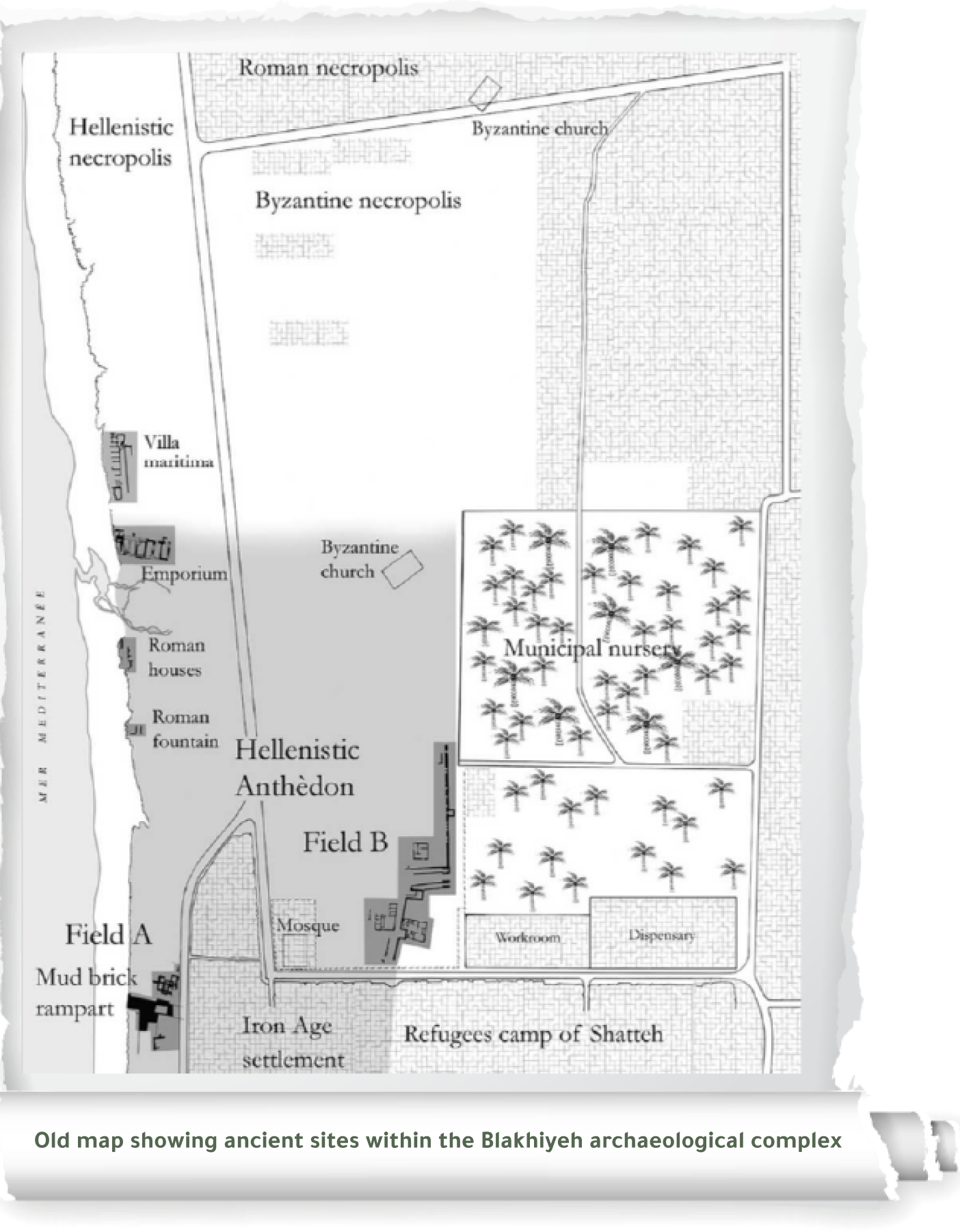
On the shores of the Eastern Mediterranean, at the northwestern tip of the Gaza Strip, lies Blakhiyeh - Anthedon. This site, covering around one square kilometre and sits 17 to 20 meters above sea level, includes the northwestern section of Al-Shati refugee camp and the adjacent shoreline area known as Al-Mashtal. It extends up to the street that connects the Sheikh Radwan area to the coast road.
The city of Anthedon was the first known seaport in Gaza and was
inhabited between 800 BCE and 1100 CE. The port came under the control
of the Neo- Assyrians, Babylonians, Persians, Greeks, Romans, and
Byzantines, before the early Islamic era.
Before it was destroyed, the site included a number of archaeological
remains such as mosaic floors, fortified structures, and submerged
monuments. This permitted its listing as part of the UNESCO’s
Tentative World Heritage List, following a submission by the Permanent
Delegation of Palestine to UNESCO in April 2012.
UNESCO describes Anthedon as “an outstanding example of a type of
architectural ensemble, showing a mixture of building materials and
techniques.” Despite the site’s cultural heritage value, it was
subjected to several violations in recent times.
An investigation by ARIJ in 2021, had revealed three such violations
of the site that pre dated the latest war: the bulldozing of the
mosaic floor inside a Byzantine church, prior to the inter Palestinian
troubles in 2007; the construction of the Al-Shati Police Station by
Hamas on the site in 2013; and the building of a stadium on its ground
in 2018.
But these violations would not compare with what the site has been
subjected to in the latest Israeli war. Satellite images compiled by
Ollie Ballinger, Lecturer in Geo-Computation at the Centre for
Advanced Spatial Analysis, University College London (UCL), show
moderate to severe damage to the northwestern and northeastern areas
of the port.
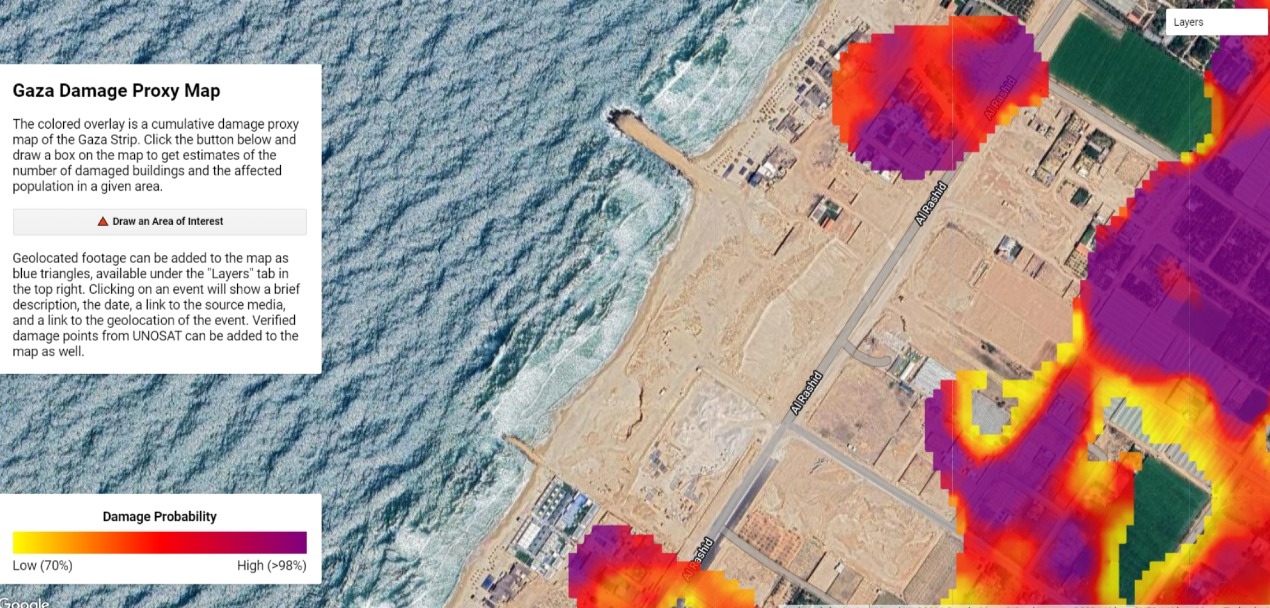
Extent of damage to the Blakhiyeh site during war on Gaza
Source: Ollie Ballinger
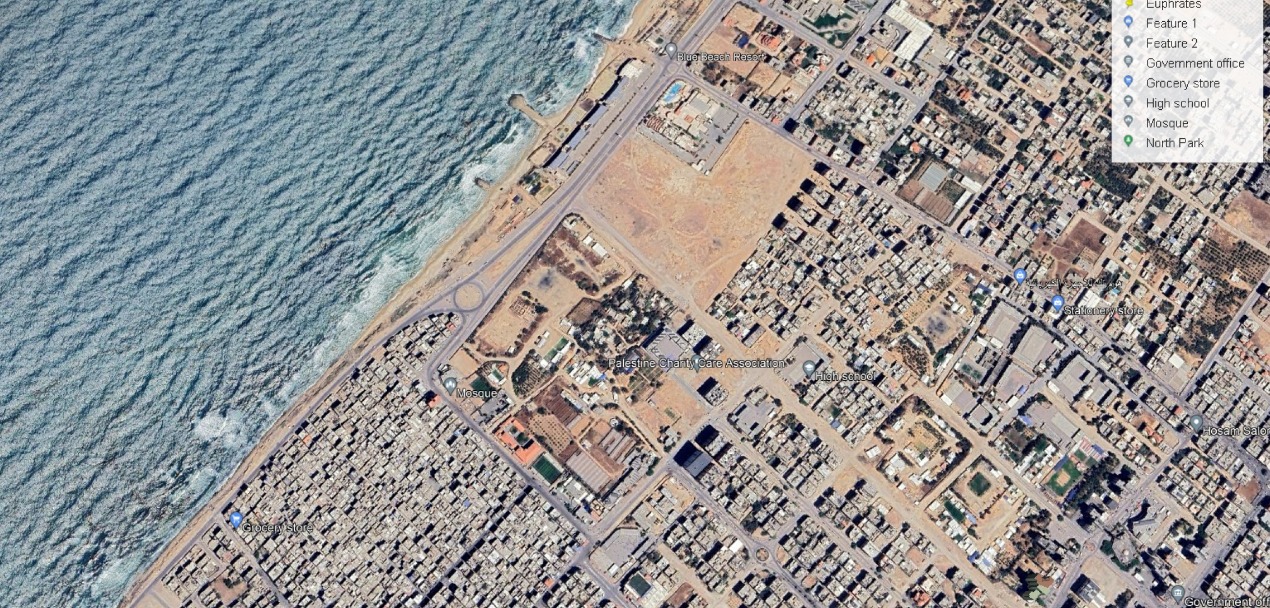
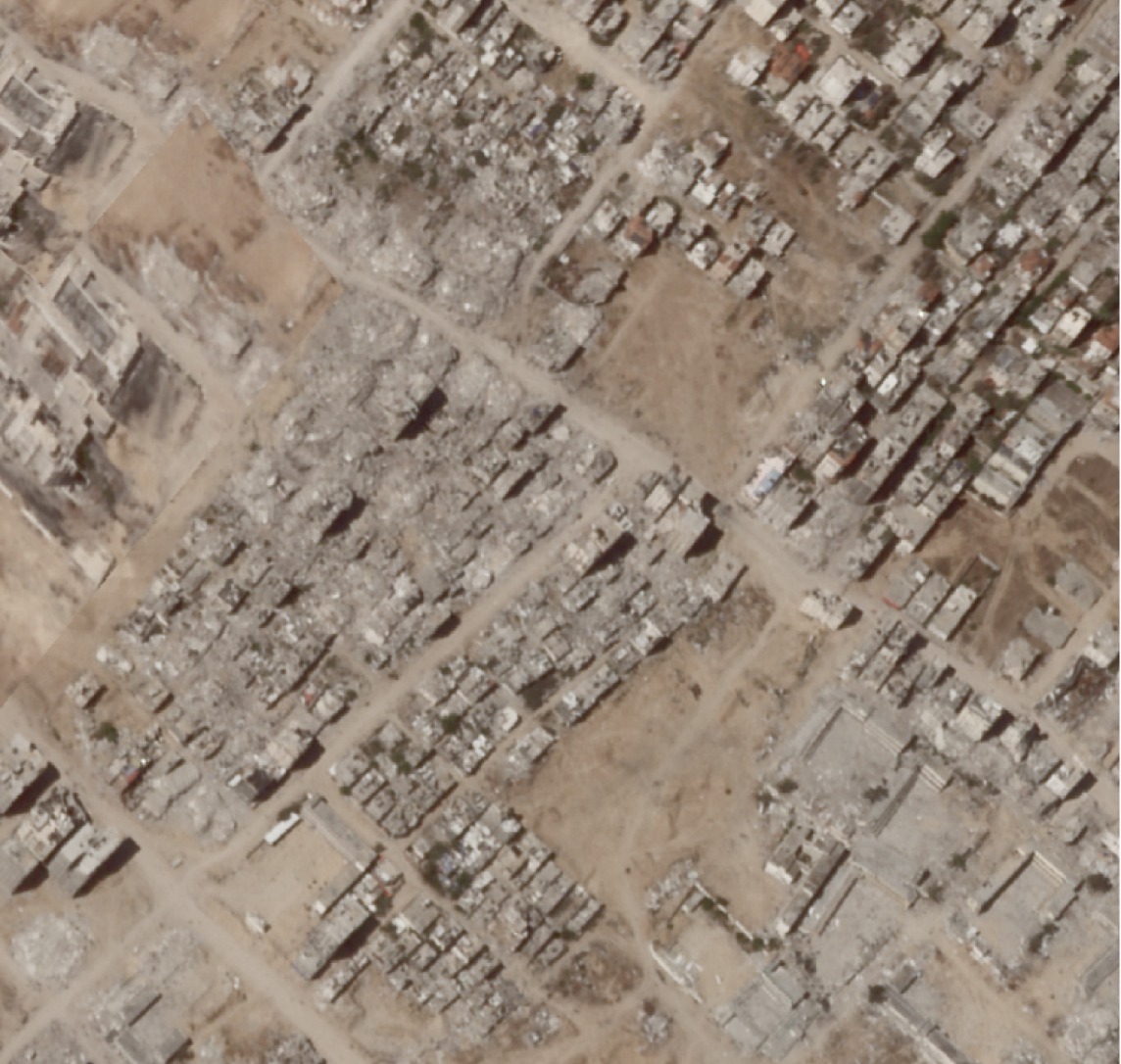
Blakhiyeh before and during the war
Source: (Google Earth Pro) (Planet Lab)
Photos taken after six months of war show how the site has been turned into an area of sand interspersed with deep craters and all remains of archaeological monuments have disappeared.
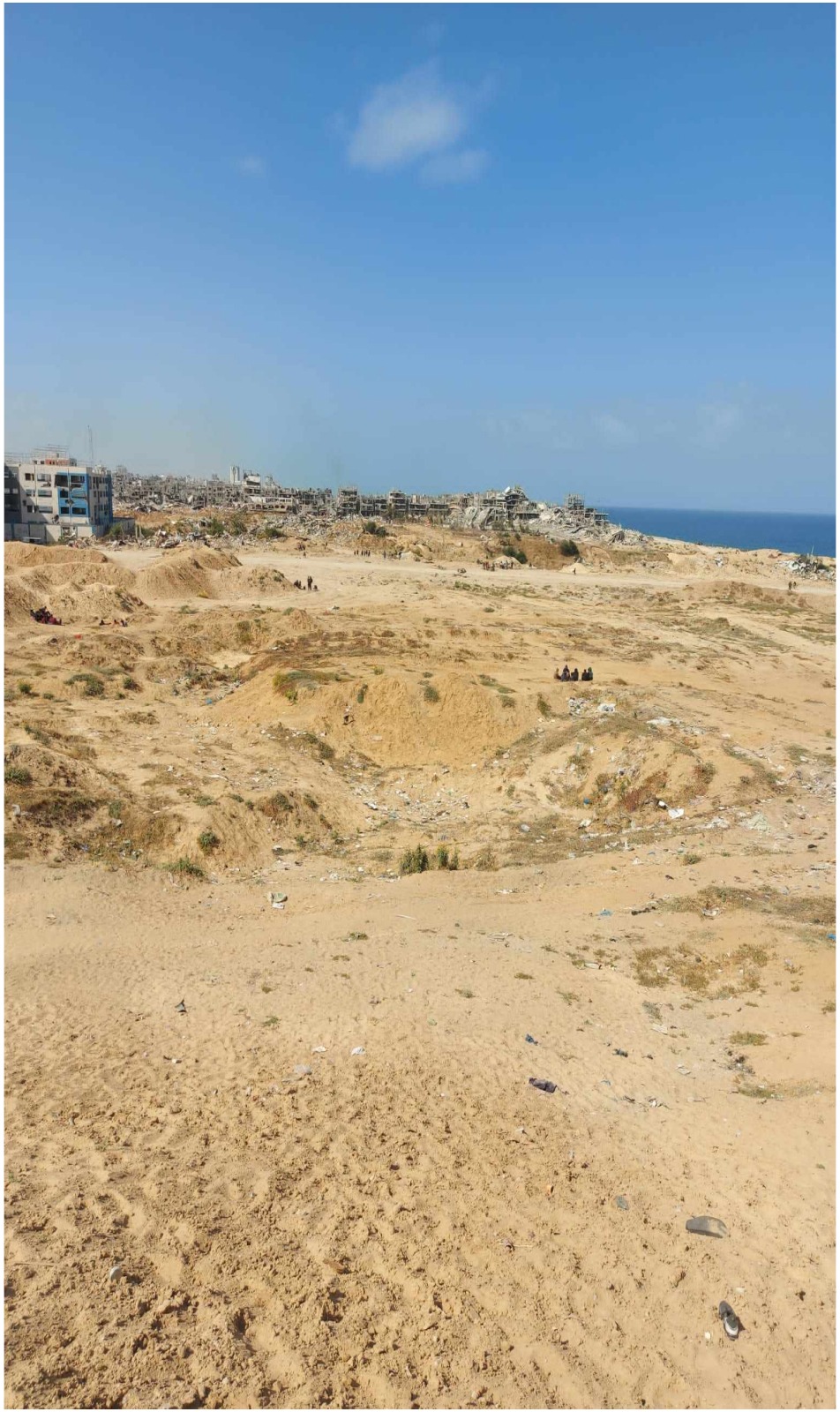
Photo of site after it was bombarded and bulldozed
Images provided by Palestinian archaeologist Fadel Alatel indicated
that the Israelis had directly targeted the area and bulldozed it
completely. We confirmed this by comparing satellite images from
September 2022, with those taken in May 2024, available on the Planet
Lab website.
Pre-war photos confirm the existence of archaeological remains in Area
B of the port, where Palestinian archaeologist Fadel Alatel, and
foreign experts carried out excavations, the last of which was in
2005. We managed to obtain a photo showing some of this excavation
work. Despite the later encroachments, things stayed as they were at
this site until the destruction caused by the Israeli invasion of Gaza
which began on October 7, 2023.
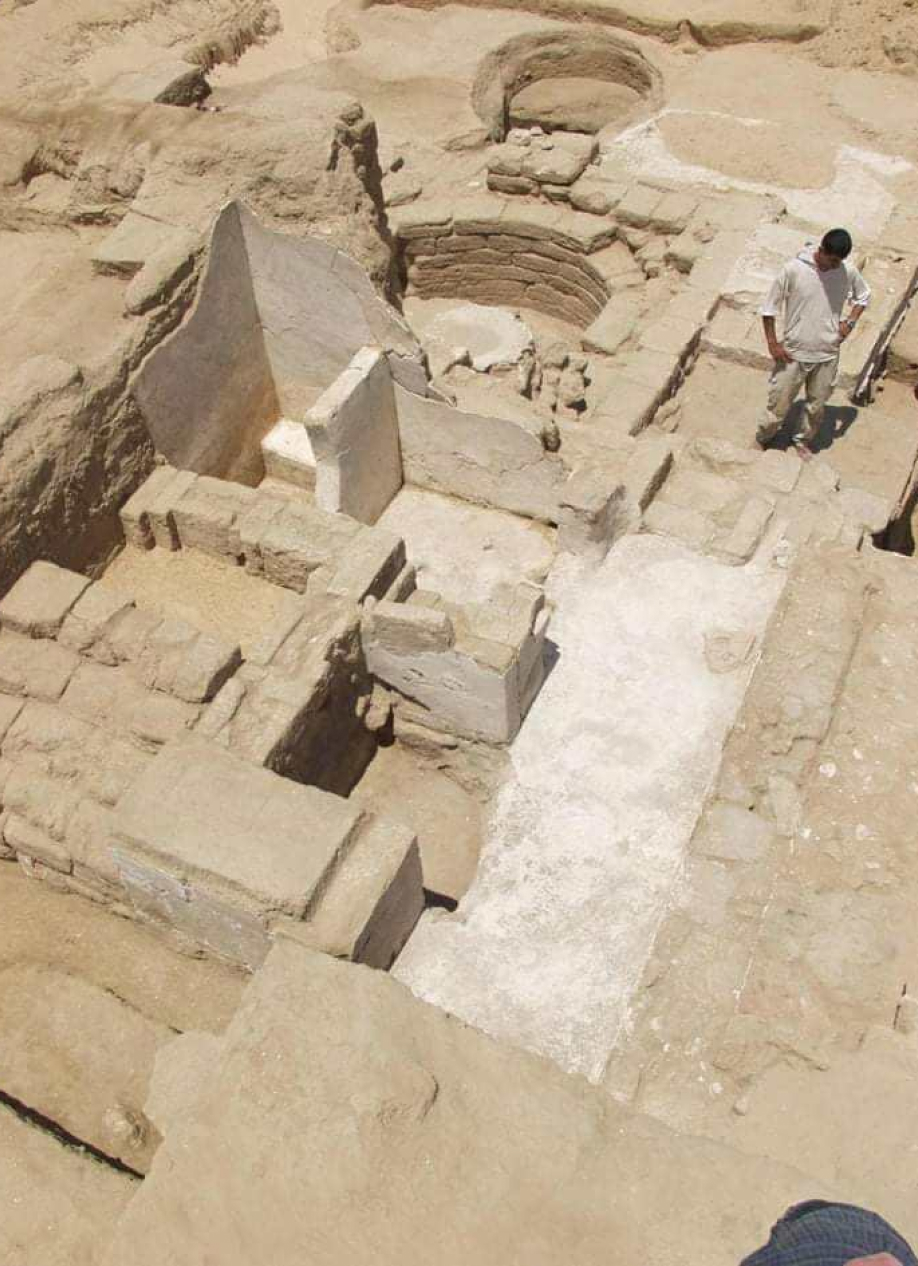
Excavation work at the site in 2005
We sent the recent photos of the site to archaeologist Marc-André
Haldimann, of the Institute of Archaeological Sciences at the
University of Bern in Switzerland, to identify the excavation sites
and tell us what had happened to them. Haldimann confirmed that Area
B, where the archaeological excavations took place, is within those
parts of Blakhiyeh that were subjected to bombardment.
On November 4, 2023, the Al-Qassam Brigades (the military wing of Hamas) released a video clip showing an Israeli tank being hit near the Al-Khalidi Mosque, about 800 meters from Al-Shati camp, as it was passing the edge of the archaeological site on route to the camp. The clip clearly indicates the period during which the archaeological remains in the port were being destroyed.
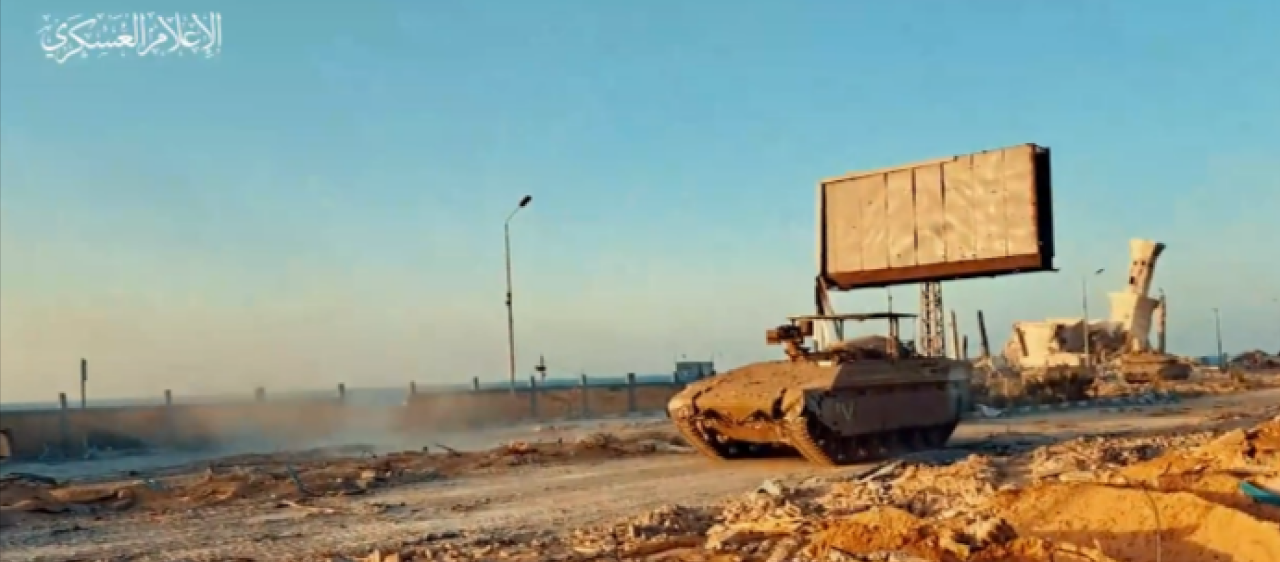
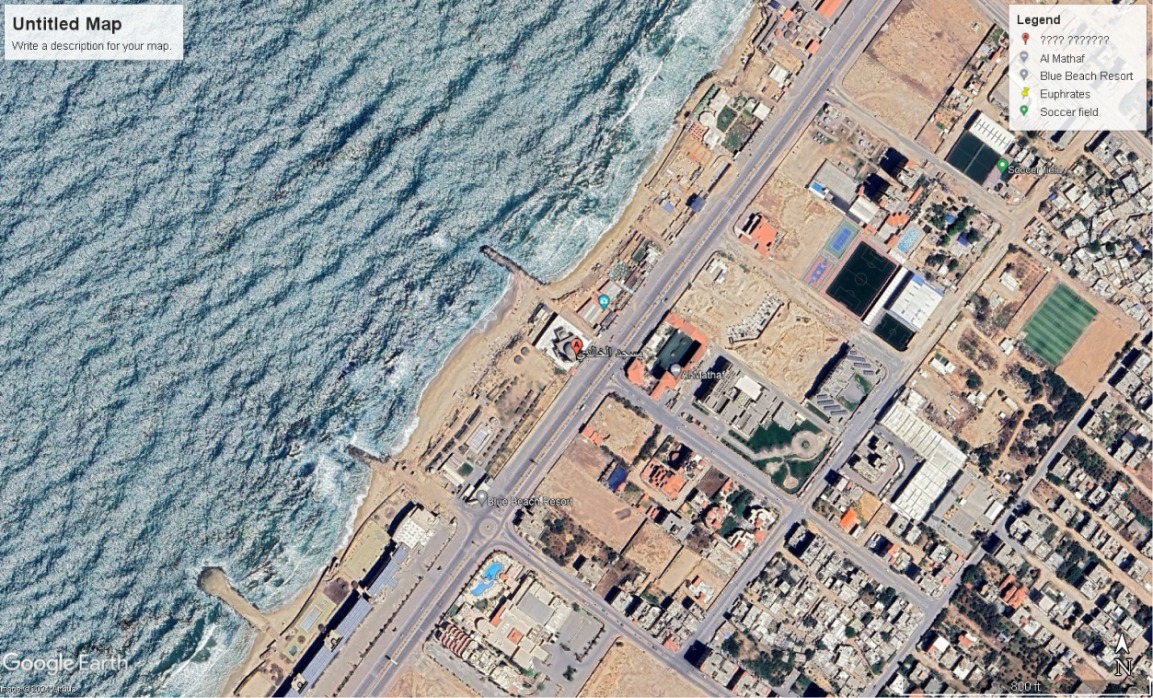
Israeli tank next to Al-Khalidi Mosque on its way to the archaeological site of Blakhiyeh port
Another video clip, put out by the Israeli army, shows tanks arriving at the entrance to Al-Shati Camp. This means that they will have passed through the Blakhiyeh site to reach the outskirts of the camp.
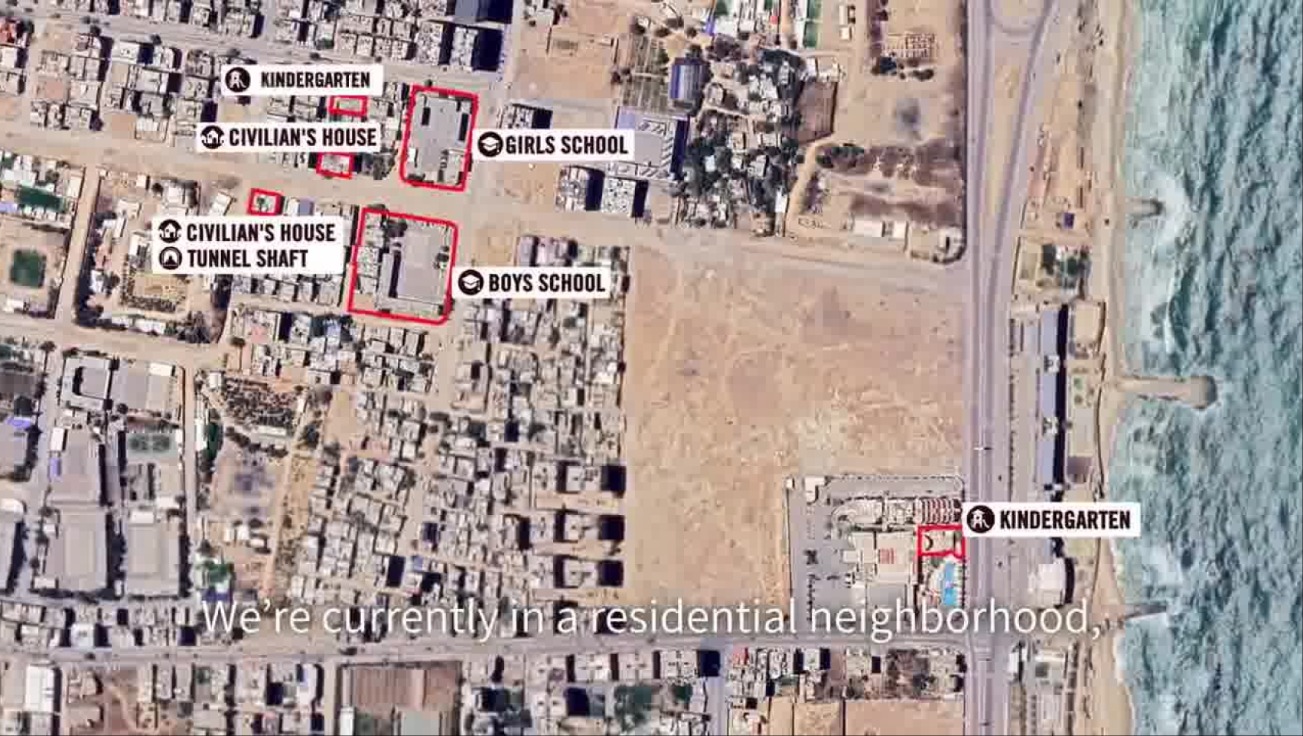
Footage from the video shows the targeting of the Al-Mashtal Hotel, which lies inside the port of Blakhiyeh
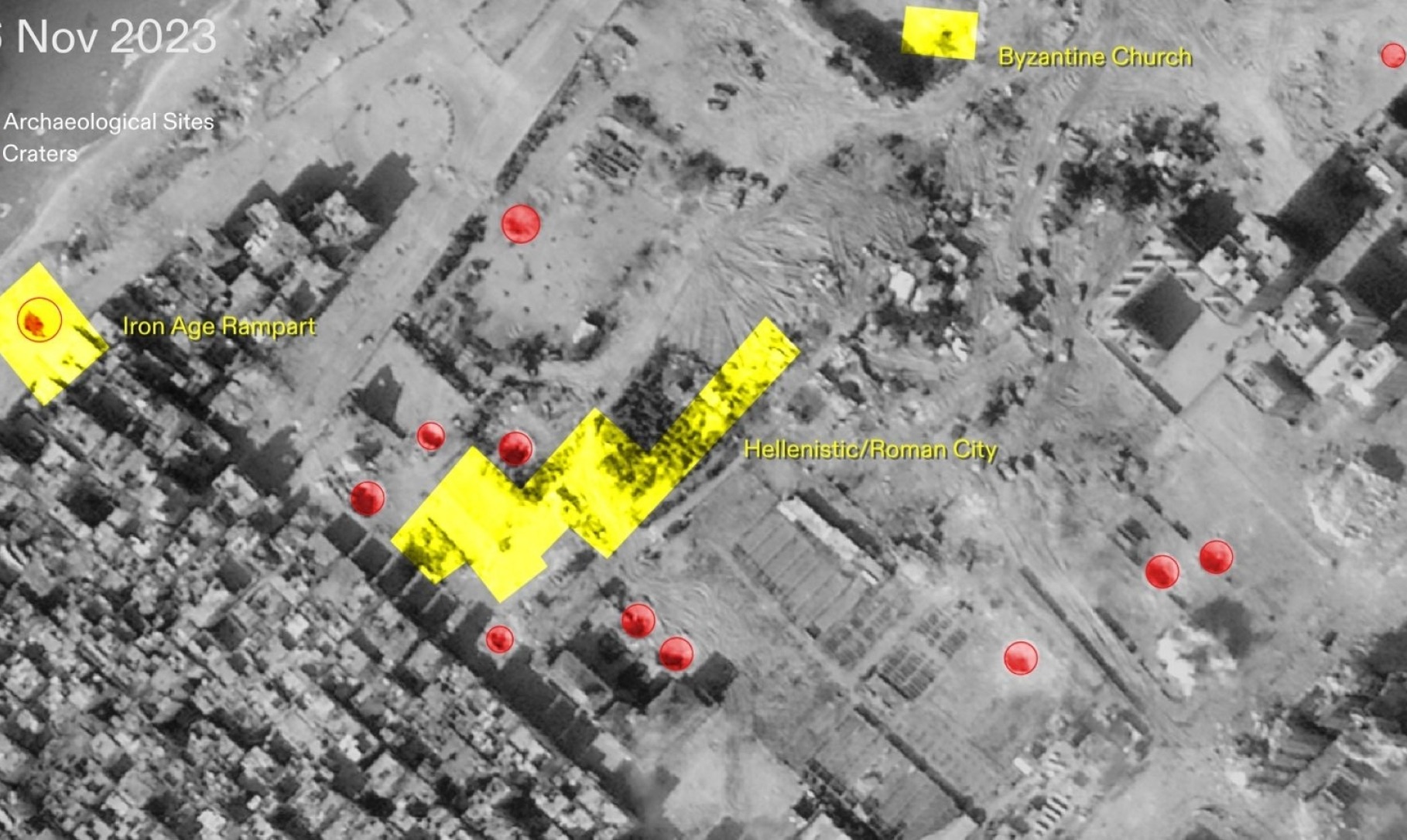
A report from the Palestinian organisation Al-Haq (a Ramallah-based human rights NGO) states that the Israeli bombardment produced at least 30 craters in the archaeological site of Blakhiyeh Port, each between eight to 16 metres in diameter. Satellite images show craters of varying diameter in Areas A and B, and in surrounding sites.
A report broadcast on the American channel CNN, looked into Israel's
use of 2,000 lb (or 900 Kg) bombs in Gaza.
CNN identified locations targeted with these bombs, which leave behind
large craters, including in the Blakhiyeh archaeological site.
Images supplied to us by Palestinian archaeologist Fadel Alatel show
the presence of large craters within the archaeological site,
especially in Area B.
US President Joe Biden threatened to stop supplying Israeli with 2,000
lb (or 900 Kg) bombs, admitting that they have killed civilians in
Gaza.
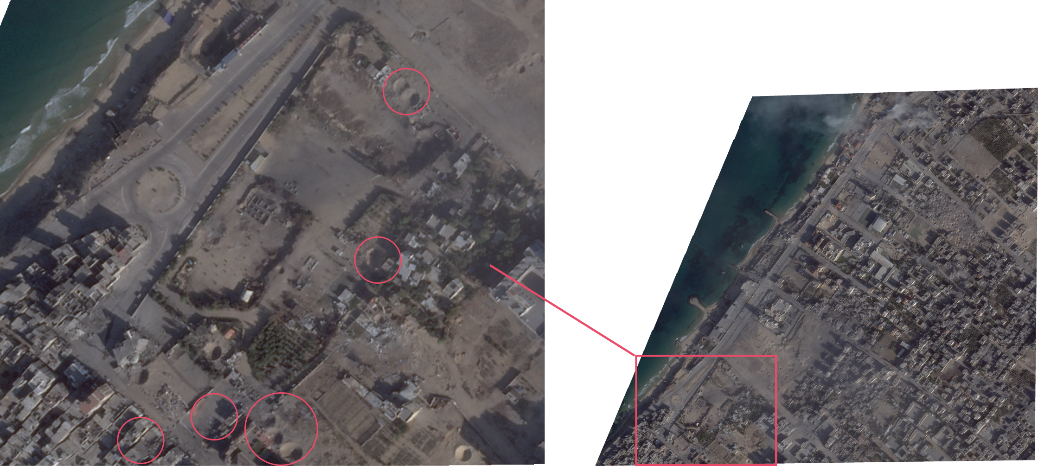
A photo taken on October 30 showing craters produced by bombardment
at the site of the ancient port (Source: Planet Lab - Ain Media)
Destruction of archaeological sites is a violation of the 1954 Hague
Convention for the Protection of Cultural Property in the Event of
Armed Conflict. The third paragraph of Article 4 of the Hague
Convention states: “The High Contracting Parties further undertake to
prohibit, prevent and, if necessary, put a stop to any form of theft,
pillage or misappropriation of, and any acts of vandalism directed
against, cultural property. They shall refrain from requisitioning
movable cultural property situated in the territory of another High
Contracting Party.”
Dr Derek Fincham, a professor at South Texas College of Law, described
the UNESCO assessment as “deeply disturbing,” pointing out that this
damage to cultural heritage sites could fall within the scope of the
1954 Hague Convention.
He added that both Israel and Palestine are parties to the convention,
and bear responsibility for protecting cultural heritage during armed
conflicts. "It is difficult to assess from a distance the extent of
damage to cultural heritage, beyond what has been documented by UNESCO
and other international bodies and observers."
Dr Fincham, a lecturer specializing in heritage protection law, added:
“One aspect of the Hague Convention is the principle of military
necessity. This permits damage to important cultural sites, if this is
required to achieve a military objective. This is a broad and
non-specific aspect of the legal framework.”
This investigation was completed with support from ARIJ